A discreet framework for using private dining access, reservation logistics, waterfront movement, and post-event routines to evaluate a South Florida condo.
For a seasonal buyer, the Miami International Boat Show can be more than a fixture on the social calendar. It can serve as a practical rehearsal for ownership: a concentrated period when dining plans, waterfront movement, guest expectations, privacy, and timing all matter at once.
The objective is not to choose a condo because it feels convenient during a single event. It is to observe how a preferred address performs when the city is active, then determine whether that same setting supports the quieter rhythms of a second home. The most revealing questions are often simple: How many transitions stand between the residence and dinner? Can plans change gracefully? Does returning home feel calm? Can guests be hosted without turning the evening into an exercise in logistics?
This is the proper lens for a buyer’s-guide approach: evaluate the complete sequence from residence to appointment, dining table, and home again.
Private dining access is not a single amenity. For one buyer, it means a dedicated room suited to an intimate dinner. For another, it means a trusted concierge who can coordinate a difficult reservation. Others may prioritize in-residence catering, a resident lounge, a chef’s kitchen, discreet arrival, or the ability to entertain without leaving the building.
Before touring, divide the subject into three categories. First, consider access: who handles requests, how far in advance arrangements are typically made, and whether residents receive a distinct pathway. Second, consider setting: acoustics, privacy, table configuration, service circulation, and separation from shared traffic. Third, consider recovery: the ease of returning home, receiving late guests, and restoring the residence the following morning.
Ask for precise explanations rather than lifestyle shorthand. Terms such as private, exclusive, and preferred can describe markedly different arrangements. Any dining privilege, reservation benefit, or service commitment that materially influences a purchase should be reviewed in the applicable ownership documents and current operating policies.
Miami Beach may appeal to buyers who want dinner itself to remain central to the evening. When reviewing options such as The Perigon Miami Beach, map the entire itinerary rather than considering only straight-line proximity. Account for departure, arrival, guest pickup, valet time, and the return journey.
Brickell offers a contrasting urban rhythm. A buyer considering Cipriani Residences Brickell can test whether a vertically organized neighborhood suits a schedule shaped by meetings, dining, and short transitions. The relevant question is not whether a destination appears close on a map, but whether the route remains comfortable at the hour it will actually be used.
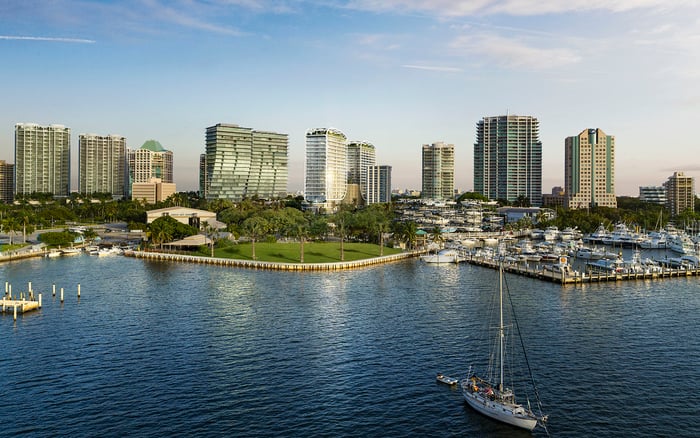
For buyers drawn to a more residential waterfront pattern, Coconut Grove warrants a separate trial. Place Vita at Grove Isle within a comparison that weighs the desired balance of separation and access. Farther north, St. Regis® Residences Bahia Mar Fort Lauderdale can broaden the search for buyers evaluating a Fort Lauderdale base alongside Miami.
No neighborhood should prevail solely because it performs best for one dinner. The stronger choice supports the buyer’s preferred lifestyle throughout an entire stay.
A polished dining plan can still falter at the front door. During a tour, walk through the property as though two couples were arriving before dinner. Consider the clarity of entry, waiting areas, elevator transitions, guest parking procedures, and the distance from arrival to the residence. Privacy should feel intuitive, not improvised.
Inside, assess whether the floor plan can accommodate drinks before dinner without exposing service or private zones. Examine circulation among the kitchen, living area, terrace, and powder room. If a catered meal is important, ask where staff would stage, how deliveries are received, and which building rules apply. If the preference is to meet elsewhere, focus instead on wardrobe storage, vehicle readiness, package handling, and the ease of securing the residence after a short seasonal stay.
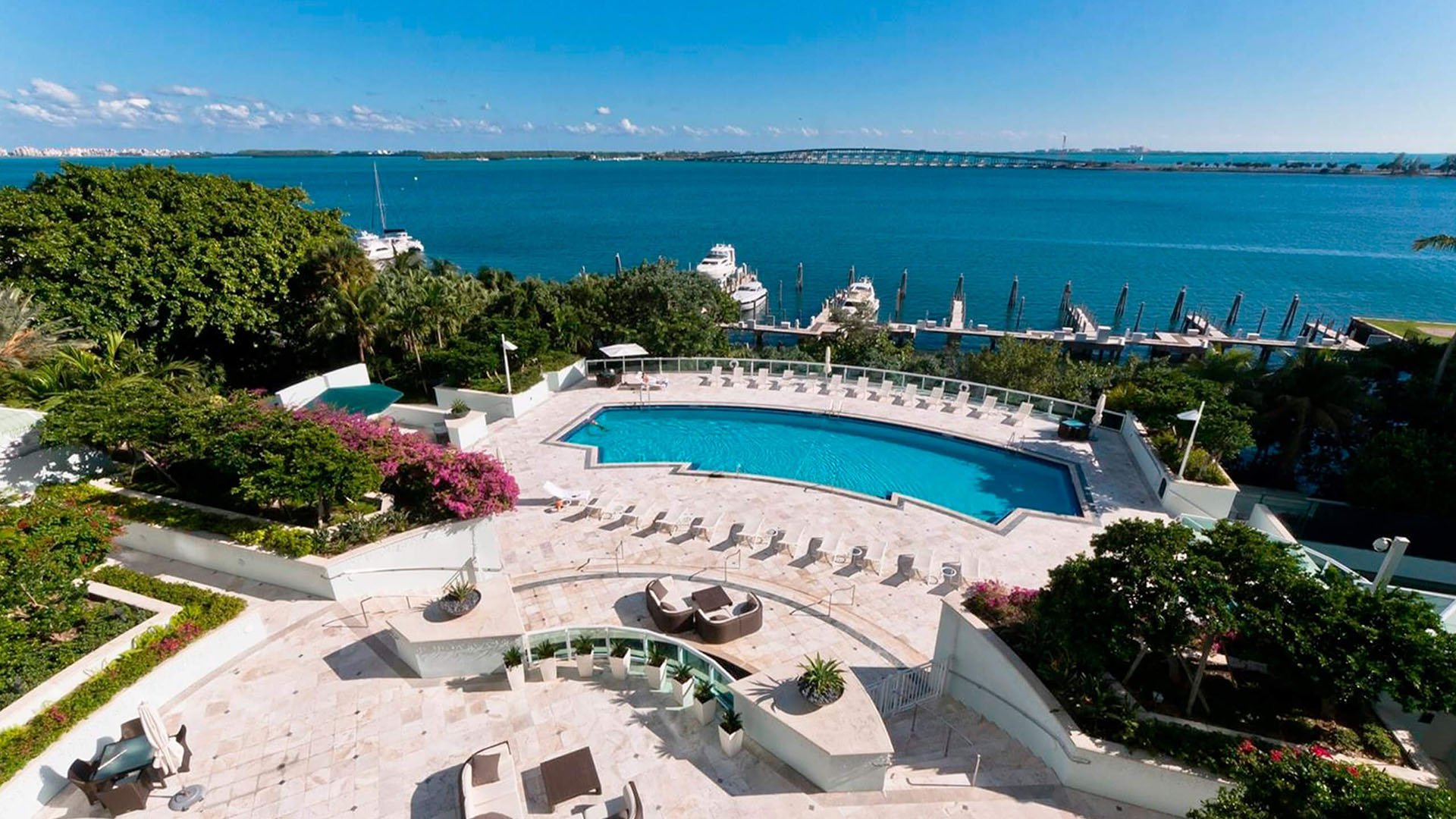
A marina can shape the appeal of a waterfront routine, but it should never be treated as a visual promise. Buyers should verify access rights, operating rules, availability, vessel limitations, fees, and transferability through appropriate documentation and professional review.
Touring only during peak activity can exaggerate inconvenience; touring only on a quiet day can conceal it. A useful comparison includes both conditions.
On the active day, begin at the candidate residence and maintain a written itinerary. Record actual transition times, but also note qualitative friction: uncertainty at pickup, crowded arrival points, noise at the residence, or a lobby that lacks the desired discretion. Arrange dinner in the style you would realistically prefer, whether in a private room, a club setting, at a restaurant table, or through in-residence service.
On the quieter day, repeat the essential route and spend more time inside the building. Review morning light, work-from-home needs, wellness routines, grocery access, and the experience of receiving one or two guests. Ask the appropriate representatives about reservation procedures, staffing boundaries, guest policies, private-event rules, and recurring costs.
Then score each property against five criteria: dining access, mobility, hosting, privacy, and everyday ease. Weight those categories according to your own behavior. A second-home buyer who entertains twice per season should not assign the same value to a private dining room as someone who hosts weekly.
Service can distinguish an experience, but it should not eclipse the fundamentals of condominium ownership. With qualified advisers, review financial obligations, use restrictions, insurance considerations, management structure, alteration rules, rental policies, and any provisions affecting guests or catered events.
Request current details for every service that matters. Determine whether dining support is part of the condominium operation, provided by a separate hospitality component, arranged through third parties, or simply available nearby. Clarify what is included, what incurs an additional charge, and what may change over time.
The best seasonal purchase is not necessarily the address with the longest amenity description. It is the residence whose service model, location, and operating rules align with how the owner genuinely lives.
After the event, resist the urge to choose immediately. Revisit your notes once the social momentum has passed. The decisive observation may be that the most glamorous dinner demanded too much coordination, or that a quieter address made hosting feel effortless.
Reduce the shortlist to properties that satisfy both event-week expectations and ordinary residential needs. Return at a different hour, test the preferred route again, and verify every material representation. The goal is a condo that makes a demanding evening feel composed while proving equally persuasive on an unprogrammed morning.
Should private dining access determine which condo I buy? It should be one weighted factor, not a substitute for reviewing the location, finances, rules, and residence itself.
What should I ask a concierge about dining reservations? Ask who may submit requests, the typical lead times, guest limits, fees, cancellation terms, and whether access is guaranteed or request-based.
Is a private dining room the same as a restaurant reservation benefit? No. A room within the property, concierge service, and preferred access elsewhere are distinct arrangements that require separate verification.
When should I tour during a major event period? Tour once amid the activity you expect to encounter and again under quieter conditions for a balanced view.
How can I evaluate traffic without relying on estimates? Travel the intended route at the relevant time and assess the entire door-to-table sequence.
What matters most when hosting before dinner? Prioritize guest arrival, privacy, seating, circulation, service access, acoustics, and building rules.
Should yacht access influence a condo decision? It can, but rights, availability, costs, rules, and vessel parameters should be independently confirmed.
Are branded services permanent? Service structures and operating policies can change, so review governing documents and current agreements with qualified advisers.
How many neighborhoods should a seasonal buyer compare? Compare enough distinct settings to determine whether the priority is urban energy, waterfront calm, beach access, or separation.
What is the final test before making an offer? Confirm that the property works for an ordinary day as convincingly as it does for a high-profile evening.
For a discreet conversation and a curated building-by-building shortlist, connect with MILLION.
If branded residences are on your mind — as a home or as an allocation — we would be glad to share what we are seeing, privately.
Begin a quiet conversation