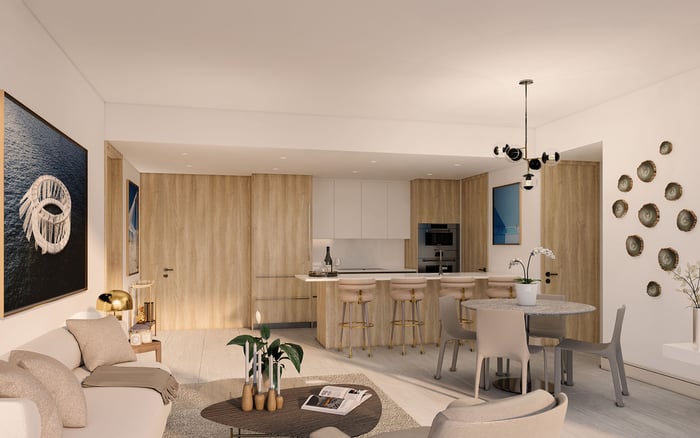
At One Park Tower by Turnberry North Miami, buyers evaluating concierge depth should focus on coverage, booking procedures, fees, communication, and accountability rather than relying on amenity count alone.

Luxury condominium presentations often emphasize the number and variety of amenities. For buyers considering One Park Tower by Turnberry North Miami, a more useful diligence question is how consistently the service program can support the residential experience.
Physical spaces do not operate themselves. Any service-dependent feature may require personnel, schedules, reservations, maintenance, resident communication, and a clear process for resolving problems. The quality of that coordination can matter more in daily life than the length of an amenity list.
This distinction is especially important in new-construction and pre-construction purchases. Buyers may be evaluating a planned operating model rather than an established service record, making written disclosures and direct questions essential.
Concierge depth is not simply the presence of a desk. It reflects whether requests can be received, assigned, tracked, and completed across shifts. A polished arrival means little if routine requests are delayed, responsibilities are unclear, or residents must repeatedly explain the same issue.
Coverage should be evaluated by time and function. Buyers can ask who responds during peak periods, evenings, weekends, and overnight hours. They should also determine whether specialized duties are assigned to dedicated personnel, shared among team members, or handled by outside vendors.
The distinction affects consistency. A dedicated role may offer focused knowledge, while a shared role may create flexibility but also competing priorities. An outside provider may add expertise, yet introduce separate booking, payment, cancellation, and accountability procedures. None of these structures is inherently superior; the important point is to understand which model applies.
Security and concierge teams can both contribute to the resident experience, but their core responsibilities differ. Security generally centers on access and monitoring. Concierge work may involve reservations, deliveries, transportation coordination, local guidance, resident requests, and communication among building departments or service partners.
Buyers should not assume that round-the-clock security means every concierge function is available at all hours. They should ask who handles non-security requests outside regular concierge hours and whether urgent and routine matters follow different escalation paths.
A clear division of responsibilities can improve both service and accountability. Residents should know whom to contact, how requests are documented, and who has authority to resolve an issue when more than one team or vendor is involved.
A disciplined review begins with staffing. Ask about planned desk hours, shift coverage, overlapping personnel during busy periods, training, supervision, and procedures for absences. If a service depends on a specialized role, determine whether that role is dedicated or shared.
Next, examine access. Buyers should request information about reservation windows, guest rules, capacity limits, wait lists, cancellation procedures, and any priority system. A desirable service can have limited practical value if booking is difficult or operating hours do not suit a household’s routine.
Costs deserve equal attention. Determine which services are included in common charges, which involve separate charges, and which are provided through third parties. Buyers should also ask how pricing changes, gratuities, vendor payments, refunds, and missed appointments are handled.
Finally, clarify accountability. Who responds to a missed booking or delayed request? Is there a defined escalation path? How are recurring issues recorded and reviewed? Written procedures provide a stronger basis for evaluation than broad hospitality language alone.
A simple comparison framework can help buyers review properties consistently. Create columns for personnel, operating hours, reservation method, included cost, separate fees, vendor involvement, guest access, cancellation rules, and issue resolution. Apply the same questions to each service the household expects to use.
This approach can also be used when comparing One Park Tower with other South Florida residential options, including The Well Bay Harbor Islands and Four Seasons Hotel & Private Residences Fort Lauderdale. The purpose is not to assume that the properties share the same operating model, but to evaluate each one through the same practical questions.
A shorter amenity list supported by dependable operations may suit a buyer better than a broader program with uncertain access. The correct conclusion depends on the household’s priorities, preferred level of assistance, expected usage, and tolerance for reservations or separate charges.
Marketing descriptions can introduce a service vision, but purchase decisions should rely on the documents and disclosures applicable to the transaction. Buyers can review the materials available to them for references to operating responsibilities, budgets, common expenses, rules, third-party arrangements, and the authority to modify services.
Any difference between a planned service and a guaranteed obligation should be understood before purchase. Buyers should also identify which details remain subject to change and direct project-specific legal, financial, and contractual questions to qualified advisers.
For One Park Tower by Turnberry North Miami, the central diligence issue is straightforward: determine how the service concept is intended to work in ordinary daily use. Coverage, communication, booking procedures, cost clarity, and problem resolution provide a more meaningful test than amenity count by itself.
Why can staffing matter more than amenity count? Staffing affects whether service-dependent features are consistently available, coordinated, and responsive.
What does concierge depth mean? It describes the capacity to receive, manage, track, and complete resident requests across personnel, shifts, and service partners.
Is concierge service the same as security? No. The functions may interact, but security generally focuses on access and monitoring while concierge work may involve resident assistance and coordination.
What coverage questions should buyers ask? Buyers should ask about desk hours, peak-time overlap, evening and weekend availability, overnight procedures, and coverage during staff absences.
Why do reservation procedures matter? Reservation windows, capacity limits, wait lists, guest rules, and cancellation policies determine how practical a service is to use.
Should buyers ask whether services cost extra? Yes. They should identify what is included in common charges and what may involve separate fees or third-party payments.
How should buyers evaluate outside vendors? Buyers should clarify the vendor’s role, booking and payment process, cancellation rules, and responsibility for resolving service failures.
What is a useful way to compare South Florida residences? Apply the same checklist to each property, covering personnel, hours, access, costs, vendor involvement, and accountability.
Which documents may help clarify the service model? Buyers can review the transaction documents and disclosures available to them for operating responsibilities, budgets, rules, expenses, and modification rights.
What is the central diligence question at One Park Tower? Buyers should determine how the proposed service experience is intended to function in daily life, including coverage, communication, costs, and issue resolution.
For a tailored shortlist and next-step guidance, connect with MILLION.
If branded residences are on your mind — as a home or as an allocation — we would be glad to share what we are seeing, privately.
Begin a quiet conversation