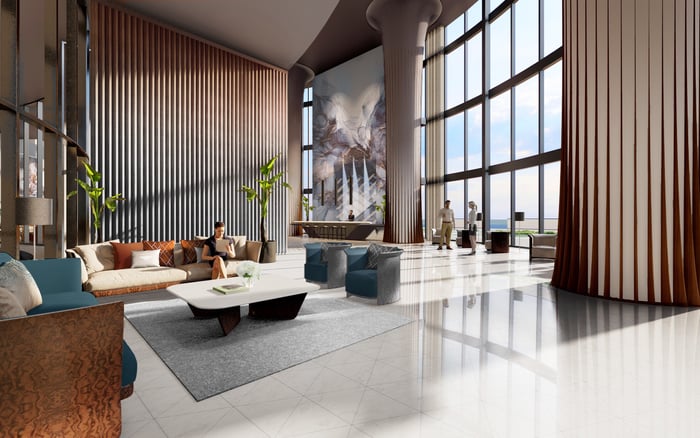
For collectors considering Ritz-Carlton and St. Regis residences in Sunny Isles Beach, the essential comparison is operational: collection records, artwork-specific lighting, environmental protection, and written installation approvals. Brand prestige alone does not establish these provisions.
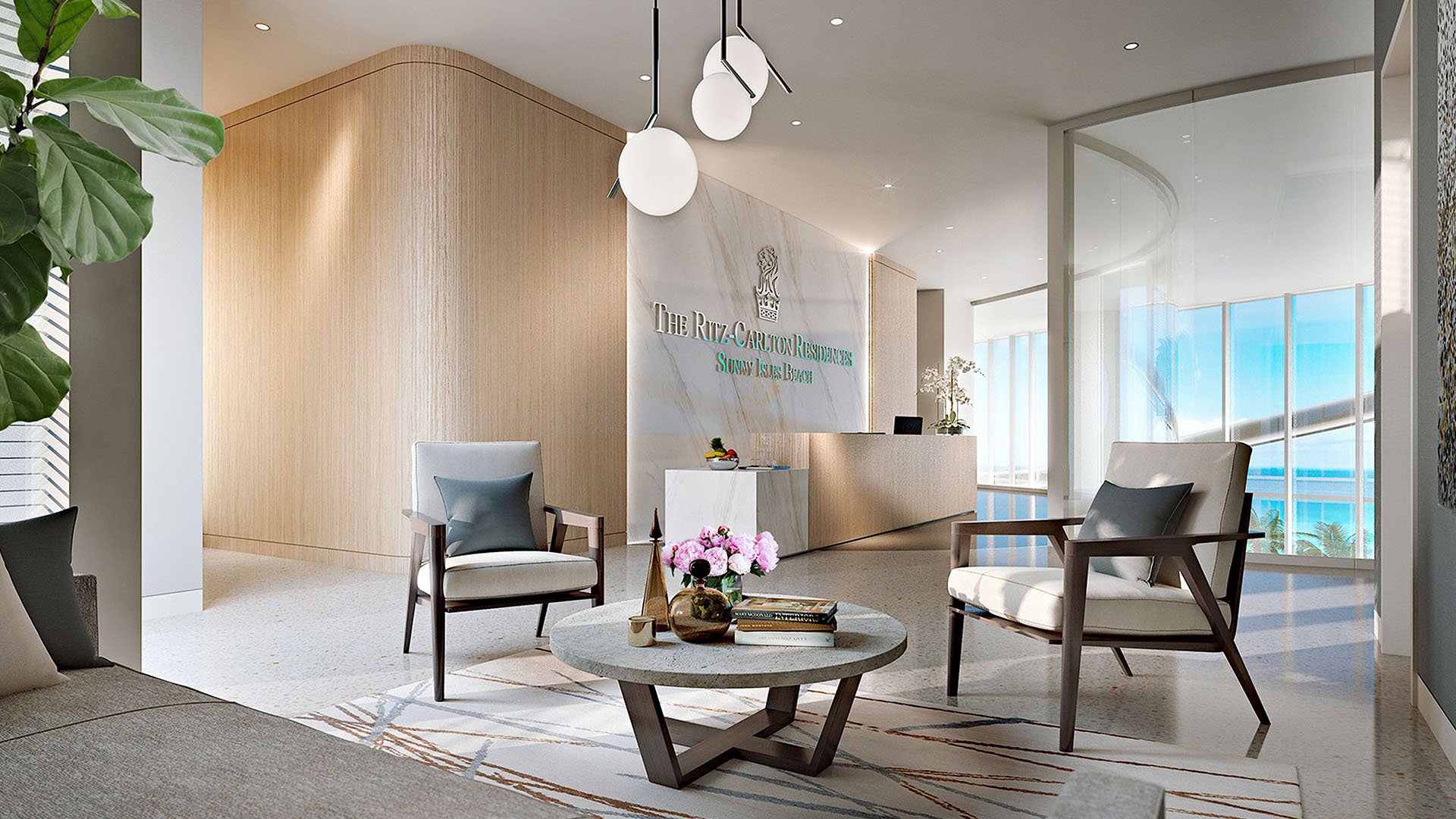
A significant collection changes the brief for a coastal residence. The question is not simply where a painting will hang, but how it will be documented, illuminated, protected, installed, and eventually moved. For buyers in Sunny Isles Beach, that operational layer deserves the same attention as the floor plan and interior finishes.
The Ritz-Carlton Residences® Sunny Isles and St. Regis® Residences Sunny Isles offer distinct starting points. One is a completed property; the other's construction status was listed as under construction on February 26, 2026. That dated status does not establish its status today. Neither property has a publicly established complete collection-management system, museum-grade lighting package, or detailed artwork-installation approval procedure.
The absence of public detail does not mean internal procedures are absent. It is a reason to request them before committing to an installation plan.
The Ritz-Carlton residences at 15701 Collins Avenue were completed in 2020 and comprise 212 residences. Arquitectonica designed the architecture, with interiors by Michele Bönan. For a buyer, the next step is to establish the selected residence's actual conditions and obtain current condominium alteration requirements. Completion does not confirm that existing walls, lighting, or environmental controls suit a particular collection.
St. Regis was announced as two standalone 62-story towers at 18801 Collins Avenue, developed by Fortune International Group and Château Group. Its design team includes Arquitectonica, Patricia Anastassiadis for interiors, and EDSA for landscape design. Approximately 70,000 square feet of residents-only amenities and services are marketed, but amenity scale does not answer conservation or installation questions.
For St. Regis, request the latest construction status, current finish schedules, and the review process for owner-requested changes. Project details remain subject to final plans, permits, and approvals. Treat a proposed lighting or mounting solution as a coordination request-not an included feature-until its scope and acceptance are documented.
A collector's operational brief should begin with an asset register. Recommended fields include artist, title, medium, dimensions, ownership, value, insurance, location, condition, handling history, and conservation needs. These are proposed diligence measures, not confirmed services at either property.
The register should distinguish privately owned works from artwork belonging to the association or another party. Before placing a work outside the private residence, establish who can authorize its location, who insures it, and who pays for maintenance, damage, removal, conservation, and restoration.
A detailed art-governance framework is not publicly disclosed at either property. At St. Regis, an appointed curator, registrar, acquisition committee, and conservation policy are not publicly established. At Ritz-Carlton, a collection-management framework and artwork-installation workflow are likewise not disclosed.
Ask for a named administrative contact and a written allocation of responsibilities. Do not assume a service relationship includes collection oversight. St. Regis services are described as managed by Marriott International, which does not own, develop, or sell the residences. Buyers should separately confirm which entity handles each art-related request.
Museum-grade lighting should be a performance brief, not a stylistic label. Neither property has publicly established artwork-specific illuminance, UV protection, color rendering, or lighting controls sufficient to verify that description.
Commission an artwork-specific review and request illuminance targets, color rendering index, correlated color temperature, dimming controls, glare shielding, and UV and infrared exposure information. Ask the collection's adviser or conservator to identify suitable requirements for the works involved rather than applying a single target to every medium.
The review should also address maintenance access and emergency-lighting coordination. A fixture location that looks elegant in a rendering still requires evaluation for servicing, controls, and its relationship to the installation. Request a written specification connecting the artwork, its proposed position, the fixture, and the control strategy.
The same discipline applies when considering Jade Signature Sunny Isles Beach alongside these residences: evaluate the collection brief independently of the project's design identity. This is a diligence principle, not a claim about that property's lighting provisions.
St. Regis' general legal requirements call for permits and approvals from relevant authorities for improvements, design, and construction. They do not identify an art-specific committee, private-residence artwork rule, or installation procedure. FAA clearance for the towers should not be interpreted as municipal building permission or approval for interior artwork, lighting, or owner alterations.
For either property, ask management to identify the applicable review pathway. Establish who assesses mounting methods, structural loads, electrical work, delivery routes, rigging, common-area protection, insurance, and life-safety compatibility. Do not assume every artwork triggers the same requirements; request a determination for the proposed scope.
A useful submission package would describe the work's dimensions and weight, proposed location, mounting approach, installation team, electrical needs, and handling plan. Ask which supporting drawings, insurance documents, or professional reviews are required before commissioning them.
Keep design acceptance, condominium consent, and any required authority approvals distinct. Obtain written confirmation of the permissions applicable to the work before scheduling delivery or rigging. General project approvals do not resolve the details of an individual installation.
Lighting and mounting are only part of the brief. Request HVAC, humidity, temperature, and leak-detection information for the proposed art-sensitive spaces. Ask how environmental conditions will be monitored and whom to contact if a concern arises. These are recommended questions, not verified capabilities at either residence.
Connect the environmental review to the asset register. A conservator's requirements for a specific work should inform its proposed location and any requested modifications. If a preferred position cannot meet those requirements, resolve the alternative before installation rather than leaving it to the delivery team.
The objective is to document how the residence's actual conditions meet the collection's needs, with clear responsibility for follow-up.
Before purchase or fit-out commitments, request condominium declarations, current alteration rules, approval forms, finish schedules, and lighting specifications. For St. Regis, add confirmation of the latest construction status and identify which design information remains provisional. For Ritz-Carlton, establish the selected residence's existing conditions and current approval requirements.
Bring those documents together with the collection register, proposed lighting brief, environmental review, and installation scope. Ask the relevant parties to resolve responsibility for insurance, damage, maintenance, removal, and restoration in writing. The aim is not administrative complexity, but a residence in which the collection can be enjoyed without unresolved operational questions.
For a discreet perspective on South Florida residences and collection-focused buyer diligence, explore MILLION.
If branded residences are on your mind — as a home or as an allocation — we would be glad to share what we are seeing, privately.
Begin a quiet conversationThe property is located at 15701 Collins Avenue, Sunny Isles Beach, FL 33160. It was completed in 2020 and comprises 212 residences.
St. Regis was announced as two standalone 62-story towers at 18801 Collins Avenue. Its developers are Fortune International Group and Château Group.
It was described as under construction on February 26, 2026. Buyers should request the latest status rather than treating that dated statement as current confirmation.
Neither property's disclosed materials establish a museum-grade lighting package. Artwork-specific illuminance, UV protection, color rendering, and controls require separate confirmation.
Recommended fields include artist, title, medium, dimensions, ownership, value, insurance, location, condition, handling history, and conservation needs. This is a proposed planning measure, not a confirmed property service.
The supplied project materials do not establish an appointed curator, registrar, acquisition committee, or conservation policy. This does not prove that internal arrangements do not exist.
No art-installation permission is established by the tower's FAA clearance. Buyers should confirm the separate condominium and authority approvals applicable to their proposed work.
Ask who reviews mounting, structural loads, electrical work, delivery routes, rigging, common-area protection, insurance, and life-safety compatibility. Obtain a determination for the specific installation scope.
St. Regis materials describe services as managed by Marriott International, but expressly state that Marriott does not own, develop, or sell the residences. Art-related responsibilities should be confirmed separately.
Request condominium declarations, alteration rules, approval forms, current finish schedules, and lighting specifications. Also seek environmental information and written confirmation of responsibility for insurance, damage, conservation, and removal.