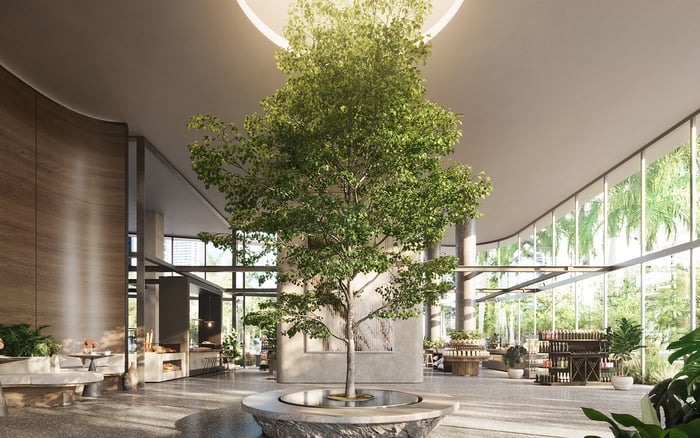
In Brickell, the most persuasive luxury amenity is often not upstairs. It is the first sixty seconds: arrival, street energy, lobby adjacency, and whether a resident can slip into a serious meal without feeling like they are “going out.” ORA by Casa Tua Brickell and Cipriani Residences Brickell both lean into hospitality as identity, but they tend to express it differently at ground level. For buyers weighing these two brands, the right question is less about what is “better” and more about which daily rhythm you want: a residential envelope that blends into a neighborhood dining circuit, or a more self-contained world where the restaurant experience feels like an extension of a private club.
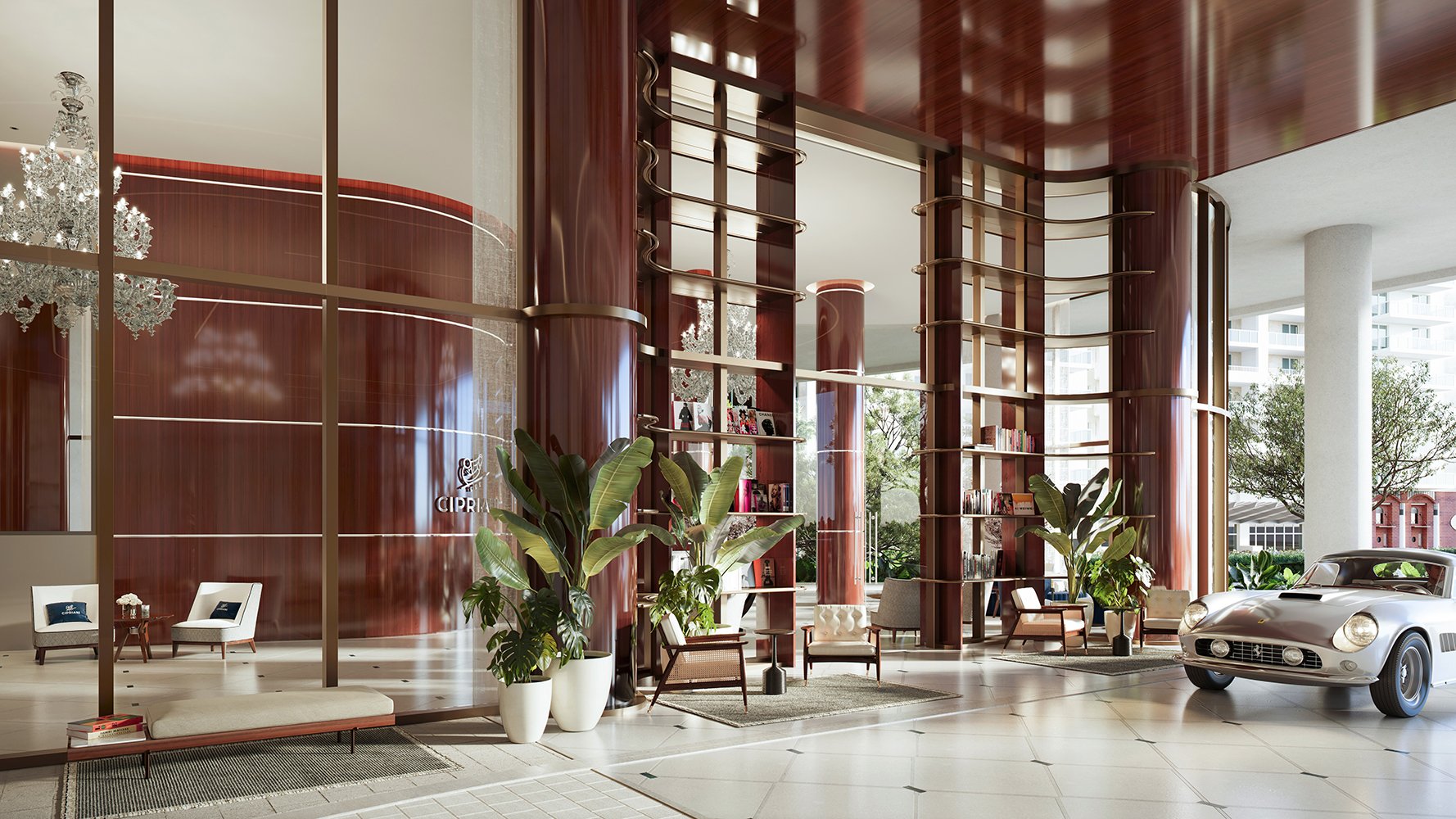
In Brickell, the most persuasive “amenity” is often the one you use without planning. Ground-floor retail and dining sets the tone for everything that follows: how discreet the arrival feels, whether the lobby reads as serene or performative, and how seamlessly residents can move from elevator to espresso to a properly set table.
For ultra-premium buyers, this is not a minor lifestyle perk. It shapes privacy, security posture, weekend foot traffic, and the practicalities of hosting. A street-level restaurant that earns attention can lift an address-only if the design protects residents from the collateral effects of that success.
This is the context for comparing ORA by Casa Tua Brickell and Cipriani Residences Brickell. Both are positioned to deliver a hospitality-forward experience, yet the street-level expression can feel meaningfully different depending on your tolerance for energy, your preference for “membership” versus “neighborhood,” and how you want guests to experience your building.
ORA by Casa Tua Brickell signals a particular way of living: the day is fluid, plans are improvised, and dining is less an “occasion” than an extension of a well-run routine. In buildings with this posture, the ground floor is designed to feel open and lively without tipping into chaos. The strongest executions create a clear threshold-visually inviting from the sidewalk, yet firmly controlled for resident arrival.
Buyers drawn to this profile tend to value optionality. They want to step outside and immediately have choices, and they want the building to feel embedded in Brickell rather than set apart from it. In that sense, the street-level layer becomes part of the identity: you live in Brickell, and the city functions as an extension of home.
The practical question to ask at ORA is how the dining component is orchestrated alongside resident circulation. Look for clean separation between restaurant queues and resident entrances, and a valet plan that does not pull residents into the same cadence as peak dinner turns. The best hospitality-driven towers make this feel effortless-not heavily policed.
If you are also cross-shopping other Brickell towers with strong neighborhood connectivity, it can be useful to compare how different brands handle street-level activation. For example, 2200 Brickell tends to attract buyers who want a refined, resident-first sensibility in an urban setting, while still staying close to Brickell’s dining circuit.
Cipriani’s brand equity is built on consistency, choreography, and an old-world certainty about service. In a residential context, that often translates to a ground-floor dining layer that feels less like a public stage and more like a controlled environment-designed to be predictable, not situational.
For some buyers, this is the deciding advantage. They do not want to guess what the lobby will feel like on a Thursday at 8 p.m. They want a building that holds its tone regardless of season, events, or neighborhood surges. When dining is conceived as an extension of a club-like environment, residents may experience it as “theirs,” even if it is not formally private.
In practice, evaluate Cipriani’s ground-floor experience through the lens of discretion. The ideal delivers energy without friction: no spillover into resident corridors, minimal curbside congestion, and a lobby that never reads as an antechamber to a restaurant. When that balance is executed, the restaurant becomes a true amenity without diluting the residential address.
If your broader short list includes other brand-driven Brickell offerings, compare how each handles the idea of a lifestyle “world.” Baccarat Residences Brickell, for instance, appeals to buyers who respond to high-touch branding and curated arrival experiences, while still wanting the immediacy of downtown-adjacent dining.
The most useful way to compare ORA and Cipriani at ground level is to focus on how design and operations will affect ordinary days.
A luxury retail and dining component is only “luxury” if the curb works. Study the relationship between valet, rideshare drop-offs, and resident vehicles. In the most elegant scenarios, guests arrive without bottlenecks, and residents come and go without feeling as if they are cutting through a scene.
In Brickell-where density and dining popularity can spike quickly-this comes down less to theoretical planning and more to operational discipline.
The most important architectural moment is the threshold. Does the building deliver a clear psychological shift from sidewalk to residence, even with retail present? Or does it feel like you are entering a venue?
Buyers who prefer ORA’s neighborhood-facing energy may accept more street presence, as long as the private realm remains legible. Buyers who prefer Cipriani’s club-like control typically want the threshold to read as more insulated.
It is not glamorous, but it is decisive. A serious dining component introduces sound, scent, and service logistics. Ask how these are handled: loading and deliveries, trash paths, kitchen exhaust, and late-night activity. The goal is simple-your residence should never feel like it sits “on top of” a restaurant.
Luxury buyers notice whether they are treated as the primary client or as part of the audience. The ground-floor dining experience should provide residents with frictionless access, whether that means preferred seating practices, streamlined ordering, or a service culture that recognizes the building as a home-not just a destination.
The difference in feel can be subtle: at one address, you are a familiar face; at another, you are a reservation.
This is the crux. A vibrant ground floor can make a building feel alive and relevant. It can also dilute the sense of retreat many high-net-worth buyers require.
If you want Brickell’s momentum at your doorstep, ORA’s posture may align with your lifestyle. If you want the certainty of a controlled environment, Cipriani’s expression may feel more natural.
Because a Research Pack and publicly available details can never fully capture day-to-day operations, the evaluation should be experiential.
First, visit twice: once during a quiet daytime window and once at peak dinner hours. The contrast will tell you more than any rendering.
Second, simulate your real routine. Arrive by car, then by rideshare, then on foot. A tower can feel perfect in one mode and compromised in another.
Third, pay attention to what you do not notice. The best buildings make logistics disappear: deliveries do not dominate, staff movement is efficient, and the lobby reads as residential even when the restaurant is busy.
If you are also considering other Brickell addresses that emphasize lifestyle programming and strong street presence, it can help to benchmark against a different hospitality concept such as Mercedes-Benz Places Miami, which attracts buyers who like a branded ecosystem and the convenience of integrated daily services.
Ground-floor dining is not only a lifestyle variable. It can shape resale appeal by widening the pool of buyers who want a “complete” building experience. That said, any value lift is not automatic.
A restaurant that becomes a neighborhood magnet can increase cachet, but it can also introduce unpredictability that certain buyers will discount. Conversely, a more controlled, club-like dining environment may read as less “buzzworthy” from the street, yet feel more compelling to privacy-driven purchasers.
The most durable value proposition is usually balance: a ground-floor layer that adds convenience and prestige while protecting the residential core. That is the standard against which both ORA by Casa Tua Brickell and Cipriani Residences Brickell should be judged.
Neither approach is universally superior. The right fit is the one that aligns with how you actually live.
Choose ORA’s style if you want a building that feels plugged into Brickell’s pace, where stepping downstairs can feel like stepping into your neighborhood. This profile often suits buyers who host frequently, keep flexible schedules, and enjoy the social friction of the city.
Choose Cipriani’s style if you want a dining experience that feels composed and consistent, where the building maintains its tone regardless of what is happening outside. This profile often suits buyers who prioritize discretion, predictable service, and a more controlled arrival.
In both cases, insist on clarity around circulation, staffing rhythms, and how the building protects privacy during peak periods. In ultra-luxury, the details are the product.
Which building offers the better “resident-first” dining experience? The better fit depends on whether you prefer a neighborhood-facing scene or a more controlled, club-like atmosphere.
Will ground-floor restaurants make the lobby feel busy at night? They can-unless arrivals and circulation are designed so restaurant activity never spills into resident space.
Is street-level retail a positive for resale in Brickell? Often yes, but only when the building preserves privacy and maintains smooth curb operations during peak hours.
What should I listen for during a peak-hour visit? Focus on noise bleed near entrances, elevator cores, and any areas where guests and residents intersect.
Do deliveries and back-of-house logistics matter for buyers? Yes, because loading, trash routes, and service access can affect quiet enjoyment more than amenities do.
Is a “club-like” dining environment necessarily private? Not always; it can simply mean the experience is designed to feel curated and consistent.
How can I compare two buildings if menus and concepts evolve? Evaluate layout and operations: separation, thresholds, and curb flow typically matter longer than any one concept.
What is the best way to judge curbside congestion? Arrive by car and rideshare during dinner hours and observe whether drop-offs and valet feel choreographed.
Does street energy affect privacy and security? It can; higher foot traffic increases the need for clear access control and well-defined resident-only zones.
If I entertain frequently, which ground-floor setup is preferable? Choose the one that matches your hosting style-either spontaneous neighborhood dining or predictable in-house service.
For a tailored shortlist and next-step guidance, connect with MILLION Luxury.
If branded residences are on your mind — as a home or as an allocation — we would be glad to share what we are seeing, privately.
Begin a quiet conversation