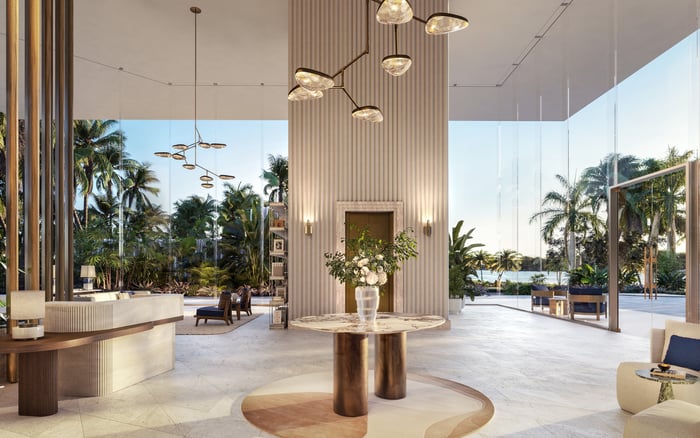
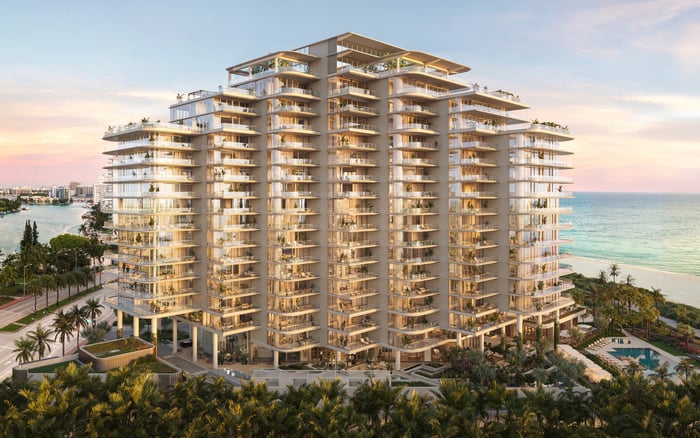
A buyer-oriented comparison of how “speakeasy” style lounges function as privacy infrastructure at two high-profile South Florida addresses, and what that means for daily life, entertaining, and resale.
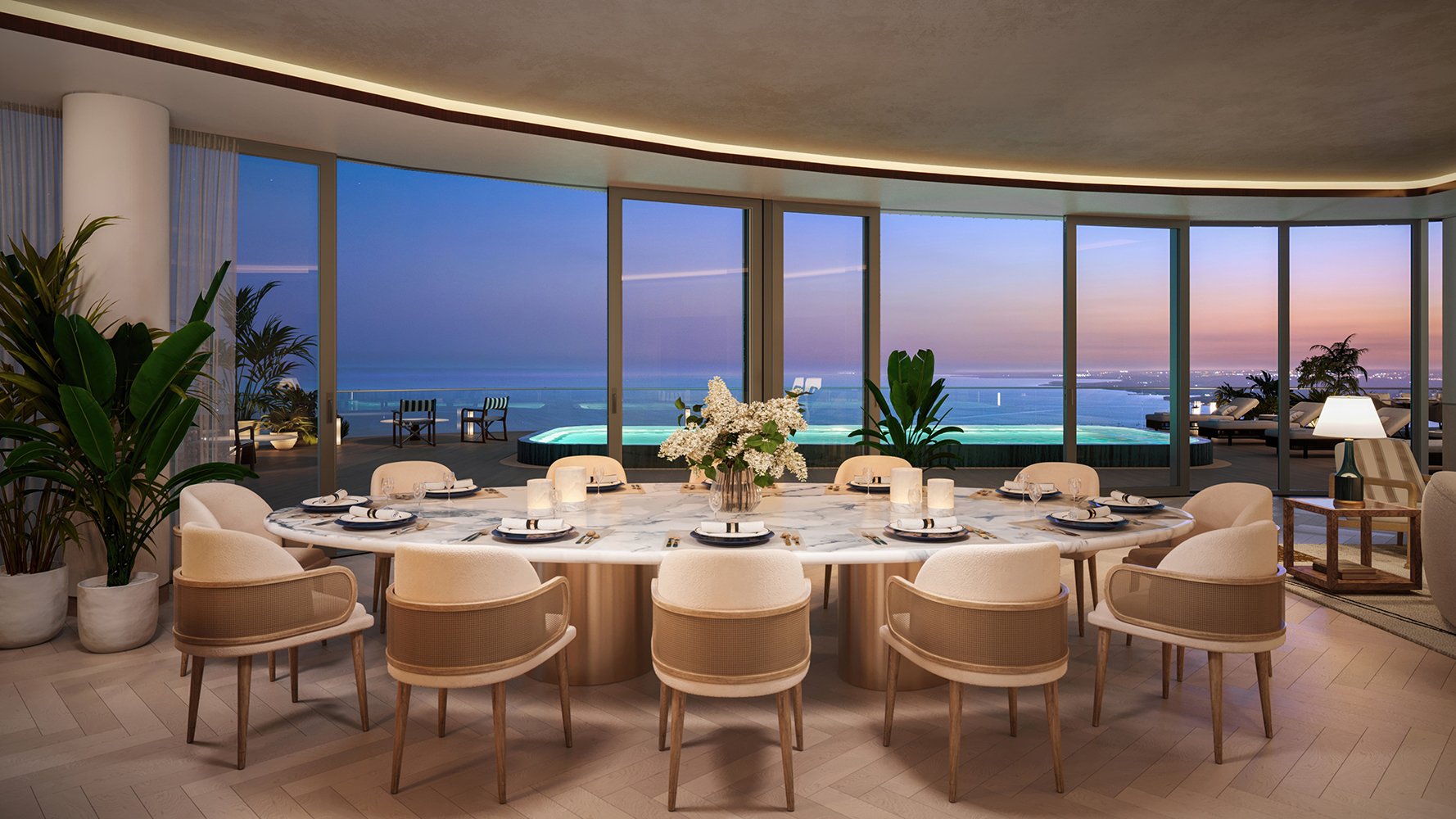
In South Florida’s newest generation of branded and design-forward towers, the private lounge has evolved from a simple amenity into social infrastructure. A speakeasy-style room-typically tucked away, low-lit, and deliberately free of obvious wayfinding-is less about novelty and more about control: who is there, how they arrive, and how seamlessly they’re cared for once inside.
That is the right lens for comparing The Perigon Miami Beach and Cipriani Residences Brickell. Both speak to an ultra-premium buyer, yet they operate in different ecosystems: one anchored by the sensory rhythm of the shore, the other embedded in a vertical, walkable core of business, dining, and nightlife. When a developer or brand gestures toward “speakeasy” energy, it’s signaling intimacy, discretion, and the ability to host without broadcasting.
Because no two projects disclose identical details, the most dependable comparison isn’t the cocktail program or the furniture-it’s the mechanics that create exclusivity: access, adjacency, acoustics, service pathways, and how the space performs on a Wednesday as well as a Saturday.
A private lounge can read as exclusive in marketing and still function like a shared clubhouse in daily life. For a buyer deciding between Miami Beach and Brickell, evaluate five practical criteria.
First, access discipline. Does entry feel resident-forward, or is it built to accommodate a constant stream of guests? A lounge that’s easy to find and heavily programmed becomes more social-and less rare.
Second, circulation and separation. Real discretion depends on thoughtful routes: you should be able to arrive, be seated, and leave without crossing high-traffic amenity corridors. The more a lounge is intertwined with a fitness floor, pool deck, or event lawn, the more it becomes a pass-through.
Third, acoustic privacy. Speakeasy ambience isn’t only lighting. It’s absorption, door seals, and the absence of hard, echoing surfaces. If you can hear the building’s energy, the room isn’t a refuge.
Fourth, service choreography. Exclusivity is often created by what you don’t see: staff entry points, staging areas, and the ability to deliver food and beverage without disrupting the room. A lounge without a practical service plan trends toward self-serve, which erodes the feeling of a private club.
Fifth, guest governance. Can you host a small group without friction? Are there clear rules and booking protocols? The best resident lounges protect owners from amenity overuse while still allowing spontaneous evenings.
This framework is especially relevant when comparing two high-profile addresses in Brickell and Miami-beach, where buyers often oscillate between a city schedule and a shoreline one.
At The Perigon Miami Beach, the promise of a speakeasy-style lounge reads as an extension of the neighborhood’s most valued commodity: the ability to step away from visibility. Miami Beach buyers tend to be sensitive to exposure-whether literal (public beachfront energy) or social (being “seen” in the same venues week after week). In that context, a hidden lounge becomes an in-building alternative to the public room.
The beachside advantage is psychological as much as practical. Residents often use the building as a retreat. The lounge becomes a transition space between ocean-facing quiet and the rest of Miami’s velocity. When executed well, that can feel more exclusive than a larger, more animated club concept because the goal isn’t attendance-it’s control.
Buyers should also consider how a Miami Beach tower’s lifestyle can shift with seasons and weekends. A discreet lounge holds up best when it isn’t the building’s only “scene.” When the room is positioned as a secondary, softly guarded option, it’s more likely to preserve its character over time.
For buyers considering other Miami Beach environments that balance privacy and social access, it can be helpful to compare the ethos of nearby ultra-premium offerings like Five Park Miami Beach, which embodies a different relationship to the city’s energy while still prioritizing elevated resident-only experiences.
At Cipriani Residences Brickell, the speakeasy idea plays differently. Brickell is a district of proximity: offices, dining, and luxury hospitality are layered vertically and horizontally. The appeal isn’t retreat first. It’s access, frictionless scheduling, and the ability to pivot from a meeting to a late dinner without leaving the neighborhood.
In that setting, the most exclusive speakeasy lounge isn’t necessarily the darkest room. It’s the one that lets residents entertain without logistical noise: a place to gather before heading out, to debrief after, or to host a small inner circle without the performance of a public venue.
The Brickell buyer profile also tends to include more frequent, shorter social moments: impromptu drinks, business-adjacent catchups, and intimate celebrations that don’t warrant renting a full private room elsewhere. A speakeasy lounge that supports this cadence-with strong guest governance and a polished service rhythm-becomes a daily luxury rather than an occasional novelty.
For context, Brickell now offers a spectrum of amenity philosophies. A design-driven tower like 2200 Brickell can represent a more residential, less brand-centric approach to private spaces, while iconic waterfront living such as Una Residences Brickell often attracts buyers who treat entertaining as an extension of their home rather than a separate “club” identity.
Exclusivity is situational. The Perigon’s edge is removal. When you live near the beach, your daily environment can include tourists, day-trippers, and high-visibility hotspots. A hidden lounge becomes a controlled interior world-especially compelling for second-home owners and residents who prefer low-contact socializing.
Cipriani Residences Brickell, by contrast, can feel more exclusive through curation and continuity. In an urban district, privacy is less about isolation and more about predictability: knowing the tone of the room, who it is for, and how it’s managed. When a branded lifestyle delivers consistent service standards, the lounge can operate like an extension of a private club, located inside your building.
A simple rule applies: if you define exclusivity as “fewer variables,” Brickell’s best private lounges win when they’re run with discipline. If you define exclusivity as “fewer eyes,” Miami Beach often wins by geography alone.
Buyers often overestimate how often they’ll host large gatherings-and underestimate how often they’ll want a refined place for four to eight people. That’s where speakeasy lounges earn their keep.
Choose The Perigon’s vibe if your ideal evening is quiet and controlled after a beach day, or if you prefer hosting that feels like an invitation into your private world. The beachside speakeasy concept tends to reward intentionality: fewer events, higher-quality moments.
Choose Cipriani Residences Brickell if you host in shorter bursts and want the lounge to function as a staging room for the city. Brickell entertaining is often about tempo: meet, move, and return, without the friction of valet lines or competing reservations.
In both cases, press on the practicalities: can you reserve it, can staff assist, can guests be escorted, and can you keep your residence itself private while still being social.
Speakeasy culture, at its best, is about being known without being seen. In luxury residential life, that translates into controlled recognition: staff who understand residents and guests, a room that doesn’t feel public, and a building culture that doesn’t invite casual drop-ins.
Miami Beach tends to heighten the “seen” factor because of its broader visitor ecosystem. Brickell heightens the “known” factor because the same neighborhood networks recur frequently. Neither is inherently better; the decision comes down to whether you’re protecting anonymity or protecting routine.
If you’re highly privacy-driven, evaluate where the lounge sits relative to the main lobby. The most discreet experiences usually involve layers: a primary arrival for daily life, and a secondary pathway that makes social moments feel separate.
Amenity trends shift, but discretion doesn’t. What dates a speakeasy lounge is over-theming. What sustains it is flexibility: a room that can feel like a quiet library one night and a celebratory salon the next.
For resale, the most durable value proposition isn’t the idea of a speakeasy-it’s the building’s ability to offer private social space without turning it into a high-traffic event venue. Future buyers will ask the same questions you’re asking now: does this feel genuinely resident-only, and does it support the way I actually live in South Florida?
A final strategic note: buyers comparing Miami-beach to Brickell often end up prioritizing the broader neighborhood lifestyle over any single amenity. The lounge is a tie-breaker, not the foundation. The smartest approach is to choose the district that matches your weekly rhythm, then select the building whose private spaces reinforce that rhythm.
Which feels more exclusive in practice, The Perigon Miami Beach or Cipriani Residences Brickell? The Perigon can feel more secluded by setting, while Cipriani can feel more curated through daily service and city cadence.
Does a “speakeasy lounge” usually mean residents-only access? Not always; the real indicator is how access is controlled and whether guests can enter without a resident.
What should I ask during a tour to judge exclusivity? Ask about reservation rules, guest policies, staffing, and whether the lounge has separate circulation from main amenities.
Is a speakeasy lounge more valuable for full-time residents or second-home owners? Both, but second-home owners often value it as a private alternative to public venues during peak seasons.
How important is soundproofing in these lounges? Extremely; acoustic privacy is often the difference between a true hideaway and a themed room near busy amenities.
Will these lounges feel crowded during holidays and major weekends? They can, which is why booking protocols and capacity discipline are central to preserving exclusivity.
Are speakeasy lounges typically suited for business meetings? Yes, if lighting, seating, and service are designed for conversation rather than only nightlife ambience.
Do private lounges add to resale appeal? They can, especially when the space is flexible and managed in a way that protects residents from overuse.
Should I prioritize the lounge over other amenities? No; treat it as a lifestyle enhancer after you’ve validated privacy, location fit, and daily convenience.
How do I decide between Brickell and Miami Beach if I want discretion? Choose Miami Beach for geographic separation and Brickell for a controlled, repeatable routine close to the city core.
To compare the best-fit options with clarity, connect with MILLION Luxury.
If branded residences are on your mind — as a home or as an allocation — we would be glad to share what we are seeing, privately.
Begin a quiet conversation