A buyer-focused guide to terrace ownership at Setai and Faena Residences Miami, separating confirmed Setai features from the maintenance, wind-exposure, and storm procedures that require property-specific written answers.
A terrace can be the most persuasive room in a Miami residence: open sky, a long view, and space to dine beyond the glass. For a discerning buyer, that appeal should come with a clear understanding of maintenance obligations, everyday comfort, and storm preparation. The question is not simply how generous the outdoor space looks, but how confidently it can be owned and used.
At Setai Residences Miami Beach, the confirmed details offer a useful starting point. The property is at 101 20th Street, with oceanfront access in South Beach, and its residential tower is described as 40 stories. Private balconies and floor-to-ceiling impact glass are documented features. None of these details, on its own, establishes who maintains each terrace component or what must happen to outdoor furnishings before a storm.
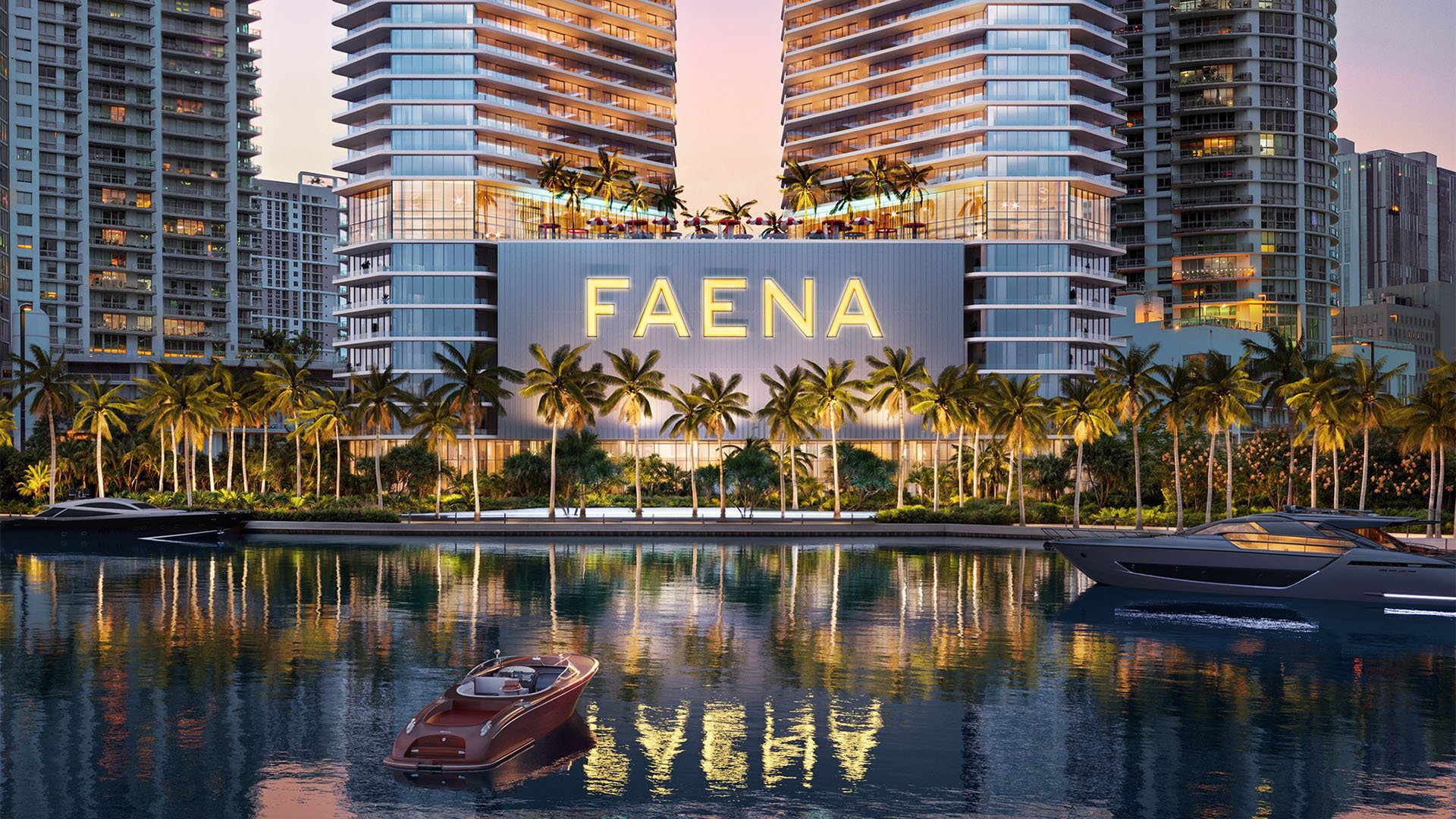
Buyers considering Faena Residences Miami Downtown Miami should begin with documents specific to that project. The Faena terrace details discussed here belong to a different property: Faena House Miami Beach at 3201 Collins Avenue.
Faena House has wraparound outdoor terraces described as Aleros. They connect to the interiors through floor-to-ceiling window-wall and sliding-door systems, with openings described as approximately 12.5 feet. Those architectural details apply to Faena House alone. They should not be used to characterize the Downtown Miami project's terrace dimensions, glazing, maintenance responsibilities, or storm procedures.
The distinction goes beyond the name. A shared brand is no substitute for a residence-specific plan or an association's written requirements. For a Downtown Miami purchase, request the applicable terrace drawings, specifications, governing documents, and any current or proposed operating rules, with their status clearly identified.
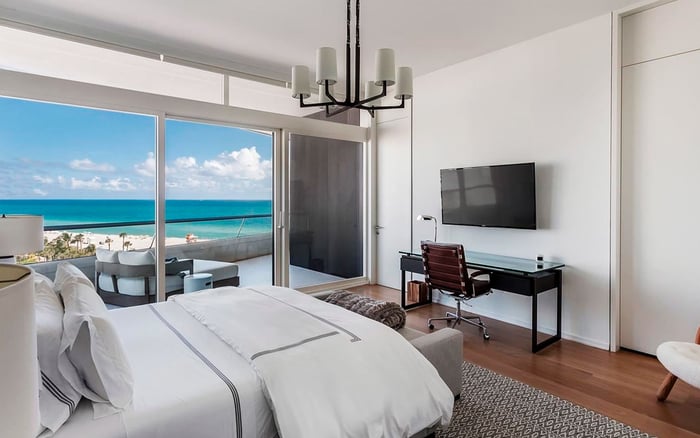
At Setai, the individual residence is a more useful point of comparison than the building name. Unit 3803 is identified on floor 38, with northeast exposure, an open balcony, and ocean and skyline views. Unit 1808 is identified on floor 18, with east exposure and an open balcony. Both are described as having clear impact glass.
Unit 2007 offers another configuration: a large wraparound terrace with northeast exposure and unobstructed ocean views. Unit 2004 is separately described as having an open balcony and clear impact glass. Together, these examples underscore why buyers should not assume that all Setai outdoor spaces share the same layout or orientation.
Compare the exact floor plan with the physical space. Consider where dining furniture would sit, how circulation would work, and whether the proposed arrangement leaves doors free to operate. Treat furnished imagery as a design suggestion, not confirmation that every displayed item or installation is permitted.
Floor and compass exposure are useful identifiers, but neither is a unit-specific wind measurement. The difference between Setai's floor-38 northeast-facing residence and its floor-18 east-facing residence does not establish which terrace will feel calmer or how often either will suit outdoor dining.
Evaluate comfort at the exact residence rather than extrapolating from another unit's view. If access permits, visit at different times and note conditions where seating would be placed. Ask whether a relevant wind assessment is available and whether proposed screens or other interventions require approval. A visit remains a snapshot, not a guarantee of conditions throughout the year.
For Faena Residences Miami, the same discipline applies without borrowing the beachfront property's characteristics. Request information tied to the selected residence's floor, orientation, and terrace geometry. The goal is an informed judgment about usability, not an unsupported promise of wind protection.
Divide terrace maintenance into clear categories before purchase. Ask who is responsible for routine cleaning, surface care, drainage checks, railing upkeep, door servicing, waterproofing, and repairs. The applicable documents and written management clarification should answer these questions; no allocation of responsibility is established here for either property.
At Setai, descriptions include glass railings and tempered, tinted sliding-glass doors, while individual residences also have impact-glass descriptions. These features warrant component-specific questions: who arranges service, which contractors may be used, and what approvals are required before work begins?
Request any available maintenance schedule, service requirements, and records relevant to the residence. Ask how responsibility is assigned when a problem involves both a terrace finish and an underlying component. No terrace-maintenance cost schedule is established here, so a buyer's budget should not rest on an assumed annual figure or presumed inclusion in association charges.
Impact glass is not permission to leave furniture outdoors during a storm. Setai's glazing descriptions establish features, not a furniture-removal policy. A wraparound terrace likewise does not establish whether tie-downs, covers, storage containers, or attachments are allowed.
Request the applicable storm-preparation instructions and ask what activates them. The written answer should distinguish among furniture, cushions, planters, decorative objects, and any other proposed outdoor items. Ask whether removal is required, whether any securing method is authorized, and whether fastening anything to a railing, wall, or terrace surface requires approval.
Establish who communicates instructions and who confirms completion. If a preparation service is offered, request its scope, authorization requirements, charges, and limitations. Resolve these matters before relying on a service; a property's luxury positioning does not establish them. Review any proposed furnishing scheme against the applicable written requirements before installation.
For an owner who travels, terrace readiness deserves the same attention as interior care. Ask who can enter the residence, move outdoor items, and verify that required preparation has been completed while the owner is away. Do not assume that building staff will undertake these tasks automatically.
Before purchasing substantial outdoor furniture, consider where it could be stored if removal is required. Ask whether the proposed arrangement is compatible with access, storage, and preparation instructions. A beautiful terrace should not depend on an unresolved last-minute relocation plan.
Finally, request the relevant terrace rules, maintenance allocations, and storm instructions before committing to a furnishing package. If an answer remains unresolved, keep the question open in the purchase review rather than treating a verbal assurance as confirmed policy. The strongest decision pairs architectural pleasure with clearly understood responsibilities.
For a discreet approach to comparing South Florida residences and their ownership considerations, explore MILLION.
If branded residences are on your mind — as a home or as an allocation — we would be glad to share what we are seeing, privately.
Begin a quiet conversationSetai Residences is at 101 20th Street, Miami Beach, with oceanfront access in South Beach.
No. Individual residences include open balconies and a documented wraparound terrace, with different floors and orientations.
Unit 3803 is identified on floor 38 with northeast exposure, an open balcony, ocean and skyline views, and impact-glass features.
Unit 1808 is identified on floor 18 with east exposure, an open balcony, and clear impact glass.
No such permission is established by an impact-glass description. Obtain the property's applicable written storm-preparation requirements.
The owner-versus-association allocation is not established here. Request the applicable documents and written clarification covering cleaning, servicing, waterproofing, and repairs.
Floor and orientation do not establish unit-specific wind performance. Evaluate the exact residence and ask whether a relevant wind assessment is available.
No. Faena House is at 3201 Collins Avenue in Miami Beach and is distinct from the Downtown Miami project.
No. The documented wraparound Aleros and approximately 12.5-foot openings belong to Faena House and should not be transferred to the Downtown Miami project.
Confirm who is authorized to enter, prepare the terrace, and verify completion under the applicable rules. Do not assume that building staff provide those services automatically.