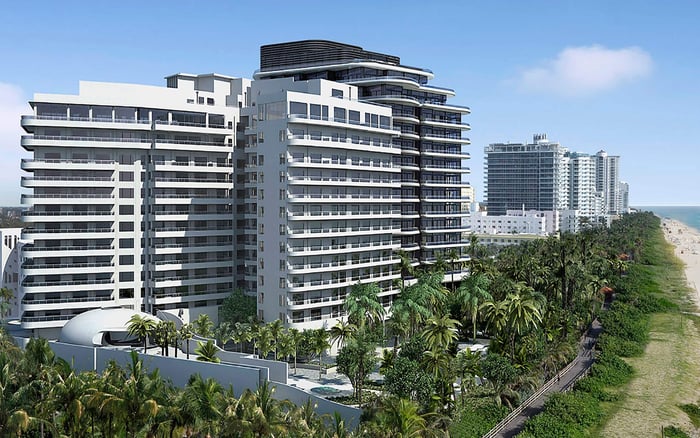
A buyer-focused review of replacement-cost appraisals, storm deductibles, association funding, and unit-owner loss-assessment coverage before purchasing at Faena House Miami Beach.
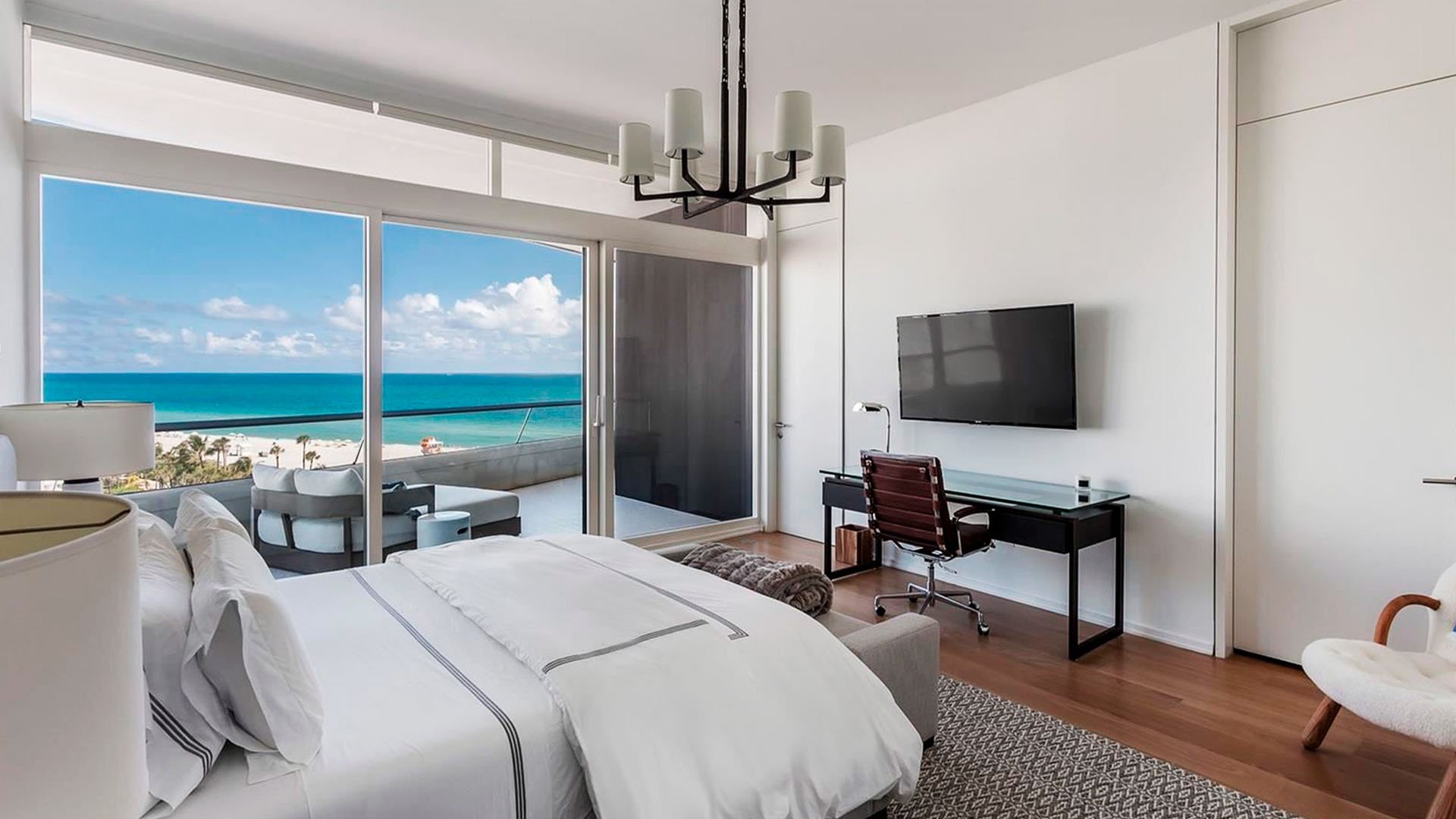
At Faena House Miami Beach, the architectural proposition is clear: an 18-story oceanfront condominium designed by Foster + Partners at 3315 Collins Avenue, Miami Beach, FL 33140. The insurance proposition demands a different kind of attention. Before purchasing, a buyer should understand how the association’s replacement-cost valuation, master-policy deductibles, and the unit’s own coverage work together.
The essential distinction is between an insured building and a fully protected owner. Adequate association limits do not eliminate deductible exposure, and a unit-owner policy does not automatically reimburse every special assessment. A considered acquisition examines both the insurance contract and the association’s ability to fund amounts the insurer will not pay.
Establish Faena House’s current limits, appraisal value, storm deductible, reserves, and assessment position through the actual transaction documents. Neither the architecture nor the purchase price supplies those answers.
Florida Statute 718.111(11) requires condominium associations to maintain adequate property insurance, regardless of the insurance requirements in their declarations. Adequacy is determined using full insurable value or replacement cost. That replacement cost must be established through an independent insurance appraisal, or an update of a prior appraisal, at least once every three years.
For a buyer, the practical task is to compare the latest appraisal and any valuation update with the current master-policy limits. Ask the insurance adviser to reconcile the values and explain any differences. Compliance with the valuation process does not guarantee that every claim will be fully funded.
The word “appraisal” also requires precision. The statutory requirement concerns replacement-cost valuation; it does not establish that Faena House’s policy contains a particular appraisal clause for resolving claim disputes. If such a clause appears in the contract, have counsel review its wording separately, including what it addresses and how it is invoked. A valuation document is not a contractual dispute procedure.
Read a storm deductible as a contract provision, not a headline percentage. Florida’s deductible statute requires hurricane-only deductible provisions to be clear and unambiguous. That does not make “hurricane” and “named storm” interchangeable in a buyer’s review.
Request the complete master policy and endorsements. Identify the event that triggers the deductible, the valuation base to which any percentage applies, and whether the wording applies per occurrence or across multiple storms. Without its defined base and trigger, a percentage is insufficient to calculate exposure.
If the endorsement uses a percentage, apply it only to the valuation base specified there. Do not substitute the building’s market value or the residence’s purchase price. Review any separate flood policy as well; do not assume the storm provisions answer every water-related coverage question.
A buyer comparing Faena House with 57 Ocean Miami Beach should apply the same document-level discipline to each property, without assuming their policies share limits, triggers, or deductible structures.
Florida law permits association property policies to contain deductibles established by the board. Those deductibles must be consistent with industry practice for communities of comparable size, age, construction, and facilities in the same locality. The statutory framework also considers available reserves or the association’s predetermined assessment authority when insurance is obtained.
Here, the review moves from insurance limits to liquidity. Establish the deductible, then identify the funds available to meet it. Ask which reserves can support that obligation and what assessment authority the association has. Do not treat a reserve balance as an unrestricted storm fund without checking its availability.
Next, determine the unit’s allocation under the declaration and governing documents. Do not assume the deductible is divided equally among residences or allocated by purchase price. Follow the sequence: building deductible, available funding, potential assessment, and the unit’s applicable share. Each step requires documentary support.
Oceanfront ownership warrants this distinction even when master-policy limits appear adequate: the deductible remains a separate funding question.
Florida Statute 627.714 requires residential condominium-unit-owner policies to include at least $2,000 in property loss-assessment coverage, subject to statutory conditions. That figure is a legal floor, not a recommended target for a high-value residence.
Coverage applies to assessments resulting from a covered direct property loss, not automatically to every special assessment. The loss-assessment deductible is generally capped at $250 per direct property loss, subject to the statute’s deductible conditions. Coverage is also excess over amounts recoverable under another policy covering the same property.
Have a coastal-condominium insurance broker confirm the HO-6 terms in writing: the loss-assessment limit, applicable deductible, exclusions, and whether assessments attributable to the master policy’s wind or named-storm deductible are covered. A large stated limit offers no assurance if the relevant assessment falls outside the policy’s protection.
The same questions belong in a comparison with Setai Residences Miami Beach. Compare documented coverage and owner exposure, rather than assuming a prestigious address carries a particular insurance outcome.
Loss-assessment protection has an important timing rule: maximum recovery is determined by the coverage limit in force one day before the occurrence that caused the loss. Increasing the limit after a storm does not increase protection for that earlier occurrence.
Multiple assessments arising from the same direct property loss do not multiply the insurer’s applicable limit. A sequence of assessment notices can still relate to one loss and one coverage ceiling. Buyers should distinguish the date of the damaging event from the later dates on which the association issues assessments.
Before closing, identify any pre-existing storm loss, unresolved claim, insurance nonrenewal, or pending assessment. Counsel and the insurance adviser should review those matters alongside the purchase documents. Do not assume a newly arranged policy resolves exposure arising from an earlier event.
Request the complete master policy and endorsements, any separate flood policy, the latest insurance appraisal and updates, budgets, financial statements, reserve information, board minutes, and condominium declaration. Review these materials together; an insurance certificate is not the entire answer.
The purchase decision should rest on a coherent picture: valuation aligned with policy limits, storm terms understood, deductible funding identified, unit allocation established, and personal coverage confirmed before the relevant loss occurs. For a luxury buyer, that clarity is part of the residence’s value, not an administrative afterthought.
For a considered perspective on South Florida luxury ownership, explore MILLION.
If branded residences are on your mind — as a home or as an allocation — we would be glad to share what we are seeing, privately.
Begin a quiet conversationFaena House is at 3315 Collins Avenue, Miami Beach, FL 33140. It is an 18-story oceanfront condominium designed by Foster + Partners.
Florida law requires an independent insurance appraisal or an update of a prior appraisal at least once every three years.
No. It establishes a replacement-cost valuation process; any policy clause addressing claim disputes must be reviewed separately.
No. A deductible can still create owner exposure, depending on available association funding and the unit’s assessment allocation.
Buyers should not assume they are. The policy’s definitions, triggers, valuation base, and treatment of multiple storms must be checked.
Use the valuation base specified in the applicable endorsement, not automatically the building’s market value or the unit’s purchase price.
Residential condominium-unit-owner policies must include at least $2,000, subject to statutory conditions. That minimum is not a recommended coverage target for a luxury residence.
No. It applies to assessments resulting from a covered direct property loss, subject to policy terms and statutory conditions.
An increase does not expand coverage for that earlier occurrence. Maximum recovery is determined by the coverage limit in force one day before the occurrence.
Not when they arise from the same direct property loss. Multiple assessments do not multiply the insurer’s applicable loss-assessment limit.