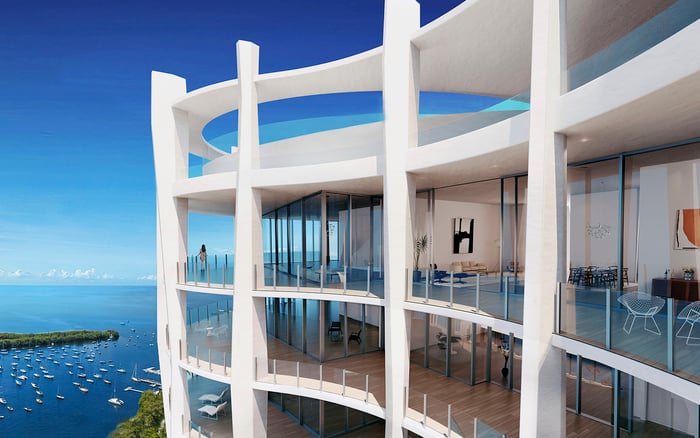
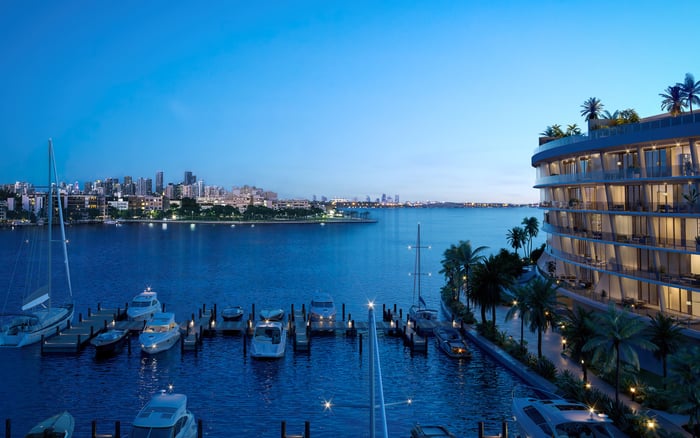
A precise due-diligence framework for evaluating coastal building-envelope risk before closing on a full-service Coconut Grove residence.
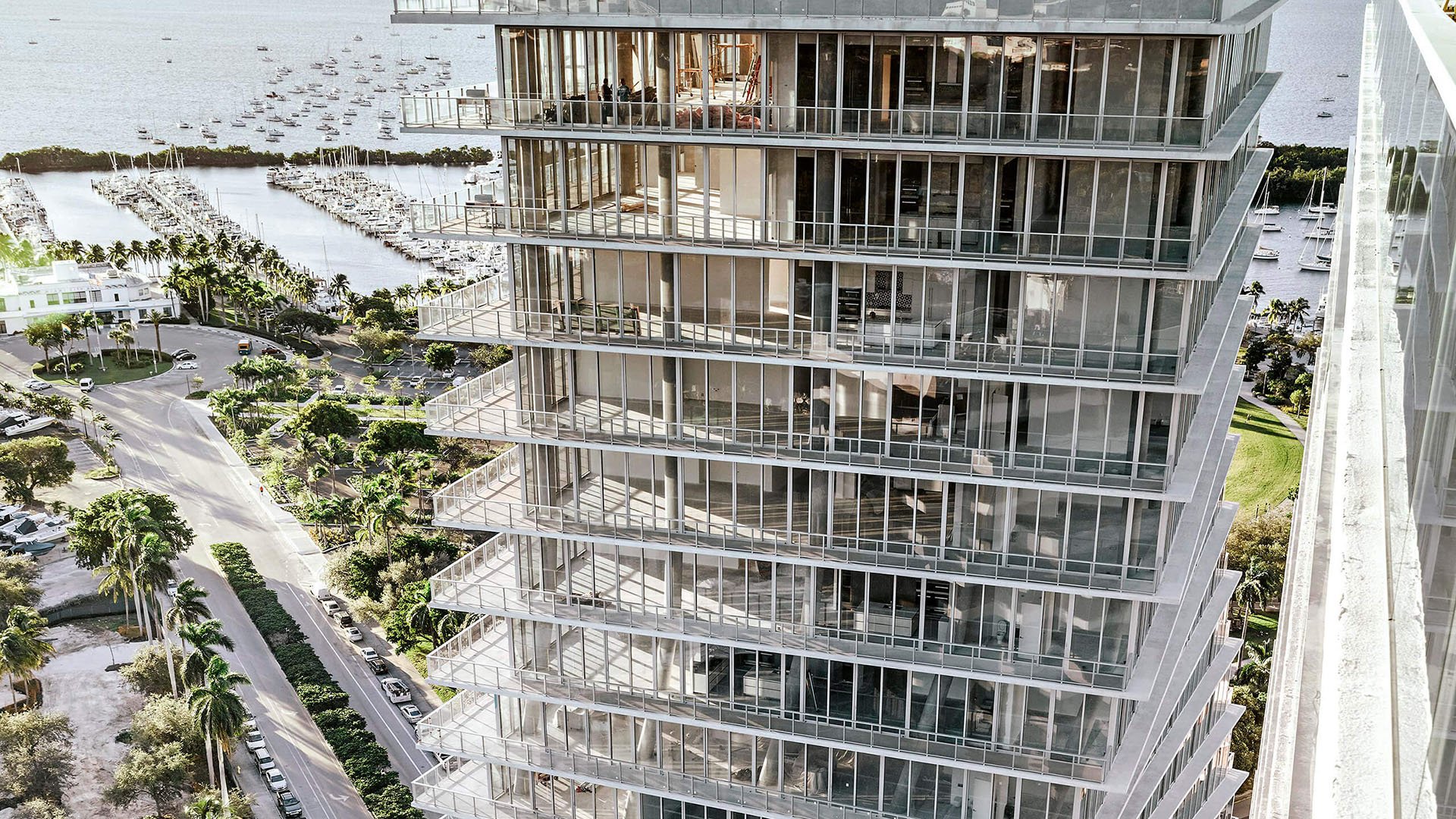
A full-service tower can make ownership feel effortless. Yet in Coconut Grove, the most consequential closing questions often concern components beyond the polished interior: balcony slabs, façade transitions, railing anchors, perimeter sealants, windows, doors, and the waterproofing layers beneath finished surfaces.
Exposure to Biscayne Bay can contribute to chloride-driven rebar corrosion, concrete spalling, metal deterioration, and waterproofing failure. These are not merely cosmetic concerns. They can become capital-risk issues involving restoration programs, reserve demands, special assessments, access interruptions, and disputes over responsibility.
That distinction matters whether a buyer is considering an established residence such as Park Grove Coconut Grove or assessing a newer full-service offering. Age alone does not answer the essential questions. Documentation, installation quality, maintenance history, recurrence patterns, and clearly assigned responsibility are more revealing.
The decisive question is not whether a tower has faced coastal exposure, but how precisely it has managed it.
Begin with the latest milestone-inspection or recertification materials, along with engineering and restoration documents addressing corrosion, cracking, spalling, balcony slabs, columns, railings, window systems, and façade deterioration. Review open findings alongside completed work. A repair invoice without its underlying scope may not establish what was investigated, why the repair was selected, or whether adjacent conditions were included.
Ask when the most recent comprehensive balcony inspection and repair program occurred, who performed it, and whether the scope included soffits, slab edges, railing bases, anchors, and penetrations. Establish whether deteriorated anchors were replaced or re-engineered with corrosion-resistant components and properly sealed. If a program remains under consideration, determine whether it has been studied, designed, bid, reserved for, or proposed for an assessment.
This is central to a buyer’s-guide approach: connecting physical condition to financial consequence. Request board materials, repair contracts, reserve treatment, warranty documents, and written confirmation of whether the association or owner is responsible for windows, balcony finishes, railings, waterproofing, sealants, and resulting interior damage.
A balcony should be examined as more than an outdoor floor. Walk it with the inspector and review the coating or membrane, slope, drains, scuppers, thresholds, perimeter joints, sealants, railing bases, and every visible penetration. Look for ponding, staining, cracks, gaps, residue, failed coatings, and evidence of repeated patching.
Where accessible, inspect the slab underside. Rust staining, cracking, and corrosion-related spalling may be more visible below than from the finished terrace. Ask what waterproofing system is installed, including its membrane or coating type, installation date, installer, maintenance history, renewal schedule, and current warranty status. If elastomeric coatings are present, confirm where they were applied and when renewal is anticipated.
Waterproofing should be understood as a layered envelope, not a single balcony product. Roofs, walls, foundations, walkways, plaza decks, transitions, and penetrations can affect where water travels and where damage ultimately appears. For buyers comparing Four Seasons Residences Coconut Grove with other local options, the useful comparison is not a broad promise of quality. It is the specificity of each system, its maintenance protocol, and the records supporting both.
Ask management to identify every known water-intrusion location from recent years, including balconies, window perimeters, exterior walls, roofs, plaza decks, and below-grade areas. Then narrow the inquiry to the target residence: its stack, floor, orientation, and comparable exposures.
Request claims, engineering findings, repair contracts, and recurrence records. A closed work order does not necessarily establish that the source was corrected. Determine whether moisture returned after heavy or wind-driven rain, whether interior finishes were repeatedly replaced, and whether the repair addressed the entry point rather than only the visible damage.
High-movement joints warrant particular attention. Ask when sealants around windows, doors, handrails, façade seams, and other envelope transitions were last replaced. In waterfront and waterview settings, attractive exposure should be considered alongside the maintenance demands created by salt-laden air, humidity, ultraviolet exposure, and wind-driven rain.
Where project records permit, also ask whether integral crystalline waterproofing admixtures were used in slabs, foundations, or below-grade concrete. Such details do not replace an inspection, but they help establish how water resistance was conceived within the original assembly.
Do not rely on a building-wide statement that windows are impact-rated or under warranty. Obtain the manufacturer, product series, finish, installation date, coastal rating, and applicable approval or certification for every type of window and exterior door serving the residence.
Then secure the original warranties and distinguish the coverage periods and exclusions for glass, frames, finishes, hardware, sealants, installation, and coastal exposure. Salt air, humidity, and ultraviolet exposure can accelerate corrosion of frames, fasteners, hardware, and protective coatings. A warranty may therefore depend on maintenance steps that are easily overlooked.
One impact-product warranty, for example, requires windows and doors to be washed with tap water at least every six months, with service invoices retained. The broader lesson is straightforward: read the warranty covering the installed product and match every maintenance requirement to evidence. Ask for cleaning records, invoices, photographs, and service histories rather than accepting a general assurance.
Impact sliders require their own file. Request records for roller replacement, track care, hardware replacement, weatherstripping renewal, perimeter sealant work, and weep-hole cleaning. Operate every panel and note drag, noise, uneven movement, corrosion, failed finishes, or water residue. A standard unit inspection may identify symptoms, but unresolved staining or recurring leakage can justify review by a qualified engineer or building-envelope specialist.
At Grove at Grand Bay, specifications include Duranar-coated metal framing, factory sealing, and custom door rollers. Those details create productive questions for any closing: What finish protects the installed framing? Which components were factory-sealed? Are replacement rollers proprietary, available, and covered?
The same discipline applies when evaluating Vita at Grove Isle or another bay-oriented residence. Project identity should begin the inquiry, not conclude it. The closing file should connect the advertised system to the installed product, the applicable warranty, the maintenance record, and the party obligated to repair it.
Before the deposit becomes nonrefundable or the transaction closes, organize findings into four categories: confirmed condition, unresolved investigation, near-term work, and responsibility. For each issue, identify the controlling document, responsible party, estimated timing if disclosed, reserve treatment, warranty status, and recurrence history.
Pay particular attention to upcoming balcony restoration, façade coating, waterproofing, sealant, and window projects. Determine whether each has merely been discussed or has advanced through design, bidding, funding, or assessment. Written answers are more useful than verbal summaries, especially when ownership responsibility may turn on declarations, maintenance provisions, or the location of a failed component.
The goal is not to demand a building untouched by coastal conditions. It is to understand whether the tower has inspected, documented, maintained, funded, and warranted its envelope with appropriate rigor. For discreet representation and disciplined coastal due diligence, connect with MILLION.
If branded residences are on your mind — as a home or as an allocation — we would be glad to share what we are seeing, privately.
Begin a quiet conversationBay exposure can contribute to chloride-driven rebar corrosion, concrete spalling, and deterioration of metal components. Those conditions may lead to restoration costs, assessments, and access disruption.
Request current inspection, engineering, restoration, water-intrusion, repair, reserve, warranty, and assessment records. Focus on findings involving balconies, façades, railings, windows, and concrete deterioration.
The review should cover coatings or membranes, drainage, scuppers, thresholds, joints, sealants, railing bases, penetrations, slab edges, and accessible slab undersides.
Rust staining, cracking, and corrosion-related spalling may be visible underneath even when the finished balcony surface appears acceptable.
Confirm the system type, installation date, installer, maintenance history, renewal schedule, and warranty status. Also examine transitions and penetrations across the broader building envelope.
Request known locations, claims, engineering findings, repair contracts, and recurrence records for the residence's stack, floor, and comparable exposures.
Check separate terms and exclusions for glass, frames, finishes, hardware, sealants, installation, and coastal exposure. Verify that required maintenance can be proven.
Look for roller, track, hardware, weatherstripping, sealant, and weep-hole maintenance records. Every panel should also be operated and visually inspected.
Responsibility can differ among the association and unit owner. Obtain written confirmation covering windows, railings, waterproofing, sealants, finishes, and resulting interior damage.
Unresolved staining, ponding, spalling, recurring leaks, or unclear repair scopes may warrant review by a qualified engineer or building-envelope specialist.