A discreet decision framework for Chicago buyers weighing cash against portfolio financing for a Key Biscayne acquisition, with emphasis on liquidity, timing, property fit, and long-range flexibility.

For a Chicago buyer, acquiring a residence in Key Biscayne is not simply a choice between writing a check and securing a mortgage. It is a portfolio decision that touches liquidity, timing, ownership structure, tax coordination, and the intended life of the home. The right answer can vary depending on whether the purchase is a second home, a future primary residence, or a long-horizon investment held for family use.
Cash may offer a cleaner path to closing, while portfolio financing may keep more capital invested or available for other priorities. Neither route is inherently superior. The stronger strategy is the one aligned with the buyer’s balance sheet, tolerance for complexity, and plans after closing.
That is why the financing conversation should begin before touring. Capital planning is part of property selection, not an administrative step added after negotiation.
A cash offer can reduce financing-related variables in a transaction. For a buyer who values speed, privacy, or a straightforward closing structure, that simplicity may be meaningful. It can also eliminate the need to synchronize lender review with the purchase timeline.
The tradeoff is concentration. Moving a substantial amount into residential real estate can reduce immediately available liquidity and alter the broader allocation of a family portfolio. Buyers should test the decision against near-term commitments, planned investments, renovation or furnishing budgets, insurance, carrying costs, and reserves. A purchase that feels comfortable at closing should remain comfortable once the residence is fully operational.
Cash also need not be a permanent capital decision. Some buyers may explore financing after closing, although availability, terms, timing, and suitability must be confirmed with their advisers and lender rather than assumed in advance.
Portfolio financing can appeal to buyers who prefer not to liquidate investments solely to fund a real-estate purchase. Depending on the buyer and institution, the discussion may consider the full financial relationship rather than the property in isolation. That can create flexibility, but it also introduces underwriting, documentation, valuation, and timing considerations.
The essential comparison is not simply an interest rate versus an expected investment return. A prudent review also considers taxes, volatility, collateral requirements, cash-flow demands, loan duration, prepayment provisions, and the consequences of changing market conditions. Those variables belong in a coordinated conversation with lending, legal, tax, and investment professionals.
Before submitting an offer, buyers should know which conditions could affect closing and which documents will be required. A prearranged financing path may help establish confidence, but it should not be presented as equivalent to cash unless the contract and advisers support that characterization.
Capital strategy should respond to the asset itself. A completed condominium, a home requiring extensive work, and a property with a longer closing horizon can create distinct funding priorities. Association review, insurance planning, inspections, title work, and ownership documents may also affect the sequence of decisions.
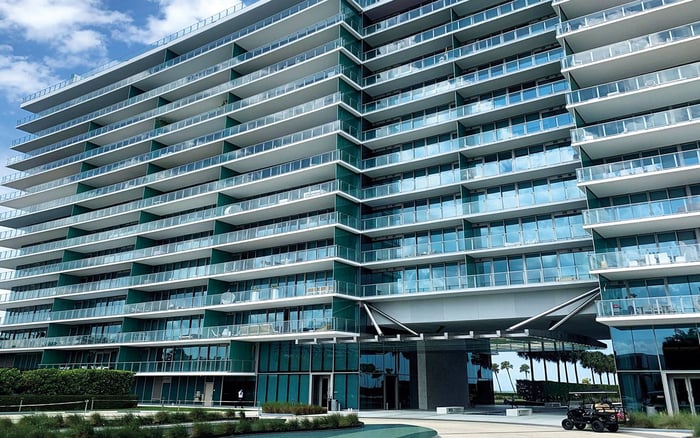
Within Key Biscayne, Oceana Key Biscayne can serve as a reference point for buyers evaluating condominium living on the island. The relevant question is not whether a recognizable address deserves cash or debt. It is whether the particular residence, contract, carrying profile, and intended hold period suit the buyer’s preferred capital structure.
Waterfront ownership can also invite comparisons beyond the island. Buyers weighing privacy and access may examine The Residences at Six Fisher Island, while those considering a lush mainland setting can use Park Grove Coconut Grove as a contrasting frame. A beach-oriented alternative such as Apogee South Beach may further clarify which lifestyle qualities justify tying up capital.
A cross-state purchase benefits from a shared timetable. Florida real-estate counsel, tax advisers, wealth managers, insurance professionals, and any lender should understand the proposed ownership structure and anticipated use. The goal is not to add ceremony, but to prevent one decision from undermining another.
Chicago buyers should also distinguish between purchasing power and deployable liquidity. Assets may be valuable without being immediately suitable for closing. Sales, transfers, pledged positions, entity funding, and approval processes can carry different lead times. Establishing who will own the residence, where the funds will originate, and what must occur before closing can make the offer strategy more deliberate.
Tax residence and domicile questions require personalized legal and tax advice. Buying in Florida, by itself, should not be treated as a substitute for that planning. The intended pattern of occupancy, records, and broader personal circumstances merit review before assumptions are built into the transaction.
Before choosing cash or portfolio financing, buyers can ask five concise questions: How much liquidity should remain after closing? What closing date is realistic? Which contingencies are essential? How long is the expected hold? What event would make refinancing, repayment, or a future sale desirable?
The answers create a clear hierarchy. If certainty and a compressed timeline dominate, cash may be attractive. If preserving liquidity and maintaining portfolio continuity matter more, financing may deserve priority. Buyers may also explore a hybrid approach with advisers when they want a clean acquisition without making the initial capital choice irreversible.
Negotiating posture should follow verified readiness. Proof of funds, lender coordination, entity documents, and signing authority are best organized before the preferred property appears. In a discreet luxury transaction, preparation is often more valuable than improvisation.
Is cash always the stronger choice in Key Biscayne? No. Its value depends on liquidity priorities, timing, contract terms, and the buyer’s broader plan.
Can portfolio financing help avoid selling investments? It may, subject to lender approval, collateral requirements, and the buyer’s complete financial profile.
Should financing be arranged before touring residences? Early preparation can clarify purchasing capacity, documentation needs, and a realistic closing schedule.
Does a cash purchase eliminate due diligence? No. Inspections, title review, association review, insurance planning, and legal guidance remain important.
Can a buyer finance the property after a cash closing? That may be possible, but future availability and terms should never be assumed.
Does buying a Florida home establish tax residency? Buyers should obtain individualized legal and tax advice rather than relying on the purchase alone.
Should the home be purchased personally or through an entity? Ownership structure should be reviewed with legal and tax advisers before the contract is signed.
How does intended use affect the strategy? Seasonal use, future relocation, family occupancy, and holding period can change liquidity priorities.
What should be ready before making an offer? Prepare funds documentation, lender contacts, ownership details, signing authority, and adviser coordination.
Is a hybrid cash-and-financing strategy worth considering? It can be, when flexibility matters and advisers confirm the structure is appropriate.
To compare the best-fit options with clarity, connect with MILLION.
If branded residences are on your mind — as a home or as an allocation — we would be glad to share what we are seeing, privately.
Begin a quiet conversation