Casa Bella and Fendi Château present distinct approaches to residential arrival. A buyer-focused comparison separates documented access features from the guest, staff, and elevator policies that deserve closer examination.
The most revealing luxury-home tour may begin before the residence door opens. For a buyer who values discretion, the essential questions are who can enter, where visitors wait, and how access from shared space to the private home is controlled. An elegant arrival and a carefully managed arrival are related ambitions, but they are not interchangeable.
Casa Bella by B&B Italia and Fendi Château Residences offer a useful comparison. One is marketed as a 306-residence Downtown Miami tower with biometric elevator access and private vestibules. The other is a smaller oceanfront Surfside condominium with a gated entrance, 24-hour security, and private elevator entry. Neither description alone establishes entirely resident-only circulation or fully separate routes for guests and staff.
The buyer's question, then, is not which building sounds more secure. It is how each documented feature supports the household's routine-and which operating details need confirmation before purchase.
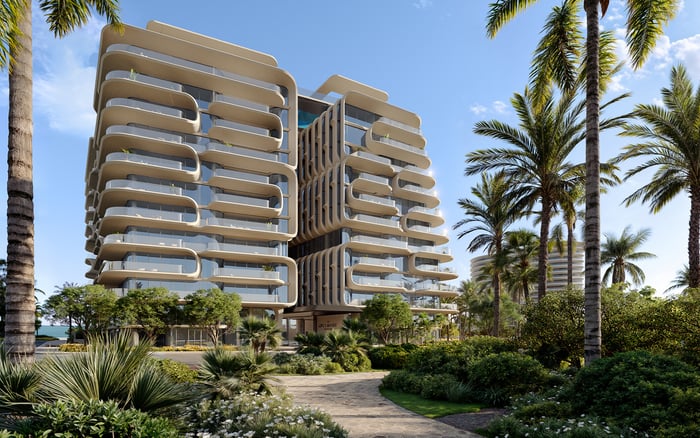
At Casa Bella by B&B Italia Downtown Miami, the stated residential specification includes two private elevators and a private vestibule for every residence. Biometric elevator access control is also specified. Together, these features emphasize the controlled transition into the home.
The terminology warrants scrutiny. Casa Bella's elevator banks are also described as private or semi-private. Buyers should reconcile that wording with the two-private-elevator specification for the residence under consideration. Neither description should be read as proof of exclusive shafts or cars dedicated to one household.
A private vestibule is the space at the residence threshold. Elevator-bank configuration defines the system serving that threshold. Access permissions determine who may use it. These are three distinct layers; a persuasive sales description is no substitute for understanding each one.
Biometric access raises practical questions. Ask how residents are enrolled, how visitors receive authorization, and what happens when the primary credential cannot be used. The specified technology does not establish fallback procedures, visitor escort requirements, or floor permissions. Review those details alongside the residence plan rather than leave them as administrative matters for later.
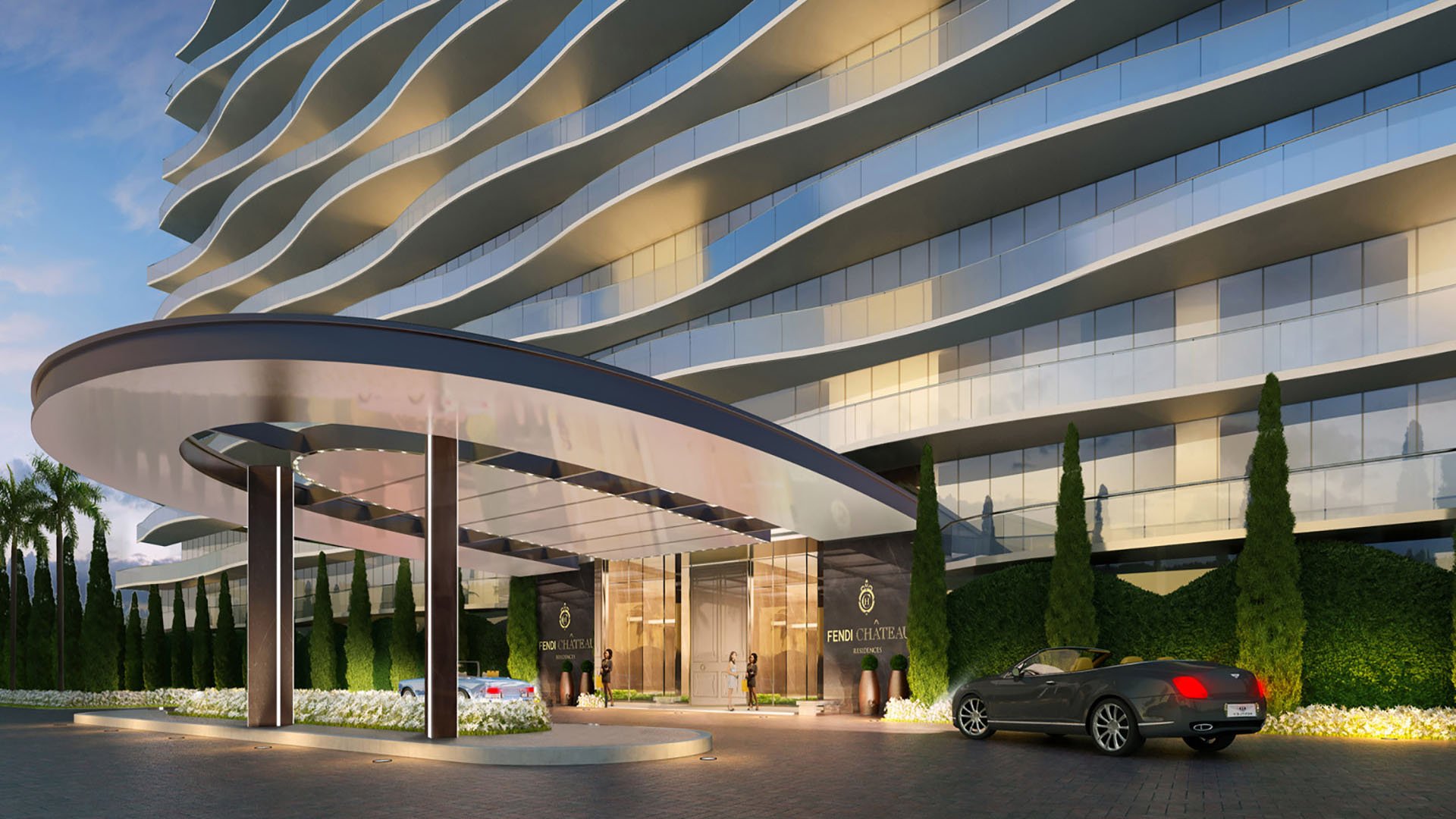
At Fendi Château Residences Surfside, the arrival sequence begins with a documented gated entrance and 24-hour security. Valet and concierge services are also listed. The property, at 9349 Collins Avenue, is described as approximately 12 stories with 58 residences and no hotel component.
That smaller residential scale distinguishes it from Casa Bella, but scale alone is not a security measure. Residence count does not establish how many visitors arrive at once, where they are received, or whether their movement overlaps with residents. Nor should the absence of a hotel component be mistaken for the absence of invited guests or service personnel.
Private elevator entry is specified for all residences, and six elevators are listed in the lobby. These details do not establish how the elevators are assigned or whether individual cars are reserved for residents, visitors, or service activity. The next step is to request the arrangement applicable to the chosen home.
East-to-west flow-through floor plans are also described. Buyers should examine the relationship between the private entry and interior rooms on the actual plan, without assuming that a flow-through layout creates a separate service route. Shabbat elevators are listed as well; households for whom that feature matters should confirm its operation and associated access arrangements.
For an owner who entertains, privacy is not necessarily about excluding guests. It is about admitting them deliberately while retaining control over access to the residence. A gracious arrival sequence deserves as much scrutiny from the visitor's perspective as from the owner's.
At Fendi Château, indoor and outdoor dining areas are expressly designated for residents and their guests. That is a meaningful use restriction, but its scope is specific. It does not establish the same restriction for every amenity or explain the route a dining guest takes through the building.
At both properties, buyers should ask where a guest checks in, who authorizes onward access, and whether that authorization is limited to a destination or time window. Ask, too, how arrangements differ when the owner is away. These are questions to resolve, not policies to assume from private-entry language.
The same distinction applies to staff and deliveries. Neither private elevator entry nor a gated entrance proves that domestic staff, contractors, and couriers follow separate paths. Buyers seeking that degree of separation should request explicit confirmation rather than infer it from the overall level of luxury.
A productive review tests ordinary situations rather than abstract assurances. Consider a resident returning while dinner guests arrive, a household employee reporting for work, and a delivery requiring acceptance. Ask management to explain each sequence from entrance to final destination, including where authorization occurs and where people wait.
Then consider an exception: an unavailable credential, an owner who cannot answer an access request, or an elevator temporarily out of service. The objective is to understand how access and privacy are maintained when the routine changes. Casa Bella's biometric specification makes the credential question particularly relevant. Fendi Château's gate, concierge, and valet services warrant a closer look at the handoffs between those functions.
For a broader Downtown Miami shortlist that includes One Thousand Museum Downtown Miami, apply the same residence-specific questions without assuming equivalent elevator or arrival arrangements. Consistent questions yield more useful comparisons than matching amenity labels.
Before committing, request the applicable floor plan, clarification of elevator-bank service, and written guidance on guest and service access. Distinguish architectural specifications from operating rules: the former describe the physical arrangement; the latter explain how people may move through it.
Casa Bella's specified private vestibules and biometric elevator controls emphasize the residential threshold. Fendi Château's gated entrance, 24-hour security, residential-only character, and private elevator entry describe a different combination of access features. Neither supports a blanket claim of superior security or complete guest separation.
For the discerning buyer, the strongest fit is the home whose physical layout and confirmed procedures align with daily life. Privacy becomes more tangible when the route home, the welcome extended to guests, and the limits on onward access are clearly understood.
Explore South Florida residences through a more discerning buyer lens with MILLION.
If branded residences are on your mind — as a home or as an allocation — we would be glad to share what we are seeing, privately.
Begin a quiet conversationCasa Bella is marketed as a 306-residence condominium tower in Downtown Miami.
The stated specification includes two private elevators and a private vestibule for every residence, together with biometric elevator access control.
The elevators are described both as private and as serving private or semi-private banks. Buyers should confirm the configuration serving their particular residence rather than assume exclusive cars or shafts.
Fendi Château is an oceanfront condominium at 9349 Collins Avenue in Surfside, Florida 33154.
Fendi Château is described as approximately 12 stories with 58 residences, compared with Casa Bella's marketed 306 residences. That difference does not establish a security ranking.
Fendi Château is described as residential-only, without a hotel component. That does not mean invited guests or service personnel are absent from the building.
Listed features include a gated entrance with 24-hour security, valet, concierge, and private elevator entry to all residences.
No. Private entry does not establish exclusive elevator shafts, resident-only use, or fully separate guest and staff routes.
The indoor and outdoor dining areas are expressly designated for residents and their guests. That restriction should not automatically be extended to every amenity.
Buyers should clarify visitor authorization, floor permissions, escort requirements, delivery routes, and service-elevator separation. At Casa Bella, biometric fallback procedures also warrant confirmation.