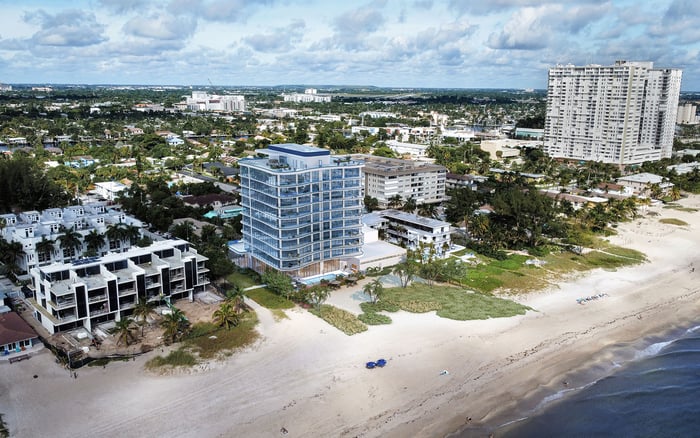
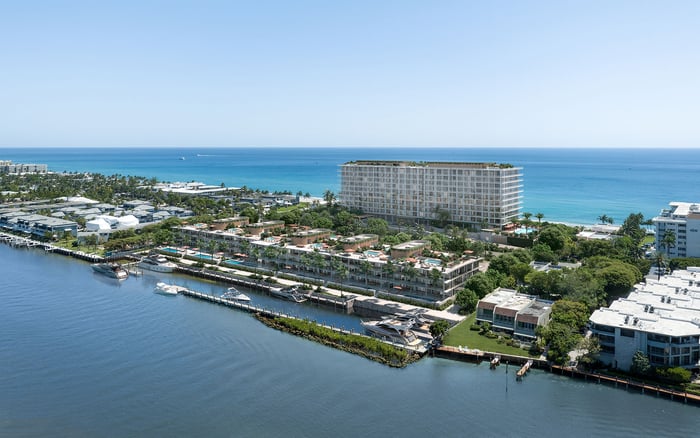
A carefully sequenced Hillsboro Beach purchase can align Florida residency, homestead filing, portability review, and the first post-sale property-tax assessment.

For a buyer moving from Zurich to Hillsboro Beach, the decisive tax-planning question is not simply when the Florida purchase closes. It is whether the buyer owns the residence and has established it as a permanent home on January 1 of the year for which homestead is claimed. In Broward, the timely filing deadline is generally March 1 of that same tax year.
That sequence can make a year-end closing significant. A buyer who completes the purchase and genuinely establishes permanent residence by January 1 may be positioned to apply for that year. Someone who closes or makes the home permanent after January 1 will generally wait until the following tax year for homestead.
The seller’s Zurich address matters less than the buyer’s Florida residency date and prior Florida homestead history.
The practical principle is simple: treat the January 1 residency test as a transaction milestone, not a post-closing formality. Confirm documentary requirements and filing procedures directly with the Broward County Property Appraiser, particularly if the move, title structure, or residency evidence is complex.
Florida homestead and Save Our Homes portability are related, but they are not interchangeable. The homestead exemption can reduce the assessed value of a qualifying primary residence by up to $50,000, although part of that exemption does not apply to school-district taxes. Once a property is homesteaded, the Save Our Homes framework generally limits annual increases in assessed value to 3% or the applicable Consumer Price Index change, whichever is lower.
Portability addresses a different issue. It allows an eligible owner to transfer up to $500,000 of the assessment difference from a former Florida homestead to a new Florida homestead. That difference is the gap between the former property’s just or market value and its capped assessed value.
Selling in Zurich does not, by itself, create a portable Florida benefit. If the Swiss residence was the buyer’s only previous home and the buyer never held a Florida homestead, there is no Save Our Homes assessment difference to transfer. The buyer may still qualify for homestead in Hillsboro Beach, but the Florida residence begins without portability from Zurich.
Some internationally mobile buyers maintained a Florida primary residence before relocating to Switzerland. If that former home carried Florida homestead, its assessment history may create an eligible portability amount. All owners receiving homestead on the former property must abandon that homestead before the assessment difference can be transferred.
The new Florida homestead must generally be established within three tax years after the former homestead is abandoned. For example, if the former property was last homesteaded in 2024 and abandoned during that year, the new homestead would generally need to be established by January 1, 2027.
Portability should be requested when the new homestead application is filed. The standard application is Form DR-501T, submitted to the property appraiser in the county of the new home. For a Hillsboro Beach purchase, both homestead and portability applications go to the Broward County Property Appraiser, generally by March 1 of the benefit year.
Where spouses or former spouses need to allocate their respective shares of a portability benefit, Form DR-501TS may be relevant before the transfer application. This is an area where ownership history should be reviewed before closing rather than reconstructed near the filing deadline.
A newly purchased Hillsboro Beach residence is first appraised at just value. Any approved portability amount is then applied in determining assessed value. Portability does not transfer the former home’s tax bill, millage rate, or homestead exemption, and it does not affect special assessments, condominium charges, or taxes connected with the Zurich sale.
This distinction is especially important in an ultra-premium acquisition. The seller’s current property-tax bill may reflect years of capped assessment growth and should not be treated as the buyer’s forecast. A disciplined pre-closing analysis begins with anticipated reassessment, then models any supportable portability benefit and applicable exemption.
If the new home’s just value equals or exceeds that of the former Florida homestead, the full assessment difference may generally transfer, subject to the $500,000 cap. If the buyer is moving into a lower-value Florida property, the transferable difference is calculated proportionally and remains subject to the same cap. Obtain an estimate before closing rather than assuming the maximum will apply.
After homestead and portability are approved, the Save Our Homes cap operates prospectively. It does not retroactively cap earlier years during which the Hillsboro Beach residence was non-homestead property.
The intended use of the home is fundamental. A Hillsboro Beach property retained as a second home or investment does not qualify for homestead or the Save Our Homes cap. Eligible non-homestead property generally has a separate 10% assessment-growth cap, but that cap does not apply to school-district levies.
For buyers focused on oceanfront living, Rosewood Residences Hillsboro Beach places the tax discussion directly within the target municipality. Buyers widening the search may also compare Armani Casa Residences Pompano Beach and The Ritz-Carlton Residences® Pompano Beach, while Four Seasons Hotel & Private Residences Fort Lauderdale offers another Broward reference point. Each potential purchase requires its own assessment and residency analysis.
This is also why ownership structure should be settled with advisers before title is taken. The residence must satisfy the permanent-home standard, and a plan designed around occasional occupancy should not be modeled as though homestead were assured.
A Zurich seller seeking the earliest available Florida benefits should work backward from January 1. The plan should allow enough time to close, take ownership, establish the property as the permanent residence, assemble residency documentation, resolve any former Florida homestead, and prepare the applications.
By March 1, the timely homestead filing and any portability request should generally be complete. Late-filing provisions and annual administrative details can vary, so deadline confirmation belongs on the closing checklist. The tax adviser, estate-planning counsel, closing team, and property appraiser should be aligned before year-end when immediate eligibility is a priority.
The most conservative budget assumes reassessment without unverified portability, excludes homestead until eligibility is established, and treats the seller’s tax history as context rather than a promise. That approach preserves flexibility while allowing approved benefits to improve the final position.
For discreet guidance on a Hillsboro Beach acquisition and its closing strategy, connect with MILLION.
If branded residences are on your mind — as a home or as an allocation — we would be glad to share what we are seeing, privately.
Begin a quiet conversationYou generally must own the property and establish it as your permanent residence by January 1 of the applicable tax year.
The timely filing deadline is generally March 1 of the tax year for which the exemption is requested.
A buyer who closes or establishes permanent residence after January 1 generally must wait until the following tax year.
No. Portability requires an assessment difference from a former Florida homestead, not a residence in Zurich.
An eligible owner may transfer up to $500,000 of the assessment difference from a former Florida homestead.
No. It reduces the new homestead’s assessed value but does not transfer the old tax bill, tax rate, or exemption.
The new homestead generally must be established within three tax years after the prior Florida homestead is abandoned.
File with the Broward County Property Appraiser, generally alongside the new homestead application using Form DR-501T.
The transferable assessment difference is generally calculated proportionally and remains subject to the $500,000 cap.
No. A second home or investment property does not qualify for homestead or the Save Our Homes cap.