A second-home review of The Ritz-Carlton Residences® Pompano Beach focused on reserve liquidity, investment safeguards, operating-budget stability, and the documents that clarify potential capital calls.

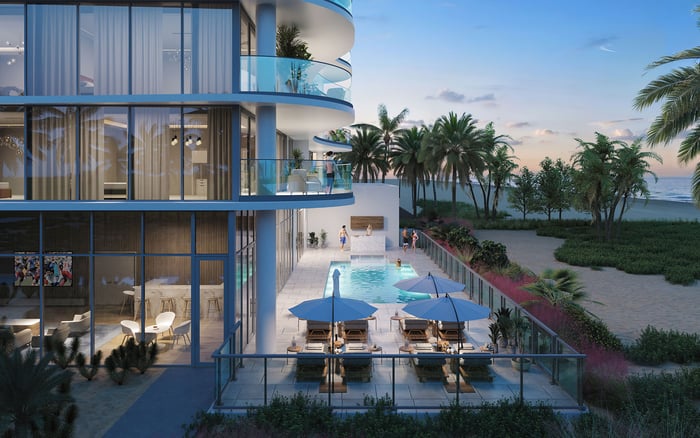
For a second-home buyer, the appeal of The Ritz-Carlton Residences® Pompano Beach is an owners-only residential setting with a substantial service offering. The development comprises 205 private residences across Beach Tower and Marina Tower components. It should not be understood simply as two oceanfront towers.
The financial question is less visible: how much cash will ownership require after closing, and when? A polished arrival experience cannot establish whether reserves are liquid, whether investments preserve access to principal, or whether an initial budget reflects the full cost of operations. Those questions deserve the same attention as the residence itself.
The decisive distinction is between a compelling lifestyle proposition and a documented financial position. Verified reserve balances, an approved annual budget, a reserve-investment policy, and a confirmed capital-call schedule are not established here. That is neither evidence of financial weakness nor reassurance that additional contributions will be unnecessary.
Dues of approximately $1.50 per square foot monthly are an estimate, not a verified final association budget. The stated monthly HOA fee for Unit 1404 at 1380 South Ocean Boulevard is $4,908. That figure applies to one residence and should not be generalized across the development.
The stated scope of monthly maintenance includes concierge, valet, security, pool and beach staffing, marina maintenance, spa operations, and building upkeep. That service scope warrants a line-by-line budget review rather than a judgment based on a single monthly number.
Request the assessment for the exact residence, its allocation formula, and the approved budget behind it. Establish whether reserve contributions are included, whether any expenses are billed separately, and whether the quoted amount reflects subsidies or exclusions. Then compare the full annual obligation with the proposed second-home budget.
A reserve balance matters only in the context of its purpose, restrictions, and availability. Operating cash pays recurring obligations; reserve funds should be reviewed separately against anticipated major replacements. A total bank balance alone does not establish what can be deployed for a particular expense.
Ask for the reserve schedule, any applicable structural integrity reserve study, financial statements, bank and investment balances, and the approved budget. Review them together: projected expenditures should align with planned contributions, existing funds, and the dates those funds become accessible.
For the Beach Tower and Marina Tower components, ask how expenses and reserves are allocated. Which costs are shared, which are component-specific, and which obligations attach to the residence under consideration? The governing documents-not a general description of amenities-should resolve those questions.
Also request documentation of any approved or proposed special assessments and association borrowing. Neither a pending assessment nor a loan is established here; neither can be ruled out simply because it is absent from a sales presentation.
No association reserve-investment policy is established here, so its permitted investments, principal safeguards, maturities, and withdrawal terms cannot be evaluated. The buyer's task is to obtain the written policy and reconcile it with actual holdings.
Ask who authorizes investments, which instruments are permitted, how principal protection is addressed, and how maturities align with expected expenditures. Review account restrictions and any costs of accessing funds before maturity. A higher yield is not necessarily useful if cash is unavailable when a major obligation falls due.
The practical test is a cash-flow timeline: expected payments on one side, accessible reserve funds and planned contributions on the other. Ask management to explain any mismatch and identify the proposed response. This is a review framework, not a finding that the association currently has a shortfall.
An initial assessment should not automatically be treated as the enduring cost of ownership. Confirm whether the developer controls the association, the expected turnover process, any subsidies, and expenses excluded from the initial budget. Request the full unsubsidized operating picture before concluding that current charges are sustainable.
For buyers also considering Ocean 580 Pompano Beach, the useful comparison goes beyond the lowest monthly assessment. Apply the same document requests to each candidate. Compare what the payment covers, how reserves are funded, and which obligations fall outside the quoted charge.
Brand identity and service expectations belong in the lifestyle decision. They do not replace financial statements, allocation schedules, or a written explanation of how future operating costs will be funded.
There is no verified schedule of major capital calls to present for this property. Instead, organize due diligence around events that can change the ownership picture.
Before closing, request updated budgets, financial statements, assessment notices, and written confirmation of the residence's obligations. At the first owner budget adoption and at turnover, revisit expense assumptions, reserve contributions, and any transition away from developer support. At insurance renewal, review the new premium and its treatment in the budget.
Inspections and major-system replacement planning are further checkpoints. Ask whether identified work has a scope, estimated cost, funding source, and payment timeline. Do not turn a possible future project into an assumed assessment, but do not ignore its financing either.
Completion descriptions are inconsistent. Current occupancy and closing documentation-not an advertised completion year-should establish transaction readiness. Counsel should also review access to updated disclosures and responsibility for assessments approved before closing but payable afterward.
The development has no hotel and no short-term rental program. A buyer should therefore underwrite ownership without short-term rental revenue. Longer-term leasing descriptions remain unconfirmed by governing-document language; annual or seasonal rental income should enter the model only after written confirmation of the actual rules.
Budget separately for taxes, regular assessments, insurance, furnishing, maintenance, and unexpected cash calls. Keep personal liquidity distinct from association reserves: even a well-planned association budget does not eliminate the owner's need for readily available funds.
A buyer weighing Rosewood Residences Hillsboro Beach alongside this Pompano Beach option should apply the same liquidity and disclosure standards without assuming the properties share reserve arrangements or leasing policies.
The purchase becomes easier to judge when four matters are clear: the residence's full carrying cost, reserves available for projected work, access to invested funds when payments are due, and contractual responsibility for assessments. Have counsel interpret the governing documents and applicable reserve requirements. Precise legal deadlines or funding obligations should not be inferred from marketing language.
For a discreet perspective on South Florida second-home ownership, explore MILLION.
If branded residences are on your mind — as a home or as an allocation — we would be glad to share what we are seeing, privately.
Begin a quiet conversationThe development is described as 205 private residences in an owners-only setting. Its components are Beach Tower and Marina Tower, not simply two oceanfront towers.
The development has no hotel and no short-term rental program. Buyers should not assume short-term rental revenue will offset ownership costs.
The actual longer-term leasing rules remain unconfirmed by governing-document language here. Obtain written confirmation before including annual or seasonal rental income in an ownership model.
The approximately $1.50-per-square-foot monthly figure is an estimate, not a verified final budget. The $4,908 monthly HOA figure for Unit 1404 is unit-specific.
The described scope includes concierge, valet, security, pool and beach staffing, marina maintenance, spa operations, and building upkeep. Confirm the exact inclusions in the approved budget.
Request the reserve schedule, any applicable structural integrity reserve study, financial statements, bank and investment balances, and approved budget. Distinguish operating cash from reserves accessible for major replacements.
Review permitted investments, authorization procedures, principal safeguards, maturities, withdrawal restrictions, and access costs. No association reserve-investment policy is established here.
No verified capital-call schedule or pending special assessment is established here. That does not demonstrate that additional owner contributions will be unnecessary.
Review them before closing, at first owner budget adoption and turnover, and around insurance renewals, inspections, and major-system replacement planning. These are due-diligence checkpoints, not confirmed assessment dates.
Have counsel review the contract and assessment documents to establish responsibility. The buyer should not assume the approval date or payment date alone determines the allocation.