Financing a Palazzo del Sol residence requires more than securing a jumbo approval. Buyers should align unit-specific valuation evidence, appraisal-gap capacity, recurring obligations and rate-lock terms before contract deadlines begin to run.

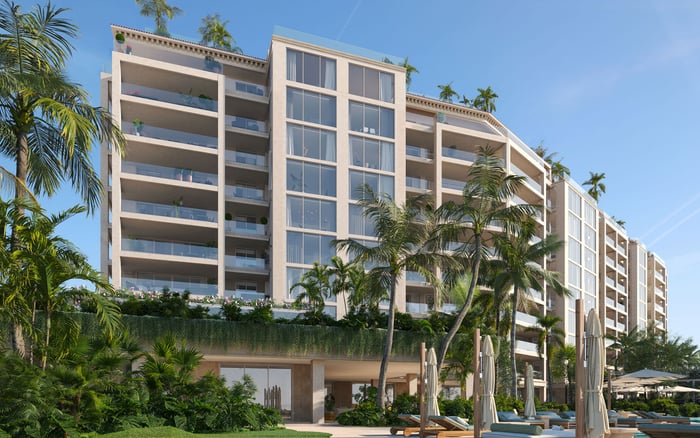
A financed purchase at Palazzo del Sol, located at 7000-7095 Fisher Island Drive, is not simply a larger version of a conventional condominium transaction. At this level, valuation can hinge on the residence itself: its scale, configuration and condition, along with the relevance of a limited set of closed sales. The buyer’s first task, therefore, is to separate an attractive asking narrative from evidence a lender’s appraiser can reasonably use.
As of September 2, 2026, recent inventory illustrated the challenge. Two residences started at $12.9 million. Four other offerings ranged from $14.75 million to $36.25 million and averaged approximately $3,878 per square foot, while a separate range of available residences extended from $12.2 million to $39.95 million. These figures help define seller expectations, but they are not closed-sale evidence.
At trophy level, the relevant question is not the building average but the specific residence a lender must value.
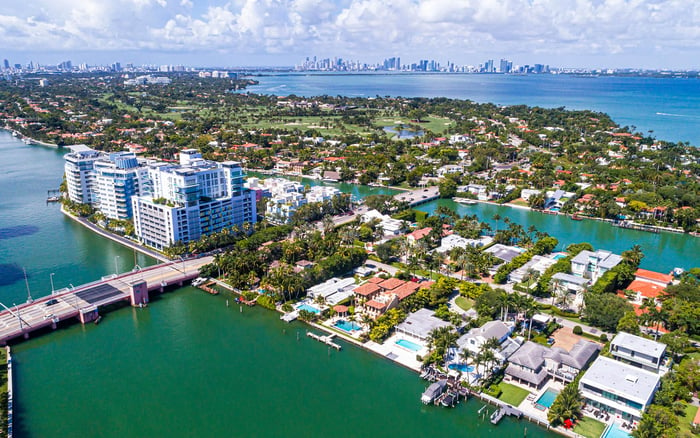
This distinction matters throughout Fisher Island. In 2026, the islandwide median closed price stood near $7.4 million, with a median sold value of approximately $1,970 per square foot. Palazzo-level trades can sit materially above those medians, so broad island statistics should frame the market rather than dictate a conclusion.
The range of transactions is notably wide. A 3,793-square-foot Palazzo del Sol residence at 7065 Fisher Island Drive sold for $7.3 million in 2019, or approximately $1,925 per square foot. By contrast, residence 7085 sold on May 18, 2026, for $28 million, while a Palazzo del Sol or Palazzo della Luna transaction at that level equated to approximately $3,670 per square foot.
Current asking prices can reach higher still. A five-bedroom residence of approximately 7,600 square feet was offered at $36.25 million, or roughly $4,770 per square foot. A combined Palazzo del Sol and Palazzo della Luna offering at 6893 Fisher Island Drive sought $39.95 million for 9,852 square feet, seven bedrooms and 8.5 bathrooms.
That dispersion does not support a generic appraisal forecast. It supports a more disciplined conclusion: comparability must be unit-specific. A buyer should ask the lender and appraiser to distinguish closed transactions from active listings and determine whether each comparable genuinely matches the subject residence in size, layout and other documented attributes. From a pricing and trends perspective, a premium asking price can inform positioning without proving realizable value.
An appraisal gap is the difference between the contract price and the lender-recognized value when the latter is lower. In a trophy acquisition, even a modest percentage difference can require substantial additional cash. The decisive question is not whether the buyer can technically fund that difference, but how much liquidity the buyer is willing to redirect from reserves, portfolio strategy and post-closing obligations.
Before signing, request loan scenarios based on multiple lender-recognized values rather than a single optimistic assumption. For each scenario, calculate the resulting loan amount, equity contribution and total cash required to close. The buyer’s advisers should also identify which assets must remain liquid through closing and whether a change in valuation could affect other underwriting measures.
Contract architecture deserves equal attention. An appraisal contingency, a negotiated appraisal-gap cap, financing deadlines, extension rights and cancellation remedies are potential negotiating tools-not automatic protections. Florida counsel should draft or review the language and clarify what happens if the appraisal arrives late, the value is disputed or the lender requests further documentation. A strong balance sheet is no substitute for precise remedies.
A rate lock should align with the actual transaction calendar. Relevant milestones include contract execution, condominium document review, appraisal ordering and inspection, underwriting conditions, lender approval and the scheduled closing. Buyers should obtain current lock periods, extension fees and float-down terms directly from the lender because these provisions vary, and the transaction evidence does not establish a standard lock window.
Locking too early may create extension costs if valuation or underwriting takes longer than expected. Waiting too long exposes the buyer to rate movement and can alter carrying-cost assumptions. The practical approach is to request a written timeline from the lender, identify who controls appraisal ordering and determine whether the lock survives a closing extension.
This planning is especially important when comparing resale opportunities with alternatives elsewhere in Miami Beach or new offerings such as The Residences at Six Fisher Island. Contract structure and delivery timing can differ, so a financing strategy suited to one residence should not be applied to another without review.
The mortgage is only one component of the monthly and closing burden. Residence 7085 carried an association fee of $16,281 per month and required a membership purchase. The combined 6893 offering had condominium fees of $26,340 per month. These figures underscore why buyers should verify current association charges, assessments, initiation costs, club dues and membership requirements for the specific residence.
Ask the lender which obligations are included in qualification and reserve calculations. Then ask the association and appropriate advisers to confirm what is due at closing, what recurs monthly or annually and whether any assessment is pending. A waterfront address may be central to the appeal, but recurring costs still influence leverage, liquidity and long-term investment planning.
Buyers considering a broader estate format on the island may also compare The Links Estates at Fisher Island. That comparison should be financial as well as architectural: condominium charges, membership obligations, contract timing and lender treatment can shape the true cost of ownership differently across property types.
Before submitting an offer, assemble a concise financing file: lender preapproval, proof of funds for the contemplated equity, appraisal-gap liquidity, a current schedule of association and membership costs, and a calendar linking every financing deadline to the proposed rate lock. Confirm that the lender is prepared for the price point and condominium review, then designate one adviser to track outstanding conditions.
The objective is not maximum leverage. It is certainty. A well-prepared buyer can decide in advance how much valuation risk to retain, when to lock and where to draw the line if the appraisal evidence does not support the negotiated price. That discipline preserves negotiating credibility while protecting liquidity for ownership after closing.
For discreet guidance on a financed Palazzo del Sol acquisition, connect with MILLION.
If branded residences are on your mind — as a home or as an allocation — we would be glad to share what we are seeing, privately.
Begin a quiet conversationThe building has a wide range of closed and asking prices, and an appraiser must evaluate the subject residence using relevant closed-sale evidence rather than seller expectations alone.
It is the difference between the contract price and a lower lender-recognized appraised value. The buyer may need to contribute additional cash if the lender sizes the loan from the lower figure.
No. An asking-price average can frame seller positioning, but it does not establish appraised or realized value for a particular residence.
Documented examples range from a 2019 sale near $1,925 per square foot to a 2026 trophy trade near $3,670 per square foot, making unit-specific comparison essential.
Buyers may negotiate an appraisal contingency, appraisal-gap cap or related remedies. Florida counsel should review the precise language and deadlines.
The lock should be matched to the appraisal, underwriting and closing calendar. Current lock lengths, extension fees and float-down terms should be obtained directly from the lender.
The available facts do not establish a standard lock period. Buyers should request written options and pricing from their lender for the specific transaction.
They can affect qualification, reserves and monthly carrying-cost calculations. Residence 7085 showed a reported fee of $16,281 per month, while the combined 6893 offering showed $26,340 per month.
For residence 7085, a membership purchase was stated as required. Buyers should verify current membership, initiation and dues obligations for their specific residence.
The listing identified all-cash and conventional terms as considered, but that field does not establish how the ultimate buyer funded the closing.