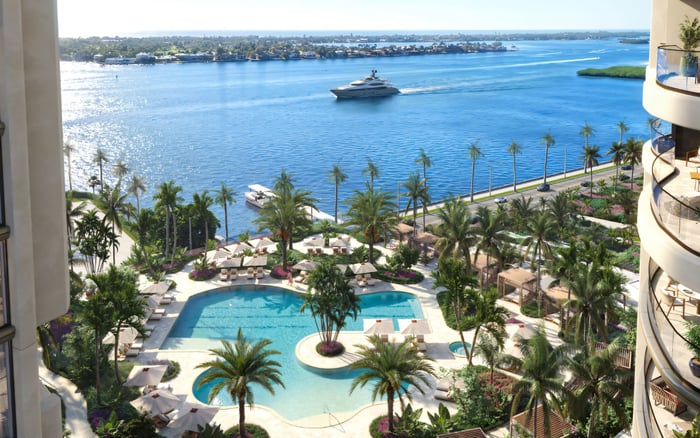
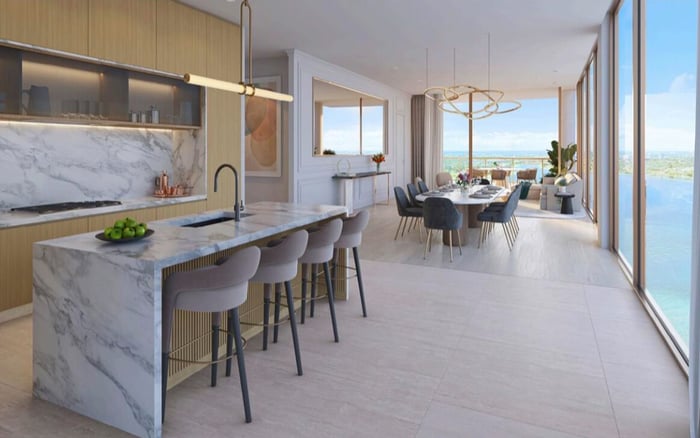
For trust and LLC buyers at The Bristol, discreet ownership should be paired with precise security diligence. Confirm representative authority, camera coverage, retention schedules, and incident-preservation procedures without mistaking service amenities for documented surveillance capabilities.
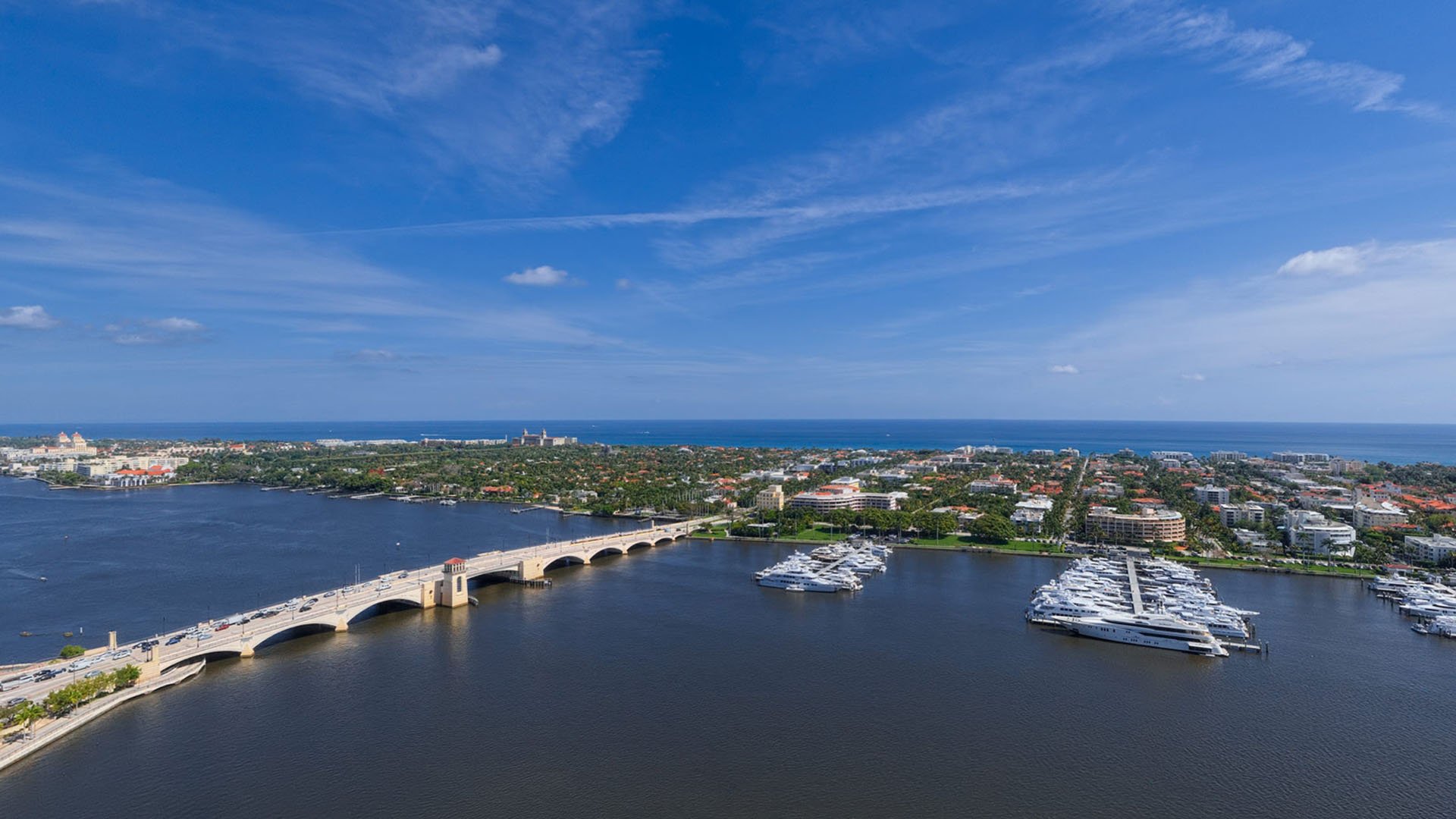
At The Bristol Palm Beach, security diligence should be as precise as the ownership documents. The property is at 1100 South Flagler Drive in West Palm Beach, despite Palm Beach appearing in its name. For a buyer taking title through a trust or LLC, the central question is not simply whether the building offers security. It is who can act for the owner, what information exists, and how that information can be preserved when needed.
A staffed arrival and a private elevator foyer shape the residential experience. Neither, on its own, establishes which spaces are recorded, whether footage is monitored live, or how long incident records are retained. That distinction matters when the ownership structure separates the titleholder from the resident or the person managing the residence.
Before closing, ask management to confirm the entity's authorized representatives and the required authority documents. Have counsel review the response alongside the proposed ownership structure. Bristol-specific entity-ownership and records-access rules are not established here; confirm them rather than assume them.
The Bristol's service offering includes full-time security, 24-hour door and front-desk staff, a full-time concierge, and 24-hour valet service, including car-wash service. Private elevator entry into each residence foyer is also part of the residential offering.
These are meaningful service features, but they are not surveillance specifications. Staffing does not establish continuous live monitoring. Valet service does not establish footage of every vehicle movement. Private elevator entry does not establish how elevator access events are logged or recorded.
For buyers also considering Alba West Palm Beach, the same distinction applies: compare the service offering separately from the documentation supporting security operations. This is a diligence principle, not a claim that the buildings share systems or policies.
A broad description of interior and exterior camera coverage should not be treated as a camera-location plan, an engineering specification, or proof of complete coverage. A detailed Bristol camera map, camera count, and live-monitoring protocol are not established here.
This information establishes no actual Bristol blind spot, camera outage, or security incident. The next step is a coverage inquiry, not a vulnerability claim.
Request a camera-location schedule addressing entrances, garage ramps, valet staging, elevators, stairwells, service corridors, amenity areas, and perimeter approaches. Ask management to distinguish spaces with recording coverage from those served only by staffing or access controls. If detailed plans cannot be circulated for security reasons, ask whether an authorized representative can receive a controlled review or written description.
Follow the resident's actual movements: arriving, transferring a vehicle, reaching the elevator, and entering the residence. Ask separately about routes used by visitors and service personnel. These are categories for review, not assertions that any particular route lacks coverage.
A buyer weighing Forté on Flagler West Palm Beach can apply the same questions independently. Neither a waterfront setting nor a polished arrival experience substitutes for building-specific answers.
The Bristol's video-retention schedule and incident-log policy remain unverified. There is no supported basis for assigning the building a specific number of recording days.
Ask for retention periods camera by camera, along with recording modes and storage arrangements. Clarify whether recording is continuous or event-triggered, who controls deletion, and what happens when footage is exported for an incident. Request relevant outage and maintenance records through the appropriate authorized process.
Treat video, access logs, and incident reports as separate record categories. Ask for the retention policy governing each; a general answer about security should not stand for all three. Also request the footage-review procedure: who receives a request, who evaluates it, and who can authorize preservation or access.
For trust or LLC ownership, designate the person expected to communicate with management and confirm that person's authority in writing. The objective is a clear point of contact-not an assumption that every beneficiary, member, resident, or adviser has identical access rights.
Have Florida counsel assess the applicable rights, the requester's authority, and the particular records sought. Do not assume that an association-records request creates a blanket entitlement to every live feed or vendor-held recording.
Police-held footage requires a separate analysis from privately operated condominium recordings. Do not use law-enforcement body-camera retention requirements to infer The Bristol's retention schedule, or assume that police involvement makes every recording publicly accessible. Ask counsel to address any disclosure restrictions relevant to the incident.
Before closing, request the written incident-preservation process. Identify the management contact and ask how an authorized representative should submit a time-sensitive request while the owner is away.
For a relevant incident, specify the date, time window, location, and potentially relevant systems in writing. Request preservation of relevant footage, access logs, and incident documentation, and seek written acknowledgment. Preservation and disclosure are distinct: asking that material not be deleted does not settle whether it must be released.
Counsel should guide any incident-specific request. Do not assume that a request automatically stops an overwrite cycle or reaches a third-party storage provider. Ask management how preservation instructions are implemented, including any vendor involvement.
The most useful pre-closing result is a written record of answers covering authorized representatives, coverage descriptions, retention schedules, incident procedures, and preservation contacts. Review unresolved questions with counsel before treating the security inquiry as complete.
If Shorecrest Flagler Drive West Palm Beach is also on the shortlist, apply the same diligence framework without assuming equivalent operations. Consistent questions make comparisons more meaningful while respecting each property's privacy.
For a trust or LLC buyer, the strongest position is documented clarity about who may act, what is retained, and how an incident is handled. Service and discretion remain valuable, but neither replaces a clear understanding of the records process.
For a discreet approach to South Florida residential decisions, connect with MILLION.
If branded residences are on your mind — as a home or as an allocation — we would be glad to share what we are seeing, privately.
Begin a quiet conversationThe Bristol is at 1100 South Flagler Drive in West Palm Beach, despite Palm Beach appearing in its name.
The service offering includes full-time security and 24-hour door and front-desk staff. Those descriptions do not establish camera coverage or recording practices.
Private elevator entry into each residence foyer does not establish whether or how elevator access events are logged or recorded.
No actual blind spot or camera outage is established here. Buyers should request a coverage description rather than infer vulnerabilities from undisclosed details.
Its video-retention schedule is unverified. Request camera-specific retention periods, recording modes, storage arrangements, and deletion controls.
Confirm the ownership entity's authorized representatives and required authority documents. Bristol-specific entity-ownership and records-access rules require separate confirmation.
No blanket entitlement to every live feed or vendor-held recording is established here. Have Florida counsel assess the requester's authority and the particular records sought.
Do not use law-enforcement body-camera retention requirements to infer a private condominium's recording schedule. Request the building's own retention policies.
Identify the incident's date, time window, location, and potentially relevant systems. Seek written acknowledgment and counsel's guidance on the request.
Yes, request the retention and review policies for each category rather than assuming a single security policy governs all records.