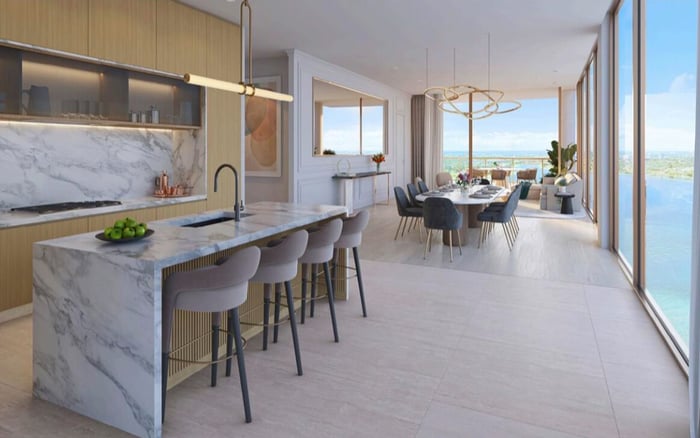
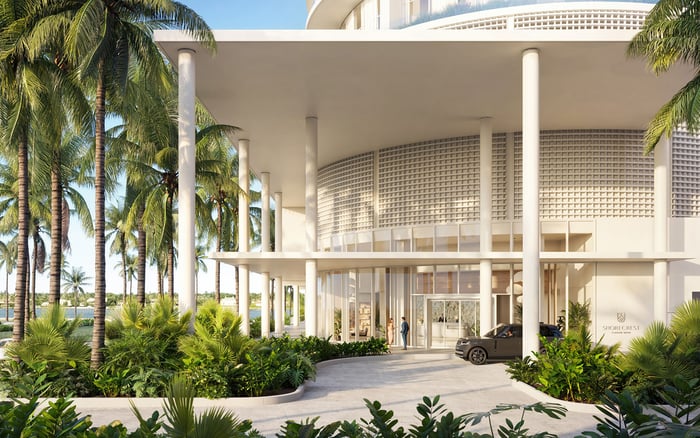
For Edgeworth buyers, storm readiness deserves the same scrutiny as finishes and amenities. Emergency-power allocation, a designated cooling refuge, and post-storm access remain unverified in the public-facing materials reviewed, making written design and operating commitments essential due diligence.
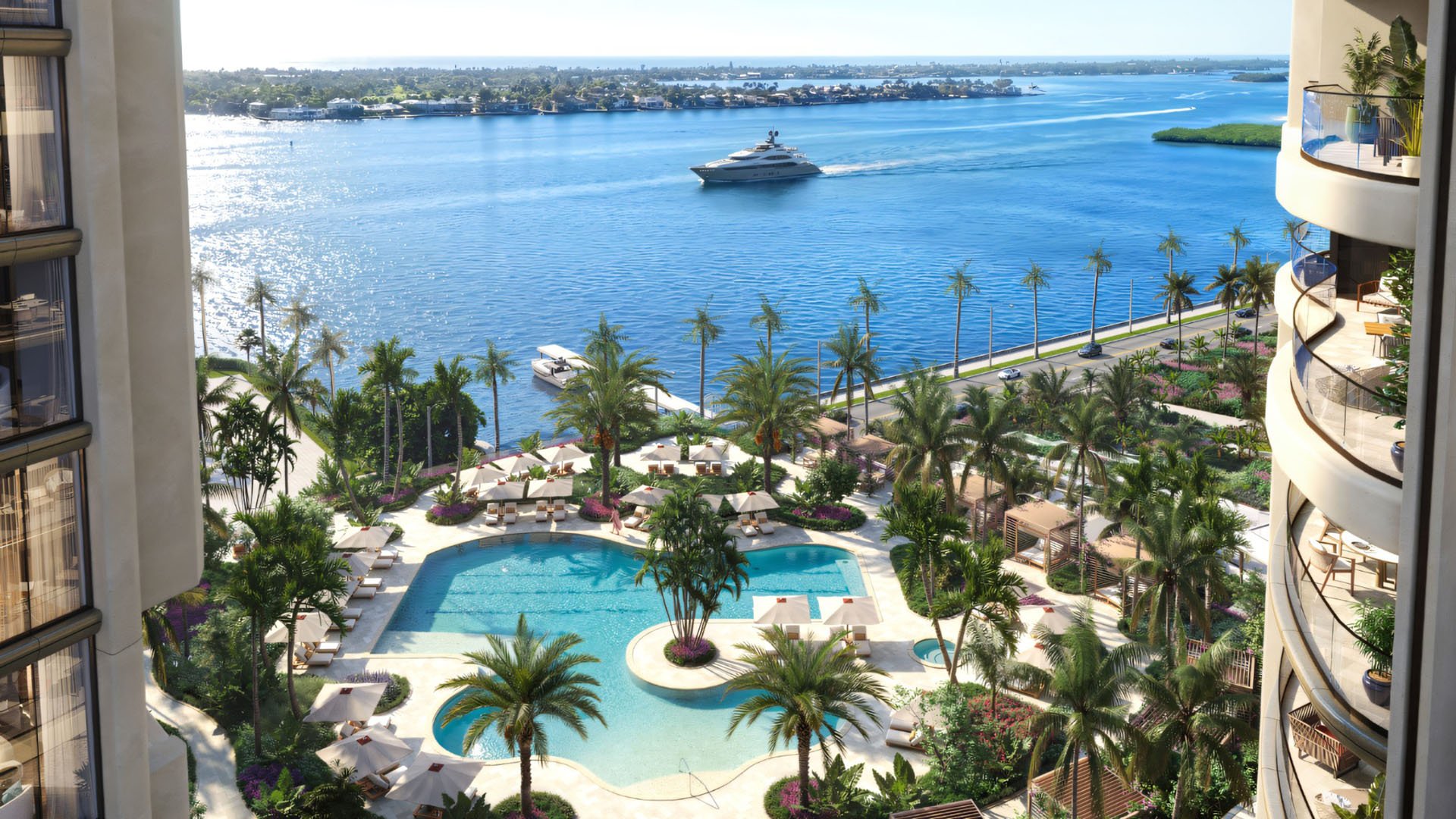
At Edgeworth West Palm Beach, planned for 1155 South Flagler Drive on the Intracoastal waterfront, the purchase conversation should extend beyond the everyday experience of ownership. Related Ross is developing the ultra-luxury condominium, with advertised spa, fitness, social, and lifestyle amenities. Those offerings describe an ordinary afternoon. They do not, by themselves, establish how the property would function through a prolonged power interruption.
For buyers, three questions warrant particular attention: what emergency power will serve, where residents could find reliable cooling during an outage, and how owners or their representatives would regain access after a storm.
These are disclosure gaps, not evidence of missing infrastructure. The public-facing materials reviewed do not establish the relevant capacities, service allocations, or operating procedures. The appropriate response is neither reassurance by assumption nor a negative conclusion. It is a request for written commitments that distinguish planned capability from confirmed operating readiness.
Generator capacity and outage runtime remain unverified in the reviewed Edgeworth materials. Those materials also do not establish whether backup power would serve residences, life-safety systems, common areas, elevators, water pumps, refrigeration, security, or air-conditioning.
The useful buyer question is not simply whether a generator is planned, but which services would remain available, under what load conditions, and for how long. Request the electrical one-line diagram, generator specifications, emergency-load schedules, fuel capacity, expected runtime at designated loads, and refueling arrangements. Ask the project team to translate those technical documents into a plain-language service schedule.
That schedule should distinguish power inside a residence from power elsewhere in the building. Seek written answers on elevator availability, water and wastewater continuity, refrigeration, security, and cooling. Ask whether services would operate simultaneously, intermittently, or in a priority sequence. Do not assume every connected system would run continuously.
Private medical equipment requires a separate answer. The reviewed materials do not state whether residents may connect such equipment or other high-load devices to emergency power. Households that depend on powered equipment should seek explicit confirmation of permitted connections and limitations, and arrange an independent contingency plan rather than treating an amenity outlet as an assured supply.
For a buyer also considering Alba West Palm Beach, this service-by-service questionnaire provides a disciplined basis for comparison. It does not imply that either property's emergency arrangements are equivalent.
No designated cooling refuge is identified in the reviewed Edgeworth information. Nor does that information establish whether an amenity room would retain generator-backed air-conditioning during an outage. A beautifully appointed lounge should not be treated as a cooling refuge without a specific operating commitment.
If a refuge is planned, ask for its location and confirmation that its HVAC is included in the emergency-load schedule. Establish occupancy limits, accessible routes, and provisions for water, restrooms, charging facilities, and staffing. Eligibility matters as much as room size: request explicit rules for residents, guests, pets, and medically vulnerable occupants.
Consider access and power together. Ask how a resident with limited mobility would reach the space if elevator service were restricted. Confirm who would open it, who would communicate its status, and what would happen if demand exceeded capacity. These are questions for the proposed operating plan, not descriptions of an established Edgeworth service.
Treat any proposed refuge as a contingency provision, not permission to disregard evacuation instructions. Personal preparations should still include emergency supplies and a plan for power loss. Portable generators must not be used indoors or in enclosed areas because of carbon-monoxide risk.
Post-storm access involves distinct permissions. Authorization to enter a restricted area does not establish that Edgeworth is ready for occupancy, that elevators are available, or that a particular representative may enter an owner's residence.
The reviewed project materials do not establish storm-specific resident credentials, a management hotline, or a way to confirm remotely that the building is safe to enter. Request a written shutdown and restart plan that identifies inspection requirements, re-occupancy criteria, the person or team responsible for clearance, and the communication channel owners should use before traveling back.
Ask that communications distinguish limited retrieval access from permission to resume occupancy. The plan should also explain what owners can expect if utilities or building services have only partially resumed. An open street or accessible lobby should not be treated as confirmation that a residence is ready for occupancy.
For applicable county re-entry procedures, retain identification showing a current address or proof of residence, such as a lease or deed. Palm Beach County's Emergency Information Center number is 561-712-6400. Keep that public information contact separate from any building-specific contact the project establishes.
Owners who are away during a storm may rely on caregivers, family members, domestic staff, or contractors. Pre-authorized access procedures for those individuals are not established in the reviewed Edgeworth materials. Request a process that specifies acceptable identification, owner authorization, the scope of access, and any escort requirements.
County business re-entry procedures require authorized employees or agents to carry completed, signed official forms, a valid driver's license, and company or work identification. Those forms are valid annually from June 1 through May 31. They are not an Edgeworth resident-access policy and do not guarantee admission for every representative.
The same distinction applies to retrieving vehicles, medications, documents, or pets. No formal retrieval process is identified in the reviewed project information. Ask who authorizes a retrieval visit, whether it can occur before general re-occupancy, and how restrictions would be communicated. Treat retrieval as a contingency, not a substitute for taking essential items when leaving.
Because Edgeworth is planned, design commitments and commissioning plans are the appropriate starting point where operating records do not yet exist. Request the proposed generator load-testing and transfer-switch testing program, maintenance responsibilities, and the process for documenting completed commissioning. Obtain maintenance records once available.
Apply the same documentation standard when evaluating Forté on Flagler West Palm Beach, without making assumptions about its systems or policies. A meaningful comparison separates what is promised, what is documented in design, and what has been demonstrated in operation.
For Edgeworth, the objective is straightforward: a written account of what remains powered, where cooling would be available, and who may return under which conditions. That clarity deserves a place alongside the residence's finishes, views, and amenities in the purchase decision.
For a considered approach to South Florida luxury ownership, explore MILLION.
If branded residences are on your mind — as a home or as an allocation — we would be glad to share what we are seeing, privately.
Begin a quiet conversationEdgeworth is planned for 1155 South Flagler Drive in West Palm Beach, on the Intracoastal waterfront.
Related Ross is developing Edgeworth as an ultra-luxury condominium.
Generator capacity and outage runtime remain unverified in the public-facing materials reviewed. That does not establish that backup infrastructure is absent.
The reviewed materials do not establish whether residences receive backup power or which residential systems would be served. Buyers should request a written emergency-load schedule.
The reviewed materials do not state whether private medical equipment or other high-load devices may be connected. Households should obtain explicit written confirmation and arrange independent contingency plans.
No designated cooling refuge is identified in the reviewed project information. Generator-backed air-conditioning for an amenity room is also unverified.
Confirm its location, backup-powered HVAC, capacity, accessibility, water, restrooms, charging, and staffing. Ask who is eligible to use it, including guests, pets, and medically vulnerable occupants.
No. Restricted-area access is separate from building clearance and permission to occupy a residence; Edgeworth's specific re-entry procedures remain unverified.
For applicable resident procedures, retain current-address identification or proof of residence. Authorized business employees or agents need signed official forms, a valid driver's license, and company or work identification; the forms are valid annually from June 1 through May 31.
The reviewed materials do not establish pre-authorized access for caregivers or other representatives, or a formal process for retrieving vehicles, medications, documents, or pets. Buyers should request those procedures in writing.