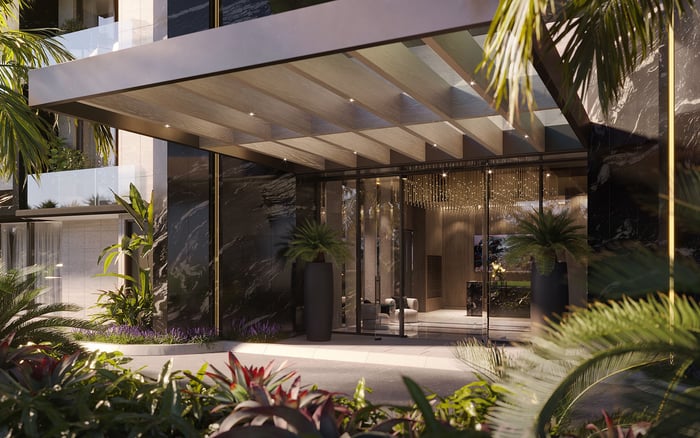
Alana’s boutique scale and proximity to a public K-8 school make it a candidate for families seeking greater teenage independence. The purchase case depends on testing actual routes, confirming school eligibility and planning separately for high school.
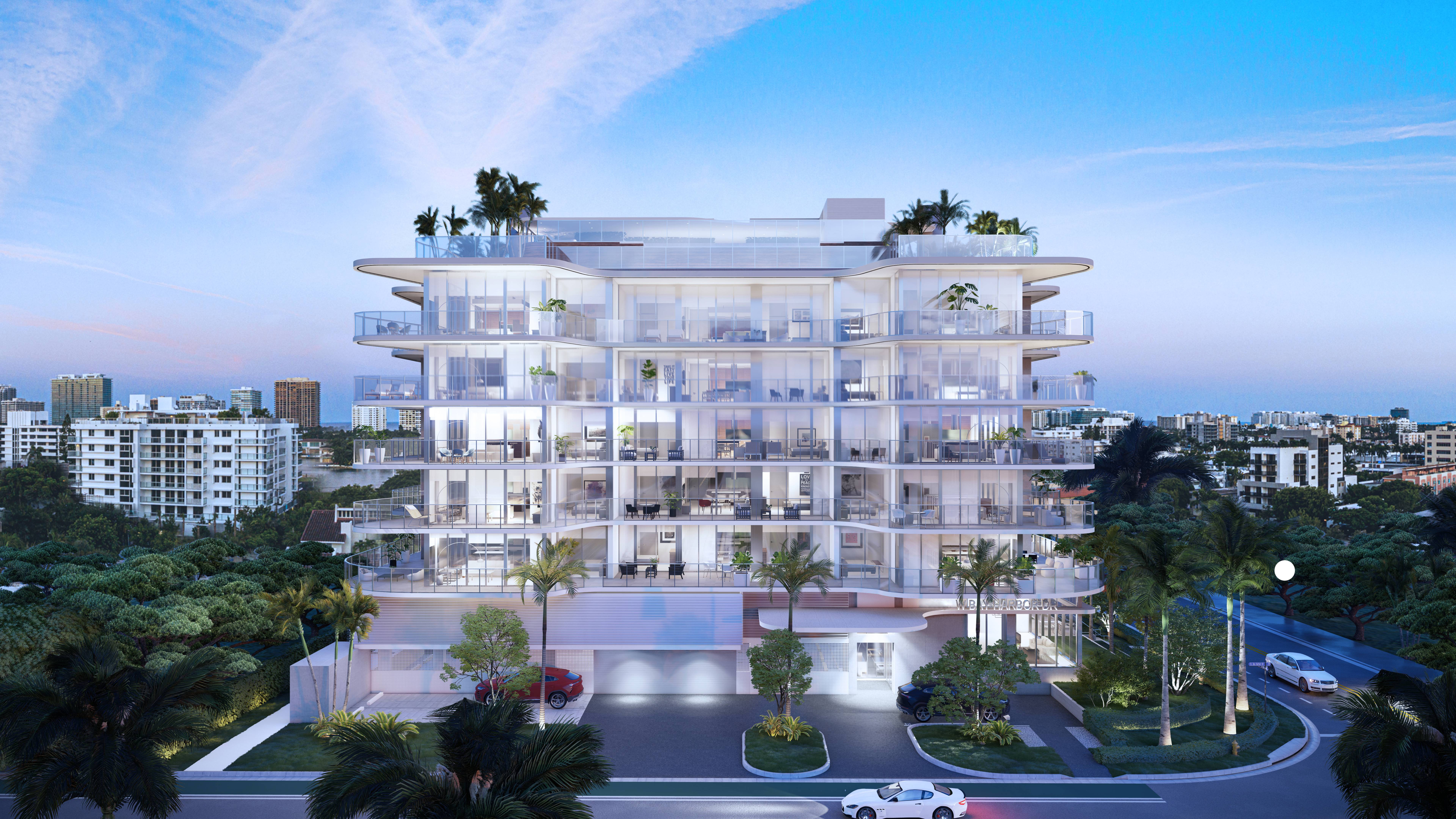
For a family buying around a teenager’s school years, luxury can mean something quieter than an expansive amenity collection: a child managing an ordinary afternoon without a parent coordinating every departure. At Alana Bay Harbor Islands, that possibility deserves examination, not assumption.
The seven-story, 30-residence condominium at 9901 W Bay Harbor Drive offers a boutique setting from which to test local independence. Residences generally have two or three bedrooms, with approximately 1,229 to 1,662 square feet. The question is whether the address supports the family’s actual school, social and extracurricular routines.
Alana is a plausible starting point for testing independence during the K-8 years, not a proven car-free solution through high school. Buyers should evaluate those stages separately, even with a longer ownership horizon.
Ruth K. Broad Bay Harbor K-8 Center is a nearby public K-8 school. An approximately two-minute proximity estimate is not a verified walking time. It does not establish the journey from the building entrance to the appropriate school entrance at arrival or dismissal.
First, confirm current school assignment and enrollment eligibility directly with Miami-Dade County Public Schools. Then walk the exact route during the relevant school hours. A quiet weekend visit cannot answer questions about weekday crossings, turning traffic or the practical demands of carrying a school bag.
For a younger teenager, that exercise may reveal a workable routine. For a student approaching ninth grade, the purchase analysis needs another layer: identify the likely high-school destination and establish transportation before treating school proximity as a lasting benefit. Access to a K-8 school does not resolve that later journey.
A useful neighborhood assessment begins with specific destinations, not a general impression of walkability. Ask your teenager to identify the school entrance, a preferred place to eat, a shopping destination and a recreational outing. Walk each proposed route together and assess the return trip separately.
Check sidewalk continuity, crossings, visibility, lighting and traffic. If cycling is part of the plan, test the route on that basis rather than assuming a walkable route is equally comfortable on two wheels. Record the full door-to-door journey, including leaving the building and securing a bicycle at the destination.
Apply the same standard when considering Bay Harbor Towers alongside Alana. The comparison should turn on the route from each building’s entrance, not a shared neighborhood label. This is a purchase criterion to investigate, not evidence that the two addresses provide equivalent independent access.
The useful outcome is a family-approved route map: journeys suitable for independent travel, journeys requiring company and journeys that remain vehicle-dependent. That is more actionable than a single optimistic travel-time estimate.
Beaches, local bistros, shops and bicycle outings are part of Alana’s location appeal. These are attractive ingredients for adolescent independence, but each destination requires its own assessment.
Proximity estimates put Bal Harbour Shops approximately seven minutes away, Surfside Beach approximately six minutes away, and Haulover Marina and Beach Park approximately nine minutes away. These estimates do not establish verified pedestrian journeys, safe continuous routes or suitability for an unaccompanied teenager.
A family may approve a familiar restaurant outing while reserving beach trips for accompanied visits. That is not a failure of the location. It is a more precise understanding of what the purchase can deliver.
Regional destinations such as Aventura Mall, Oleta River State Park, South Beach, Wynwood, Downtown Miami and Brickell belong in a wider transportation plan. Their appeal as area attractions should not be confused with practical daily walking access.
Thirty residences may appeal to buyers seeking a smaller residential environment, but building size alone does not establish supervision, staffing or access procedures. Request clear answers about front-desk coverage, elevator controls, guest entry and procedures for a teenager arriving home independently.
Bicycle and scooter storage deserve attention. Confirm where equipment may be kept, how residents access that space and whether the arrangement works for daily departures. Also verify assigned and visitor parking: family pickups, guests and backup transportation remain relevant even when local independence is the objective.
If The Well Bay Harbor Islands is also on the shortlist, ask the same operational questions there. Compare written rules and practical access arrangements rather than treating either project’s identity as a substitute for household-specific due diligence.
Alana’s amenities include a rooftop resort-style pool and sundeck, an open-air sky lounge, a summer kitchen, a fitness center and outdoor fitness space. Shaded areas, lighting and garden spaces round out the common areas. These settings may support afternoons at home, subject to the applicable rules.
The residents’ social room includes lounge seating and a large-screen television. It is not established as a dedicated teen lounge. Similarly, a children’s play area should not be assumed to suit teenagers or provide supervision.
Ask which amenities minors may use unaccompanied, whether guests require an adult and what restrictions apply to fitness and pool access. The distinction is between an amenity being available within the building and a particular teenager being permitted to use it independently.
Independent mobility should reduce household friction, not eliminate every contingency. Heat, heavy rain, storms and darkness can change a route that felt comfortable during a daytime inspection. Decide in advance who handles disrupted school journeys and evening returns.
Do not build the purchase case around an assumed dedicated school shuttle or high-frequency transit connection directly at Alana. Neither is established here. Confirm any proposed service before incorporating it into the family schedule.
The strongest buying case combines tested local journeys with dependable alternatives. Before committing, also verify occupancy and closing records: the stated completion year is 2025, but conflicting timelines require resolution through municipal and association documentation.
For a family whose school assignment, routes and building rules align, Alana may offer a measured step toward greater independence. The decision should rest on demonstrated routines, with a separate plan for the high-school years.
Explore a school-years purchase with MILLION.
If branded residences are on your mind — as a home or as an allocation — we would be glad to share what we are seeing, privately.
Begin a quiet conversationAlana is at 9901 W Bay Harbor Drive in Bay Harbor Islands. It is a seven-story condominium with 30 residences.
Residences generally have two or three bedrooms and range from approximately 1,229 to 1,662 square feet.
No. Buyers should confirm current school assignment and enrollment eligibility directly with Miami-Dade County Public Schools.
No. The approximately two-minute proximity estimate is not a verified walking time; families should test the exact route at arrival and dismissal.
No. Ruth K. Broad is a public K–8 school, so the likely high-school destination and transportation plan require separate evaluation.
The proximity estimates do not establish safe, continuous pedestrian routes or suitability for independent teenage travel. Families should assess each journey separately.
A residents’ social room has lounge seating and a large-screen television, but it is not established as a dedicated teen lounge.
Confirm guest procedures, front-desk coverage, elevator controls, bicycle storage and rules for unaccompanied minors using amenities.
No dedicated school shuttle or high-frequency transit connection directly at Alana is established here. Verify any proposed service before relying on it.
Although 2025 is listed as the completion year, conflicting timelines warrant checking municipal and association documentation, including occupancy and closing records.