A buyer-focused guide to evaluating residences near the Palm Beach International Boat Show, with emphasis on guest planning, security procedures, street access, bridge delays and building operations.
The Palm Beach International Boat Show brings concentrated activity to the downtown West Palm Beach waterfront. For a buyer, that energy can be a meaningful lifestyle advantage, but it can also expose operational details that remain less visible during an ordinary property tour.
The essential question is not simply whether a residence overlooks the waterfront. It is whether owners, household staff, guests, drivers and vendors can move predictably when event operations alter familiar curbside and pedestrian patterns. This is the distinction between admiring a setting and understanding how it functions under pressure.
The best boat-show address is one whose access plan works as elegantly as its view.
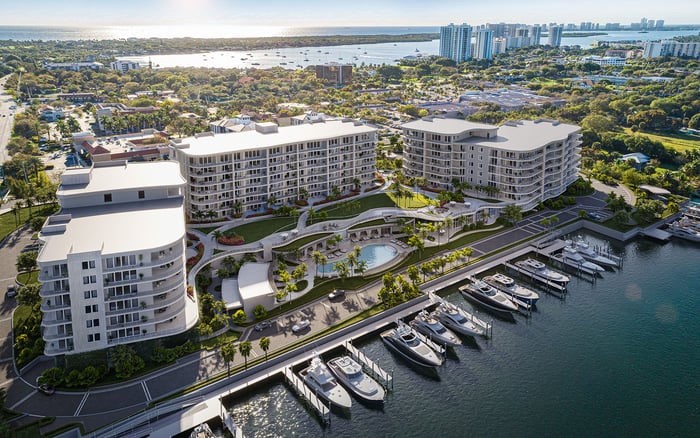
Waterfront homes can offer close proximity to yacht displays and event activity, but buyers should give equal attention to the routes connecting the lobby, garage, valet queue, loading area and nearby cross streets. When comparing Forté on Flagler West Palm Beach and Shorecrest Flagler Drive West Palm Beach, ask how each building manages arrivals when normal circulation changes.
A residence invitation and show admission serve different purposes. Before hosting clients, family or friends, confirm the event’s current admission, credential and re-entry procedures. Do not assume that a restaurant reservation, yacht appointment or invitation to a private home provides access to a controlled event area.
Send each guest a concise arrival note with the planned meeting point, drop-off arrangement, parking plan and realistic arrival time. If the itinerary includes leaving and returning to the show area, account for the current re-entry process. Guests should also know whom to contact if a gate, curb or pedestrian route changes.
Premium or hospitality access may improve the guest experience, but hosts should still verify the applicable entry procedures. Treat upgraded access as part of the itinerary rather than a substitute for arrival planning.
Security procedures can affect timing at controlled entrances. Recommend that guests travel with only what they need, allow an appropriate buffer and avoid planning a curb-to-appointment transfer with no flexibility. Current event instructions should guide expectations about permitted items and screening.
Building security and event security are separate systems. Ask whether the residence uses temporary guest registration during major events, how the front desk confirms expected visitors and whether private access procedures change during setup, public days or teardown. Entry to a condominium does not provide entry to the show, while event access does not provide entry to a private residence.
This distinction is especially important when several parties are coordinating an arrival. The owner, concierge, driver and guest should use the same meeting point and contact plan. A simple written itinerary can prevent confusion between a building entrance and an event entrance.
Event-related activity can affect waterfront circulation beyond the public show schedule because setup and teardown require time. Exact dates, boundaries and access procedures can change, so buyers should use prior experience only to identify questions-not to predict a future operating plan.
Flagler Drive and the east-west approaches to the waterfront deserve particular attention. A destination may appear close on a map while temporary fencing, staging or traffic management changes the practical walking or driving route. Buyers should identify an inland alternative rather than depend entirely on the most direct waterfront approach.
Properties set back from the water may offer different route options, but the useful path depends on the building’s actual garage, valet and service entrances. When considering Mr. C Residences West Palm Beach, ask management to trace both the preferred route and a fallback route from an inland street to the property entrance.
Pedestrian circulation deserves the same scrutiny as vehicle access. Walk from the lobby toward likely meeting points and note where a guest could wait comfortably without blocking valet, residential access or building operations. If the household includes children, older visitors or anyone with limited mobility, evaluate the route from their perspective.
Travel between Palm Beach and West Palm Beach introduces bridge timing as another planning variable. Buyers who expect frequent island-to-city trips should test the journey at comparable hours and leave room for delays rather than relying on a single estimated travel time.
At each prospective residence, ask how the building approaches major waterfront events. Useful questions include:
Does valet continue at the usual location?
Where should guests arrive if the normal curb is unavailable?
Can residents reach the garage from an inland approach?
Do delivery windows or contractor procedures change?
Is loading access handled differently during setup or teardown?
How does management communicate last-minute changes?
The answers are particularly relevant for a second home that depends on household staff, provisioning or chauffeured transportation. At The Ritz-Carlton Residences® West Palm Beach, as at any candidate building, request property-specific guidance rather than inferring access from a map or a neighboring tower.
Service planning should cover the full operational period, not only the hours when guests attend the show. Deliveries, housekeeping, maintenance and contractor visits may require different timing if nearby circulation is constrained. Buyers should understand who makes those decisions and how residents receive updates.
A polished buying decision balances waterfront proximity and marina culture against the reliability of private and public circulation. Visit during an ordinary week, then assess how the property prepares for major event activity. Walk the route from garage to lobby, examine the service entrance and ask a driver to test an alternative approach.
Review the building’s communication process as carefully as its physical access. A capable team should be able to explain guest registration, valet contingencies, delivery coordination and emergency access without relying on assumptions. The quality of that response can be as important as the location itself.
Finally, verify current show instructions and local access information shortly before each event. Conditions can change from year to year, and even a familiar route may not be the most practical choice during setup, show days or teardown. The strongest residence will combine access to the Palm Beach yachting calendar with clear management and discreet guest handling.
For discreet guidance on evaluating Palm Beach residences around the boat-show calendar, connect with MILLION.
If branded residences are on your mind — as a home or as an allocation — we would be glad to share what we are seeing, privately.
Begin a quiet conversationNo. A private invitation and event admission serve different purposes, so guests should confirm the show’s current entry requirements.
Advance planning helps hosts provide accurate arrival, parking and meeting instructions. Guests should verify the current admission process before the event.
No. Premium access may add hospitality benefits, but guests should still follow the applicable entry and security procedures.
Guests should review current event instructions, carry only necessary items and allow extra time for entry procedures.
Yes. If guests leave and return to the controlled show area, the itinerary should account for the current re-entry process.
Yes. Setup and teardown can influence nearby circulation, so residents should consider the broader operational period.
Buyers should test the building’s waterfront approach, an inland alternative, pedestrian paths and any bridge-dependent route they expect to use.
Yes. Buyers traveling between Palm Beach and West Palm Beach should allow flexibility and avoid relying on a single estimated travel time.
Ask about guest registration, valet, garage access, deliveries, contractors, loading areas and communication during major events.
No. Prior experience can identify pressure points, but current access and event procedures should be verified each year.