At ALINA, the documented Phase II woodwork process shows how architectural review can sit directly between a design concept and fabrication. Buyers contemplating customization should verify the governing documents, review authority, contractor qualifications, and every schedule dependency before committing to materials or a completion date.
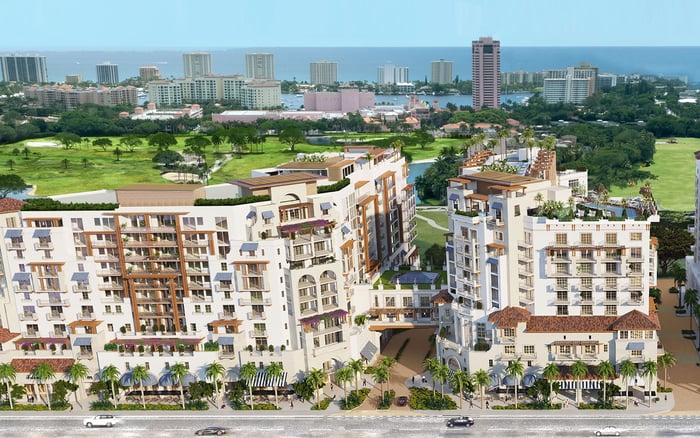
At Alina Residences Boca Raton, design discipline is integral to the property's identity. The phased luxury condominium development at 200 SE Mizner Boulevard comprises ALINA 200, ALINA 210, and ALINA 220. El-Ad National Properties developed the project, Garcia Stromberg designed it, and Moss Construction served as general contractor.
For a buyer envisioning bespoke millwork, imported stone, specialized lighting, or a reconfigured kitchen, the central issue is not merely whether the concept is beautiful. It is whether the proposed work falls within the approving party's authority-and whether the submission is sufficiently resolved to proceed. That distinction can shape material selection, contractor eligibility, and the date an owner can realistically expect completion.
In a design-led condominium, approval is a schedule dependency, not a ceremonial step.
The clearest documented example comes from Phase II architectural woodwork. Its delivery involved complex design approvals, managed through a parametric 3D model that enabled real-time updates with the architect. Once the details were approved, the same digital workflow translated them into fabrication-ready files. The process was designed to keep architectural blades and reveals aligned with the project's standards.
That sequence matters. A revised dimension, junction, or finish condition could determine when a component was ready for production and installation. It illustrates how architectural review may be integrated into fabrication rather than treated as a final signature after the decisions have been made.
The example concerns project-level Phase II work. It does not establish that an owner renovating after closing faces identical requirements. ALINA's current alteration agreement, approved-vendor policy, review fees, contractor rules, and guaranteed review periods are not specified in the project information available to buyers. The construction history should therefore be treated as a useful signal, not a substitute for the governing documents.
Material control often begins with the proposed assembly, not the finish sample alone. Flooring can implicate acoustic performance and transitions. Stone may raise questions about weight, substrate preparation, slab conditions, and installation methods. Millwork can affect sprinklers, electrical devices, ventilation, ceiling lines, and tolerances at adjacent surfaces. Kitchens and bathrooms add plumbing, waterproofing, and mechanical coordination.
A buyer should identify every category requiring prior written approval, including flooring, ceilings, cabinetry, wall treatments, plumbing fixtures, electrical work, HVAC modifications, slab penetrations, and exterior-facing elements. The review may require drawings, technical data, finish samples, or revised details before procurement begins.
This is where a residence's design and architectural ambition meets operational control. A material may be available and aesthetically appropriate yet remain impractical if its assembly cannot satisfy the applicable criteria-or if a required revision changes its lead time. Ordering before written approval can leave the owner exposed to cancellation, storage, or replacement risk.
Luxury buyers often arrive with a trusted interior designer, builder, millworker, or technology integrator. Condominium work, however, unfolds within a shared structure and operating environment. The governing documents may establish contractor qualification criteria, insurance limits, licensing, supervision requirements, permitted working hours, protection protocols, elevator reservations, and delivery procedures.
The project's original construction also reflects coordinated trade selection by the developer and general-contractor team. That does not establish that owners must use the same firms. It does underscore why buyers should determine whether any trade is mandatory, preferred, restricted, or subject to separate technical review.
Those comparing downtown options such as Glass House Boca Raton or The Residences at Mandarin Oriental Boca Raton should make the same inquiry property by property. A familiar contractor's availability matters only if the firm can satisfy the building's current requirements and access rules.
ALINA's phased history offers another useful lesson. ALINA 210 received a temporary certificate of occupancy in July 2024, demonstrating that legal occupancy milestones were handled separately by phase. A building-level occupancy milestone, however, should not be confused with completion of a buyer's customized interior program.
A credible schedule should distinguish among association or developer review, architectural revisions, municipal permitting, material procurement, shop drawings, fabrication, contractor mobilization, building access, inspections, and final installation. These activities may overlap, but they are not interchangeable. A delay during approval can push a custom item out of its fabrication slot, affecting installation and follow-on trades.
Buyers should ask the design team to identify every decision requiring approval before an order is released. Long-lead work demands particular scrutiny because an early deposit does not necessarily confer permission to fabricate. Schedule contingencies should also account for resubmissions, sample replacement, elevator capacity, limited work windows, and inspection sequencing, where applicable under the governing rules.
This practical approach belongs in sophisticated buyer guidance because timing affects more than convenience. It can influence temporary housing, furniture storage, staffing plans, carrying costs, and the opening date of a seasonal residence.
Before finalizing a renovation budget, request the current declaration, bylaws, design guidelines, alteration application, contractor requirements, insurance standards, working-hour rules, elevator procedures, and any published qualification criteria. Confirm who reviews submissions, what each submission must include, whether comments can trigger resubmission, and when written authorization becomes final.
Ask focused questions. Does approval extend to finish brands, colors, dimensions, and installation methods, or only to life-safety and structural matters? Are there restrictions on wet-over-dry changes, penetrations, ceiling alterations, or visible window treatments? Must specific consultants sign or seal drawings? Are mock-ups or physical samples required? Which approvals belong to the building, and which belong to the city?
For perspective, buyers may also review Mr. C Residences Boca Raton while comparing how different ownership structures and document sets frame customization. The comparison should remain document-led: neither branding nor visual language reveals the precise alteration rights attached to a particular residence.
In Downtown Boca Raton, customization can be central to the value a buyer expects from an ultra-premium home. Yet the most refined result depends on disciplined sequencing. Scope should be tested against current rules before pricing is treated as firm, and approval assumptions should be written into designer and contractor agreements.
An attorney can interpret the controlling documents, while the architect or designer can translate review comments into technical revisions and procurement decisions. The buyer's role is to insist on clarity: who can approve, what can be rejected, when fabrication may begin, and which party bears the cost of a change.
For private guidance on evaluating ALINA and other South Florida residences, connect with MILLION.
If branded residences are on your mind — as a home or as an allocation — we would be glad to share what we are seeing, privately.
Begin a quiet conversationALINA is a phased luxury condominium development at 200 SE Mizner Boulevard in downtown Boca Raton, comprising ALINA 200, ALINA 210, and ALINA 220.
El-Ad National Properties developed the project, Garcia Stromberg designed it, and Moss Construction served as general contractor.
It demonstrates that detailed architectural approval can be integrated with digital coordination and fabrication readiness rather than operating as a simple formality.
No. The documented process concerned project-level architectural woodwork and does not establish identical requirements for post-closing owner alterations.
Yes. A proposed material may require review of its dimensions, assembly, installation method, acoustic performance, weight, or relationship to building systems.
The available project information does not establish ALINA's current contractor policy. Buyers should verify whether trades are mandatory, preferred, restricted, or subject to qualification criteria.
Custom components may not be fabrication-ready until drawings, models, dimensions, and details satisfy the required architectural review.
Buyers should separately plan for design review, revisions, permitting, procurement, fabrication, contractor access, inspections, and installation.
Request the current declaration, bylaws, design guidelines, alteration application, contractor rules, insurance requirements, working hours, and elevator procedures.
Yes. ALINA 210 received a temporary certificate of occupancy in July 2024, reflecting a phase-specific legal occupancy milestone.