A buyer-focused guide to converting a South Florida residence into a true primary home, with attention to documentation, daily life, building selection, and timing.

For a Brooklyn buyer considering Sunny Isles Beach as a primary residence, the most important shift is not geographic. It is evidentiary. A second home can be enjoyed episodically, furnished beautifully, and visited often. A primary residence, by contrast, should be supported by a coherent pattern of life: where one sleeps, receives mail, keeps records, builds community, and makes practical decisions.
This briefing is designed for the ultra-prime buyer who wants the move to feel seamless without treating it casually. The central question is not whether Sunny Isles Beach can support a refined full-time lifestyle. It is whether the buyer’s legal, financial, household, and building decisions all point in the same direction.
The best conversions are quiet and organized. They begin before closing, continue through move-in, and mature over the first year of ownership. The residence becomes more than a pied-a-terre with an oceanfront view. It becomes the home base around which the buyer’s calendar, advisors, records, and routines are arranged.
Primary-residence conversion is ultimately a story told through documents and behavior. Buyers should align their advisory team early, especially when the transition involves a long-standing prior home in Brooklyn. The aim is consistency: tax posture, estate planning, loan representations, insurance, family logistics, and building records should not conflict with one another.
A buyer should avoid relying on one symbolic act. A license update, voter registration change, homestead-related filing, utility account, or mailing address change can each matter in context, but none should be treated as a substitute for actual use. The question is whether the total picture supports the new residence as the center of life.
For that reason, the move should be documented like a private household project. Maintain closing records, move invoices, utility confirmations, insurance correspondence, association approvals, school or club records if relevant, medical provider changes, and evidence of regular presence. The tone should be factual, not theatrical. A clean record is usually more persuasive than a dramatic one.
A primary-residence conversion into Sunny Isles Beach is often weakened by ambiguity around the prior home. If the Brooklyn property is retained, the owner should be clear about its new role. Is it being leased, used occasionally, held for family, or prepared for sale? Each path can be legitimate, but the path should be reflected in records and actual use.
The same discipline applies to personal property. A residence that still contains the owner’s essential wardrobe, records, art rotation, and daily household infrastructure may continue to look like a primary home. Conversely, a Sunny Isles Beach condominium that is thoughtfully equipped for daily living, not merely seasonal stays, is easier to understand as a true conversion.
Buyers should also consider family patterns. If one spouse, partner, or child remains meaningfully tied to Brooklyn, that does not automatically prevent a move, but it does increase the need for clarity. Sophisticated households often have complex calendars. The goal is not artificial simplicity. It is consistent documentation.
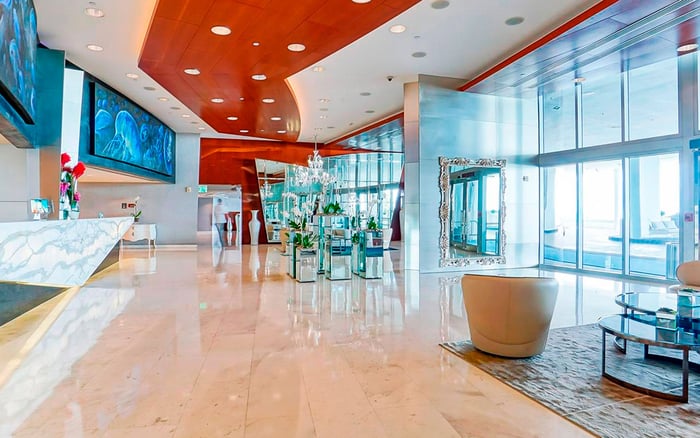
Sunny Isles Beach offers a glamorous first impression, but primary living tests a residence differently than vacation use. A buyer should examine how the building functions on ordinary weekdays: arrival sequence, elevator flow, service access, valet rhythm, package handling, privacy, pet routines, wellness spaces, and the feel of the lobby at both quiet and busy hours.
This is where new construction can be compelling, but the analysis should remain practical. A buyer weighing Bentley Residences Sunny Isles may be responding to the idea of a highly curated residential experience, while another buyer may prefer the established identity associated with Jade Signature Sunny Isles Beach. The right answer depends less on brand impression than on whether the building supports the buyer’s daily operating style.
For some households, the best primary residence is the most private one. For others, it is the one that creates the most effortless transition from travel to home. Buyers comparing St. Regis® Residences Sunny Isles with The Ritz-Carlton Residences® Sunny Isles should ask the same grounded questions: how will groceries arrive, where will guests be received, how will staff coordinate access, and which residence feels natural on a Tuesday morning?
A primary home should be beautiful, but it should also be operationally durable. Brooklyn buyers often arrive with strong architectural preferences, meaningful art, and a cultivated sense of proportion. In Sunny Isles Beach, the temptation is to focus on glass, light, and water. Those are important, but they are not the entire residence.
Before committing, buyers should study storage, service corridors, kitchen utility, acoustic privacy, terrace use, sun exposure, guest separation, and work-from-home comfort. The floor plan should support everyday living without constant improvisation. If the home will become the primary base, it must handle the unglamorous parts of life with the same confidence as the view.
A residence that photographs beautifully may not live beautifully. The reverse is also true. Some of the strongest primary homes reveal themselves through circulation, quietness, and the ease of repeating daily routines. For a lifestyle-driven move, these details are not secondary. They are the substance of the conversion.
If the purchase is financed, buyers should be precise about occupancy representations and timing. A loan file, insurance file, and association application should not tell three different stories. If the intended use is primary residence, the buyer should understand what that means before signing documents and should keep advisors aligned as closing approaches.
Insurance should be treated as part of the residence decision, not a post-closing errand. Coverage, deductibles, contents, improvements, association requirements, and lender conditions can all influence the practical cost and timing of ownership. A high-value condominium may require careful coordination between personal insurance, building coverage, and any custom work planned after closing.
Association approval is another area where planning matters. A primary-residence buyer may need to coordinate interviews, applications, move-in windows, contractor access, and deliveries. The more complex the household, the more useful it is to build a calendar before closing. Precision protects the buyer from unnecessary friction.
The first year after conversion is when intention becomes pattern. Buyers should spend enough time in the residence for the home to become normal, not ceremonial. Local medical providers, fitness routines, dining habits, professional meetings, club life, philanthropy, and family visits all help establish a genuine center of gravity.
This does not require abandoning New York identity. Many buyers will continue to maintain friendships, business interests, and cultural ties in Brooklyn and Manhattan. The distinction is that Sunny Isles Beach becomes the anchor, while New York becomes one part of a broader private life.
The most successful transitions are not performative. They are calm, consistent, and elegantly managed. By the end of the first year, the residence should feel less like a decision and more like the natural address from which the owner’s life is conducted.
Is buying in Sunny Isles Beach enough to establish a primary residence? No. Ownership alone is not the same as primary-residence use. Buyers should align documents, behavior, and household routines.
Should I sell my Brooklyn home before converting? Not always. Retaining it can be compatible with a move, but its role should be clear and reflected in records.
When should advisors be involved? Before closing is ideal. Tax, legal, lending, insurance, and estate-planning guidance should be coordinated early.
Does building selection matter for conversion? Yes. A primary residence must support daily life, privacy, service needs, storage, and year-round comfort.
Are branded residences automatically better for primary use? Not automatically. The relevant question is whether the building’s operations match the buyer’s everyday rhythm.
What records should a buyer keep? Keep move documents, insurance files, utility confirmations, association correspondence, and other materials showing real use.
Can I still spend time in New York? Yes. The issue is whether Sunny Isles Beach functions as the principal home rather than an occasional retreat.
How should I think about furnishing the residence? Furnish it for daily living, including work, storage, guests, wardrobe, meals, and household management.
What is the biggest mistake buyers make? Treating conversion as a single form instead of a consistent pattern of residence, records, and conduct.
Who should help evaluate the right building? Work with advisors who understand luxury condominium operations, privacy, financing, insurance, and primary-use planning.
When you're ready to tour or underwrite the options, connect with MILLION.
If branded residences are on your mind — as a home or as an allocation — we would be glad to share what we are seeing, privately.
Begin a quiet conversation