A practical South of Fifth guide for luxury buyers with multiple pets, focused on building rules, layouts, daily routines, neighborhood fit, and resale protection.
South of Fifth has a particular magnetism for buyers who want Miami Beach at its most composed: ocean air, walkable streets, polished restaurant culture, and a residential tempo set apart from the louder parts of the city. For buyers with multiple pets, that appeal remains strong, but the search requires a more forensic lens. A beautiful residence is only one part of the decision. The real fit comes from the intersection of association rules, private outdoor space, service circulation, elevator convenience, flooring, storage, and the daily choreography of walks, grooming, feeding, and guest care.
The most sophisticated multi-pet buyers begin with lifestyle friction. How many times a day will pets need to go out? Can a handler, housekeeper, or trainer access the residence without disrupting the household? Is there a practical place for leashes, crates, carriers, food delivery, and post-walk cleaning? Can pets be separated when guests arrive? The answers shape the right floor plan as much as bedroom count or view corridor.
In South of Fifth, the best purchase is not simply the most dramatic apartment. It is the residence that allows a polished household to operate quietly and consistently, even when two or three animals are part of the family.
For a multi-pet buyer, the building’s pet policy is not a late-stage detail. It is the first gate. Before getting attached to a residence, review the current condominium documents, house rules, application materials, pet registration requirements, and any limitations tied to number, size, breed, service areas, common spaces, elevators, insurance, deposits, or fines. Rules can differ materially from one building to the next, and they may be applied with a formality that surprises buyers accustomed to single-family living.
This is why a private showing at Apogee South Beach, Continuum on South Beach, or The Ritz-Carlton Residences® South Beach should be paired with document review, not treated as a purely emotional tour. A residence may be exceptional, yet still be impractical if the policy does not match the household.
Ask whether the stated pet policy reflects current enforcement. Confirm whether rules apply per residence or per animal, whether visiting pets are treated differently, and whether large dogs or multiple smaller pets trigger separate approvals. Also ask how pets move through the building. Service elevator requirements, designated entrances, lobby restrictions, and common-area etiquette can affect daily life more than the written allowance itself.
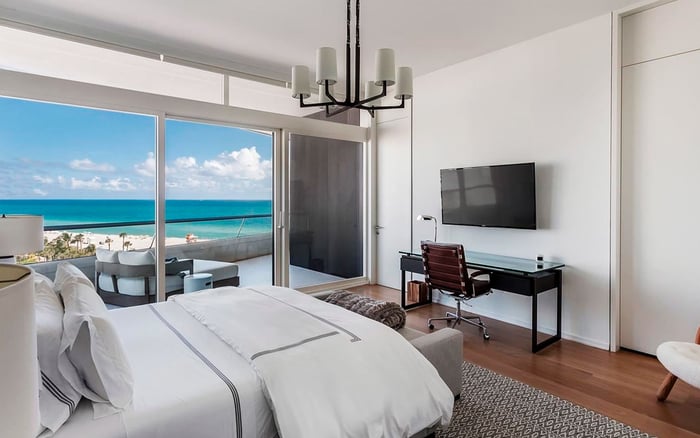
Once the policy is viable, evaluate the residence as a working home for animals. Open plans may photograph beautifully, but multi-pet households often benefit from subtle separation. A secondary bedroom, den, staff room, laundry area, or widened corridor can become an elegant pet management zone without compromising the public rooms. Buyers should look for spaces where carriers, beds, bowls, and supplies can be integrated discreetly.
Flooring matters. Smooth, durable surfaces are easier to maintain than delicate finishes, but acoustics must also be considered. Multiple pets moving across a residence can create noise below or within the unit, especially in quiet boutique buildings. Area rugs, pads, and thoughtful furniture placement are not merely decorative; they are part of neighbor diplomacy.
Terraces can be useful, but they should never be treated as a substitute for proper walks. A terrace may support fresh air, supervised lounging, and household flexibility, yet safety, drainage, exposure, and association rules all require review. For buyers comparing South of Fifth with other Miami Beach options, a residence such as Five Park Miami Beach may help frame questions about indoor-outdoor living, building flow, and the type of daily routine the buyer prefers.
In the luxury condominium world, pet friendliness is not only about permission. It is about whether the building can absorb the realities of pet ownership with grace. Multiple dogs leaving at the same time, a groomer arriving during a busy lobby period, a pet sitter accessing the home while owners travel, or a food delivery arriving weekly all place demands on staff, elevators, security, and loading areas.
The strongest buildings for multi-pet households tend to have clear procedures. Owners should understand guest authorization, elevator booking, package handling, pet incidents, cleaning expectations, and after-hours protocols before closing. A discreet system is far better than an informal arrangement that depends on one friendly staff member.
Do not reduce the search to the nearest dog park. A convenient dog park can be pleasant, but the more important question is whether the building and residence make everyday pet care feel civilized. For pets, the best luxury is predictability: a smooth route outside, a calm re-entry, a place to clean paws, and a staff culture that knows the household without turning it into a spectacle.
Sofi, as many buyers casually call the neighborhood, is especially appealing because it can support an elegant pedestrian routine. Multi-pet owners often value a location where walks are part of the day rather than a logistical project. The right block, lobby orientation, and elevator path can reduce stress for animals and owners alike.
Still, walkability should be tested in real time. Visit during morning, afternoon, and evening windows. Observe traffic at the building entrance, the sound level near the residence, the width of nearby sidewalks, and how dogs react to the surrounding energy. A pet that is calm in a quiet suburban home may respond differently to a denser coastal environment.
This is where buyer’s guides become most valuable: they shift the question from “Can I have pets here?” to “Can this specific household live well here?” South of Fifth and the broader Miami Beach market offer a range of ownership experiences, from highly serviced towers to quieter residential settings. The right answer depends on the animals, the owners, the staff pattern, and the tolerance for routine.
Pet policy is also a resale issue. A residence that works only for a narrow version of pet ownership may limit the next buyer pool, while a home that accommodates pets without compromise can feel more flexible. Future purchasers may have one large dog, two small dogs, cats, or a combination, and they will ask the same questions you should ask now.
Buyers should preserve documentation. Keep copies of approvals, pet registrations, association correspondence, and any written clarifications received before closing. If the building’s policy is central to the purchase decision, have counsel review the language carefully. Verbal comfort is not a substitute for written clarity.
The best multi-pet purchase in South of Fifth is rarely about indulgence. It is about fit. When policy, plan, surfaces, staff procedures, and neighborhood rhythm align, pets become part of the residence’s quiet luxury rather than a complication the owner must manage around.
Should I start with pet rules or available listings? Start with pet rules. A residence that does not fit the household’s animals should be removed before emotional attachment develops.
Can a building allow pets but still be difficult for multiple pets? Yes. The written allowance may be broad, while elevator rules, common-area procedures, or enforcement culture create daily friction.
What should I ask before making an offer? Ask about number limits, size limits, breed language, registration, deposits, insurance, elevator use, guest pets, and current enforcement.
Are terraces important for multi-pet buyers? They can be helpful, especially for supervised fresh air, but they do not replace safe walks or compliance with building rules.
Should I bring my pets to a showing? Only if the seller, listing representative, and building allow it. In many cases, testing the route and surroundings without the pets is the cleaner first step.
How important is elevator access? Very important. A long or crowded elevator path can become a daily issue, particularly with multiple dogs or pets that are anxious.
Can a pet sitter or groomer access the residence easily? That depends on the building’s guest authorization and service procedures. Confirm those rules before relying on outside help.
Do flooring and acoustics affect the purchase decision? Yes. Durable surfaces, rugs, and sound control can protect finishes and preserve neighbor relations.
Is South of Fifth suitable for buyers with large dogs? It can be, but suitability depends on the specific building policy, residence layout, and the owner’s daily walking routine.
What is the biggest mistake multi-pet buyers make? The biggest mistake is assuming pet-friendly means multi-pet practical. The details should be verified before contract timing becomes urgent.
If you'd like a private walkthrough and a curated shortlist, connect with MILLION.
If branded residences are on your mind — as a home or as an allocation — we would be glad to share what we are seeing, privately.
Begin a quiet conversation