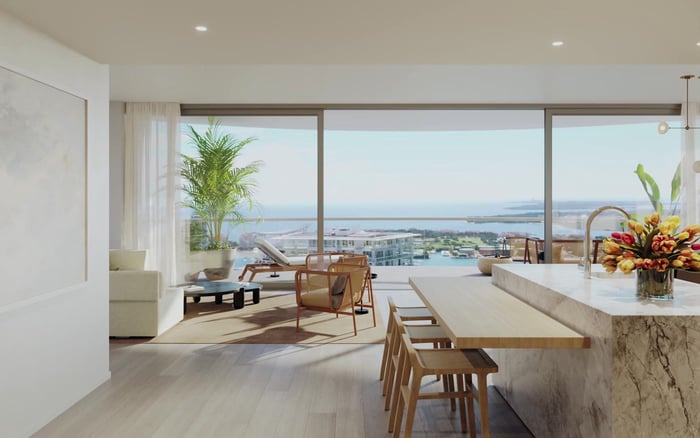
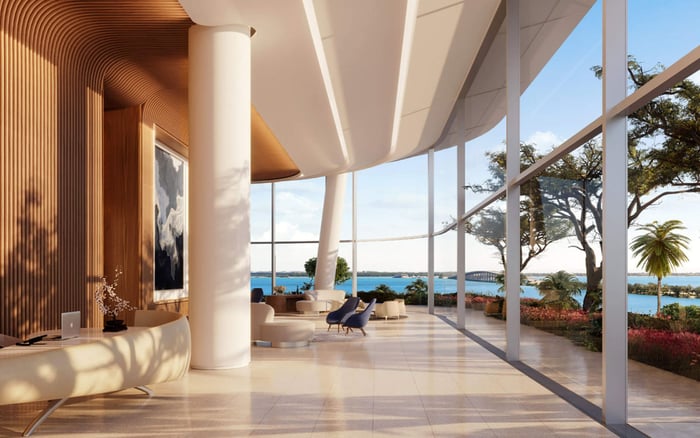
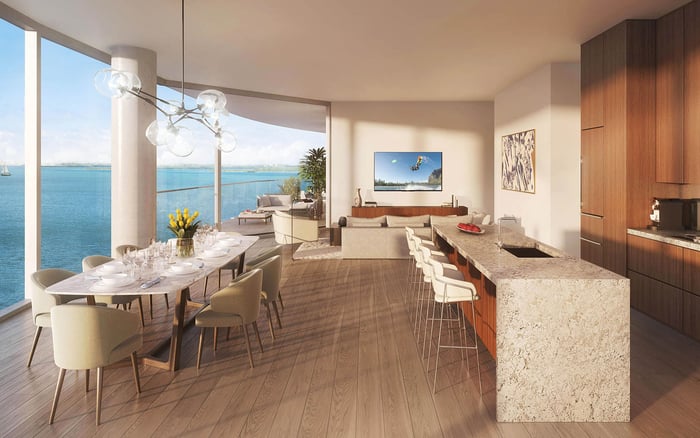
For yacht-owning buyers, the decisive distinction between Brickell and Bal Harbour is operational. Brickell offers route flexibility if the berth is on open bay, while Bal Harbour rewards vessels that fit comfortably beneath Haulover’s fixed bridge.
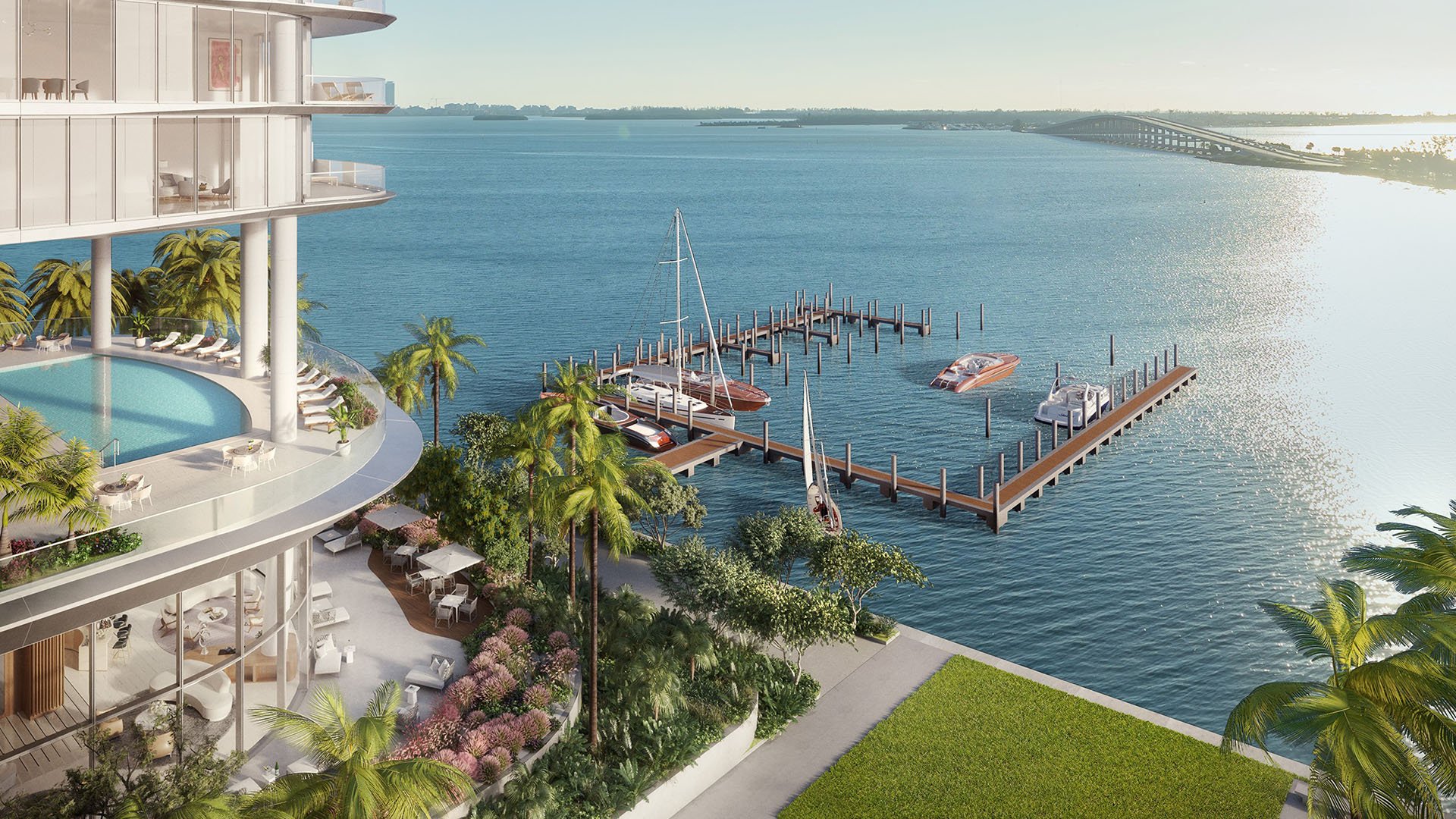
For a buyer choosing between Brickell and Bal Harbour, water access is not a decorative extension of the residence. It is an operating system. The relevant questions begin with the yacht’s maximum air draft, draft in the water, beam, intended berth and preferred route to the Atlantic. Only then should the residential search narrow around architecture, services and views.
The two markets present fundamentally different constraints. For Miami River berths, Brickell’s principal obstacle is an opening bascule bridge. Bal Harbour’s nearest direct ocean route, Baker’s Haulover Inlet, passes beneath a fixed bridge. One requires scheduling when a vessel exceeds the closed clearance; the other imposes a hard height envelope.
This demands more precision than a conventional waterfront comparison or a generic entry in a buyer’s guide. A residence can be ideal on land yet operationally mismatched to the yacht. Boat-slip rights, marina geography and crew movement therefore deserve the same scrutiny as title, floor plan and service standards.
The decisive residential question is not proximity to water, but whether the yacht’s actual route works.
The Brickell Avenue Bridge sits at Miami River mile 0.1 and is the principal bridge constraint for yachts berthed west of Brickell Avenue. Its closed vertical clearance is approximately 23 feet, with about 90 feet of horizontal clearance. A yacht exceeding the closed height generally requires an opening each time it enters or leaves a river berth.
On weekdays excluding federal holidays, openings from 7 a.m. to 7 p.m. are limited to the hour and half-hour, with additional no-opening periods from 7:35 to 8:59 a.m., 12:05 to 12:59 p.m. and 4:35 to 5:59 p.m. Exceptions include tugs and emergencies. For an owner, this turns an apparently short departure into a scheduled maneuver. For crew, provisioning, fueling, guest embarkation and return timing must be organized around the bridge rather than preference alone.
The more favorable Brickell scenario is dockage south of the Miami River on open Biscayne Bay. From there, a yacht can cross the bay toward Government Cut without encountering a fixed-bridge restriction. Yacht Haven Grande at Island Gardens on Watson Island is also accessible without fixed bridges, making it relevant to larger vessels associated with a Brickell residence.
Residential options such as Una Residences Brickell and The Residences at 1428 Brickell may belong on a land-side shortlist, but neither prestige nor bay views resolves the berth question. The buyer still needs a verified dockage plan and a mapped route from slip to ocean.
Central Brickell’s marina landscape includes planned facilities, but forward-looking specifications should not be treated as vested operating rights. Vice City Marina is planned to open in 2026 with approximately 36 slips, access without fixed bridges, capacity for yachts up to roughly 80 feet and dockside depth of around 9 feet. Each point should be confirmed directly before a buyer relies on it.
St. Regis® Residences Brickell is associated with plans for an on-site marina accommodating vessels around 100 feet for pick-up and drop-off. That description does not establish permanent slip availability. A purchaser should determine whether use is transient or permanent, whether rights are deeded, licensed or separately contracted, and which vessel dimensions the completed facility will accept.
A marina amenity can improve transfers without solving long-term dockage. The disciplined approach separates three functions: where the yacht remains, where guests board and which route the captain uses to reach open water.
Bal Harbour’s nearest direct route to the Atlantic is Baker’s Haulover Inlet, connecting northern Biscayne Bay with the ocean. The fixed bridge has 32 feet of vertical clearance and 125 feet of horizontal clearance. Because it does not open, air draft is the threshold measurement. Yacht length alone is not an adequate proxy.
The usable air-draft envelope is around 30 to 32 feet. An owner should compare that range with the vessel’s maximum height, including antennas, hardtops, towers and other non-retractable structures. A yacht taller than roughly 32 feet cannot use Haulover for ocean access and must take another route, such as Government Cut or an inlet farther north.
For a vessel comfortably beneath the fixed clearance, the benefit is immediacy. There is no bridge-opening wait, supporting more spontaneous day boating. Residences such as Rivage Bal Harbour and Oceana Bal Harbour can therefore be evaluated alongside a practical Haulover route, provided the yacht fits and suitable dockage is independently secured.
Clearance is not the inlet’s only consideration. Local depth is in the 12- to 15-foot range, while strong tidal flow and difficult sea conditions can make captain experience and weather timing important. Nearby alternatives within the bay also introduce bridge constraints: Broad Causeway has approximately 14 to 16 feet of closed clearance, while the 79th Street bridge has roughly 21 to 23 feet.
A captain should model a normal operating week, not merely a successful passage under ideal conditions. In Brickell, a river berth can create recurring bridge-calendar dependencies for departures and returns. An open-bay berth removes that particular obstacle, though draft, tide, current, channel depth and weather remain factors in every movement.
In Bal Harbour, crew gains freedom from scheduled bridge openings at Haulover only if the vessel remains safely within the fixed envelope. A marginal fit is not the same as an operationally comfortable one. Tide, loading condition, equipment position and the captain’s safety requirements all matter, as may insurer requirements.
The shore-side plan matters too. Buyers should establish how crew reaches the yacht, where service providers can load supplies, whether guest transfers depend on a separate pick-up point and what happens when the preferred inlet is unsuitable. The luxury is not simply quick access. It is a repeatable departure process with few points of friction.
Brickell is generally the stronger structural fit for a taller yacht when dockage is on open Biscayne Bay and the route avoids the Brickell Avenue Bridge. If the berth lies west of the bridge, the buyer accepts a timetable-driven operating model for vessels taller than approximately 23 feet.
Bal Harbour is better suited to yachts comfortably below Haulover’s 32-foot fixed clearance. The reward is direct local ocean access without waiting for a bridge opening; the trade-off is that an over-height yacht cannot negotiate passage simply by waiting.
Before contracting for a residence, obtain the yacht’s certified maximum air draft, draft and beam; identify the exact berth; trace the primary and backup ocean routes; confirm bridge, channel and dockside constraints; and have the captain test the proposed operating plan. Planned slips, marina specifications and permanent rights should be documented rather than assumed.
For discreet guidance aligning a South Florida residence with the realities of yacht ownership, consult MILLION.
If branded residences are on your mind — as a home or as an allocation — we would be glad to share what we are seeing, privately.
Begin a quiet conversationBrickell’s key Miami River constraint is an opening bascule bridge, while Bal Harbour’s local ocean route passes beneath a fixed bridge at Haulover.
The bridge has approximately 23 feet of closed vertical clearance and about 90 feet of horizontal clearance.
From 7 a.m. to 7 p.m. on weekdays excluding federal holidays, it opens on the hour and half-hour, subject to listed no-opening periods.
Yes. A berth south of the Miami River on open Biscayne Bay can provide a route toward Government Cut without that bridge constraint.
Published clearance is approximately 32 feet vertically and 125 feet horizontally.
The Haulover bridge does not open, so a yacht exceeding roughly 32 feet in maximum height must use another ocean route.
It can be for yachts comfortably within the fixed height envelope because no bridge opening is required.
Draft, tide, current, weather and sea state matter, and strong tidal flow can make experienced command important.
No. Buyers should verify whether dockage is permanent or transient and whether any slip right is deeded, licensed or separately contracted.
Brickell is generally the stronger fit when the yacht uses open-bay dockage that avoids the Brickell Avenue Bridge.