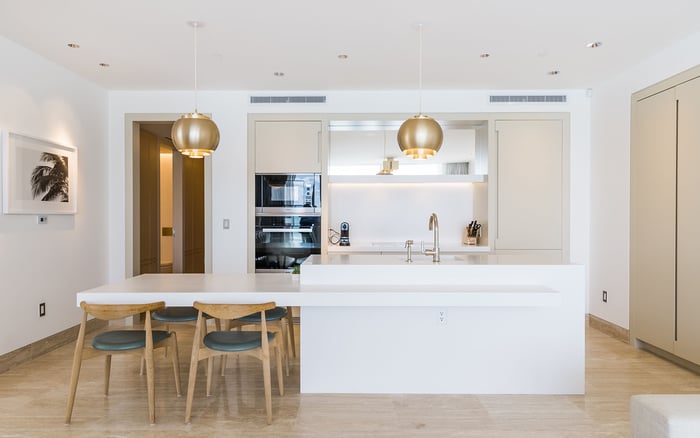
For a Fort Lauderdale penthouse buyer, reserve funding is not a footnote. The essential task is to reconcile the building’s SIRS, budgets, assessments, and debt, then translate each obligation into the residence’s likely share and carrying cost.

For a Fort Lauderdale penthouse acquisition, the association’s capital plan can be as consequential as the contract price. Florida’s revised condominium framework permits required Structural Integrity Reserve Study, or SIRS, contributions to be funded through regular assessments, special assessments, loans, or lines of credit. For associations with three or more habitable stories that must obtain a SIRS, each route creates a distinctly different pattern of owner obligations.
This edition of MILLION’s Buyer's Guides examines those patterns. The objective is not simply to confirm that a reserve study exists, but to determine whether the association’s budgets, reserve balances, assessments, and borrowing align with the study’s schedule. For readers monitoring Broward Pricing & Trends, this distinction belongs in the investment analysis-not a closing-file appendix.
The decisive question is not whether capital work will be funded, but how and when the penthouse will pay its share.
The same discipline applies across Fort Lauderdale’s luxury landscape. A buyer considering Four Seasons Hotel & Private Residences Fort Lauderdale should examine the association documents governing the specific residence and ownership structure rather than infer financial conditions from branding, amenities, or presentation.
The SIRS is the organizing document for mandatory reserve categories. These include roofs, primary structural members, fire protection, plumbing, electrical systems, waterproofing, windows and exterior doors, and qualifying high-cost deferred-maintenance items. Associations may no longer waive reserve funding for mandatory SIRS components through a member vote.
Request the latest SIRS, the current budget, two to three prior budgets, recent financial statements, reserve-account records, pending-assessment disclosures, and approximately 24 months of board and owner meeting minutes. The file should establish the current reserve balance, funded percentage, any history of underfunding or waivers, pending assessments, and estimated costs arising from milestone-inspection findings.
Then reconcile the documents line by line. Compare each SIRS component’s projected cost and funding date with the annual reserve contribution, existing reserve balance, and any alternative financing. If actual funding no longer aligns with the plan in the most recent study, an updated SIRS is required before budget adoption. If the study predates approval of a special assessment, loan, or credit line, it must be updated to reflect that funding method and its effect on the reserve schedule.
Regular assessments are recurring owner charges adopted through the annual budget. They may include scheduled reserve contributions, creating a relatively visible monthly carrying cost. That stability, however, should be tested against prior budgets. A sharp increase may represent overdue reserve normalization rather than ordinary operating inflation.
A special assessment is levied outside the annually adopted budget. It commonly addresses an unanticipated expense or a project whose cost exceeds available reserves. For a penthouse buyer, the material questions are whether an assessment has been approved, proposed, discussed, partially collected, or merely anticipated-and whether the purchase contract clearly assigns responsibility.
A loan can spread a major capital obligation over several years. That may avoid a single immediate bill, but it does not eliminate the expense. Repayment can appear as an extended increase in regular dues. Review the lender, principal, interest rate, maturity, repayment source, covenants, and the residence’s allocated share.
A line of credit may provide interim liquidity after a failed milestone inspection, hurricane loss, or infrastructure failure while owner assessments are collected. For SIRS-related borrowing, the proceeds must be immediately available to cover eligible repair, maintenance, or replacement costs. Scrutinize the credit limit, amount drawn, disclosed variable terms, renewal conditions, collateral or repayment source, and anticipated owner collections.
These distinctions matter whether the target is an oceanfront resale such as Auberge Beach Residences & Spa Fort Lauderdale or another condominium governed by its own documents. Project selection does not replace association-level diligence.
A unit-owner-controlled association required to obtain a SIRS may use a special assessment, line of credit, or loan with approval from a majority of the association’s voting interests. The file should therefore present a coherent chain of notices, agendas, minutes, resolutions, voting records, and updated financial materials.
Details of special assessments, loans, or lines of credit used for reserve items must appear in the annual financial statement available to owners and prospective purchasers. Compare that disclosure with the meeting record. Search approximately 24 months of minutes for “reserve,” “waive,” “special assessment,” “loan,” and “line of credit.” Repeated emergency discussions, unexplained departures from the SIRS schedule, missing vote records, or undisclosed debt terms should prompt legal and financial review before closing.
This scrutiny is particularly important when a residence’s scale produces an outsized allocated share. A penthouse may represent a small fraction of the building’s unit count while carrying a materially different percentage interest under the condominium documents. Never divide a building-level obligation equally by the number of residences unless the governing allocation expressly supports that calculation.
Create a unit-level schedule for every reserve shortfall, approved or proposed special assessment, outstanding loan, and available or drawn credit line. Apply the penthouse’s allocated percentage from the governing documents. Then express the result as a total estimated dollar share, a monthly equivalent, and a monthly cost per square foot.
Model at least three cases. The first assumes continued funding through regular assessments. The second assumes debt-funded capital work with multiyear repayment. The third assumes a large direct special assessment. Each case should identify timing, duration, known interest expense, and any residual shortfall. This analysis allows the buyer to compare a seemingly smooth dues profile with the economic cost of deferred or financed work.
The exercise is equally relevant when evaluating St. Regis® Residences Bahia Mar Fort Lauderdale and The Ritz-Carlton Residences® Fort Lauderdale. In every instance, use the documents applicable to the residence, association, and transaction rather than importing assumptions from another property.
A strong due-diligence file establishes a clear narrative: what work the SIRS identifies, when it is scheduled, how the association intends to pay for it, what approvals support that decision, and how much of the obligation belongs to the penthouse. Any mismatch should be resolved in writing by qualified legal, financial, engineering, or insurance advisers, as appropriate.
The refined buyer is not searching for a building with no future capital expense. The more realistic objective is disciplined governance, intelligible records, credible reserve alignment, and a carrying-cost model that remains acceptable under more than one funding scenario.
For discreet guidance on South Florida luxury real estate, connect with MILLION.
If branded residences are on your mind — as a home or as an allocation — we would be glad to share what we are seeing, privately.
Begin a quiet conversationBegin with the latest SIRS, then reconcile its component costs and schedule with the association’s budgets, reserve balances, assessments, and debt.
The permitted paths include regular assessments, special assessments, loans, and lines of credit.
It is a recurring owner charge adopted through the association’s annual budget and may include scheduled reserve contributions.
It is a charge imposed outside the annually adopted budget, often for unanticipated expenses or costs exceeding available reserves.
No. Mandatory SIRS reserve funding may no longer be waived through a member vote.
Review the lender, principal, interest rate, maturity, repayment source, covenants, and the penthouse unit’s allocated share.
The minutes can reveal recurring reserve practices, financing discussions, proposed assessments, voting records, and departures from the funding plan.
An update is required when a prior study predates an approved special assessment, loan, or credit line, or when actual funding no longer aligns with the plan.
Compare regular-assessment funding, multiyear debt repayment, and a direct special assessment, expressing each as a unit share and monthly cost per square foot.
Repeated underfunding, unexplained deviations from the SIRS, missing vote records, pending assessments, and undisclosed debt terms merit legal and financial review.