For buyers who value privacy, service, and a year-round social calendar, Boca Raton’s legacy club communities remain a distinct category of South Florida real estate. Boca West Country Club and St. Andrews Country Club sit at the top of that conversation, but they deliver luxury through different structures: one defined by scale and “village” variety, the other by a more concentrated, single-family-only environment. This MILLION Luxury guide focuses on the pieces that materially affect ownership and daily life: the physical footprint of each community, the golf and racquet ecosystems, what is publicly disclosed about dues and governance, and how to think about real estate optionality when your home is paired with a private-club lifestyle.
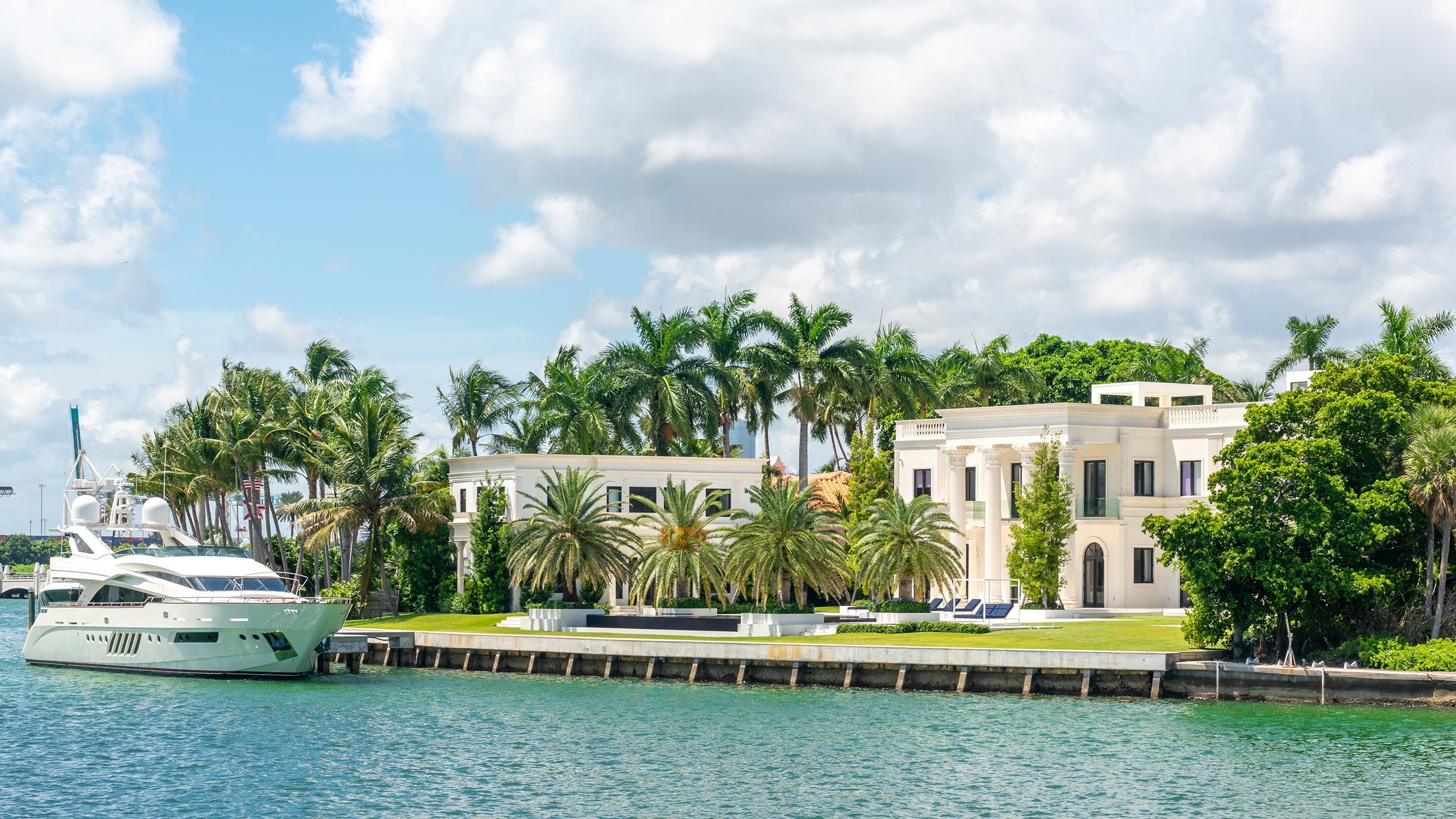
In Boca Raton, luxury buyers often describe the same objective in different language: privacy that feels effortless, security that is present without being intrusive, and amenities that run with the cadence of a private resort. The communities that deliver on that promise do it consistently, from the arrival experience at the gate to the pace of the tee sheet to how easily you can secure a table on a busy winter weekend.
Boca West Country Club and St. Andrews Country Club are frequently cross-shopped because both combine homeownership with a member-driven club lifestyle. The distinction is rarely about which is “better.” It is about which structure matches how you actually live. Boca West is built around breadth, with a large footprint, multiple residential formats, and a deep bench of amenities. St. Andrews is designed to feel more concentrated and single-family oriented, with a club experience that emphasizes immediacy and performance.
This guide compares the two through a buyer’s lens, using publicly available, club-published details and widely used market snapshots.
Boca West positions itself as a private, manned-gate community spanning about 1,400 acres, organized into 55 residential “villages.” For buyers, that village structure is not a small detail. It can shape everything from the architectural character and maintenance profile to the feel of day-to-day density and your proximity to core club assets.
For golf-focused households, Boca West is direct about its identity. The club promotes 72 holes across four 18-hole championship courses with designs attributed to Arnold Palmer (Palmer I and III), Jim Fazio (Fazio II), and Pete Dye (Dye IV). In practical terms, that inventory can mean more variety in play, more flexibility in tee-time demand, and a community rhythm where golf is a primary driver of the social calendar rather than a single amenity.
A key point for amenity-minded buyers is the Golf & Activities Center, positioned as the operational hub for golf. It is described as 150,000 square feet and completed in 2017. When you are evaluating private club communities, a purpose-built facility is often a signal of long-term commitment to programming, instruction, and the member experience.
St. Andrews is presented as a gated Boca Raton country club community consisting of 730 single-family homes. For buyers who want neighborhood consistency and prefer to avoid condo-style governance and higher-density living, that single-family emphasis is a defining attribute.
On the golf side, St. Andrews promotes 36 holes across two courses, including an Arnold Palmer Signature Design course and a Championship Course described as renovated or redesigned. The club also places clear emphasis on a Golf Performance Center, highlighting technology-forward instruction and analysis. For serious players, performance infrastructure is not secondary. It shapes practice habits, instruction quality, and whether golf remains part of your weekly routine year-round.
Beyond the fairways, St. Andrews highlights a multi-outlet dining culture and a fitness program with dedicated facilities and seasonal programming. The message is consistent with modern club expectations: members want wellness, dining, and social life to feel intentional and well managed.
Both communities present as complete lifestyle environments, but they express that completeness in different ways.
At Boca West, the scale of the golf ecosystem is the headline, supported by a dedicated hub designed to concentrate activity and service. On the racquet side, Boca West describes 27 Hydro Tennis courts and 14 pickleball courts, for a total of 41 courts. In day-to-day terms, that amount of inventory often translates to capacity during peak season, concurrent clinics, and a ladder culture that can accommodate different skill levels without constant scheduling friction. If your household plans weekends around court time, scale matters.
St. Andrews describes 15 Har-Tru clay courts, including lighted courts and a stadium-style center court. The stadium element is telling, not because it changes how you play on a Tuesday morning, but because it signals investment in instruction, events, and organized competition. For buyers, the relevant question is not only “how many courts,” but “what does the club optimize for?” More courts can favor flexibility and casual play; a strong center court can emphasize programming and visibility.
Dining is another area where both clubs highlight breadth rather than a single dining room. Boca West’s materials describe a multi-venue approach. St. Andrews names outlets such as The Gallery and The View and emphasizes chef-led direction. For prospective members, dining variety often acts as a quiet proxy for engagement: the more reasons members stay on property, the more the club functions as a true second home.
Buyers often leave governance questions until late in the process, and then discover that the answers influence daily life as much as the house itself. In private club communities, governance affects standards, capital planning, responsiveness, and how consistently the community presents from one season to the next.
Boca West describes a community-wide Master Association management structure. In a community organized into multiple villages, the master layer often defines the baseline experience, including common-area maintenance, the presentation of entry corridors, and the general posture of the community.
On security, both communities are presented as gated and manned. Third-party overviews also characterize St. Andrews as having additional perimeter or security measures. Even so, buyers should verify operational realities in person: visit at different times of day, observe the gate process, and ask about visitor protocols, especially if the property will be used as a second residence.
Membership costs are not uniformly transparent across private clubs. Boca West publishes a detailed annual dues schedule that lists base annual dues for a Social Membership of $22,593.05 for 2024 to 2025. That level of disclosure helps buyers model ongoing carrying costs alongside taxes, insurance, and any village-level assessments. For St. Andrews, initiation fees and exact annual assessments are not publicly detailed in the club materials referenced here, so buyers typically confirm directly with the club during the inquiry process.
Rankings and recognitions are best treated as context rather than proof, but they do influence perception. Boca West has published club news noting a global ranking position and has also announced being named an “Elite Distinguished Club” by BoardRoom Magazine.
From a real estate perspective, the differences between these two communities are evident even before you step inside a home.
Boca West’s 55-village structure can provide meaningful choice in home type, price band, and proximity to amenities. It can also introduce complexity. Different villages may carry different fee structures, renovation constraints, or buyer profiles. If you value optionality, Boca West can function like a diversified portfolio within one address, but it rewards careful diligence at the village level.
St. Andrews, in contrast, is framed around single-family homes. That can simplify the search for buyers who equate privacy with land and prefer a consistent residential form across the community. The trade-off is fewer “formats” to choose from, but also fewer variables as you compare properties and governance.
For directional market context, public listing portals provide a median listing price snapshot for each community. These figures reflect asking prices at a given moment rather than closed-sale outcomes, but they can still serve as a temperature check on current inventory and seller expectations.
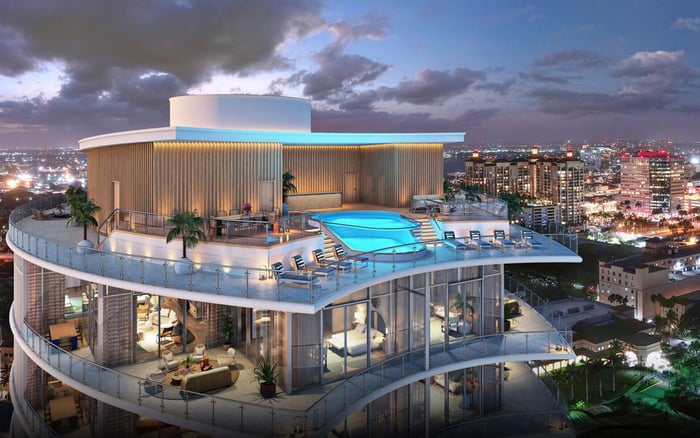
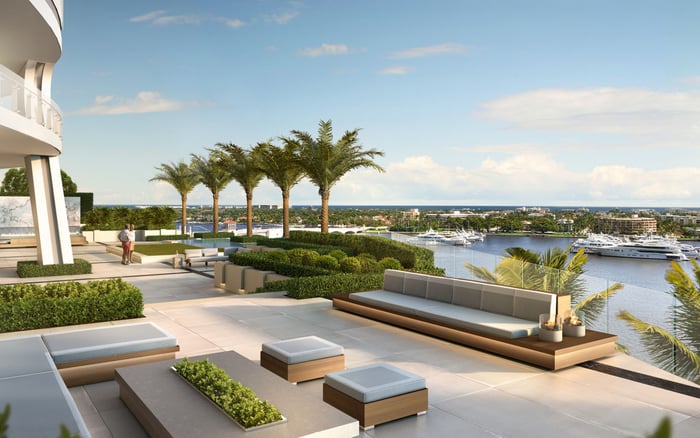
Some buyers begin their search in Boca Raton for the private-club ecosystem, then realize their priority is a lock-and-leave waterfront residence with hotel-grade services. In that scenario, West Palm Beach can enter the conversation, particularly for households that split time across South Florida.
Along the Intracoastal and downtown corridor, new and newer luxury towers increasingly compete with private clubs by offering concierge-forward living, wellness programming, and walkable dining. Buyers who want a modern, cosmopolitan cadence sometimes gravitate toward Mr. C Residences West Palm Beach for its branded approach, while those prioritizing legacy service standards often consider The Ritz-Carlton Residences® West Palm Beach.
For a residence that reads as clean-lined and contemporary, Alba West Palm Beach can fit the brief. For buyers drawn to a more classic waterfront presence, Forté on Flagler West Palm Beach is frequently discussed in the same breath as established Palm Beach County luxury.
The takeaway is not that one category replaces another. It is that “club life” can be achieved either through a private membership model or through a service-heavy residential building, depending on how you actually spend your week.
If you want maximal amenity depth and the ability to choose among multiple residential micro-neighborhoods, Boca West’s scale and village structure are central advantages, reinforced by its expansive golf offering and large dedicated golf hub.
If you want a concentrated, single-family environment with strong golf infrastructure and a clear emphasis on performance and programming, St. Andrews reads as a more distilled proposition.
In both cases, the smartest decision sits at the intersection of three realities: the home you love, the club culture you will genuinely use, and the recurring costs you are comfortable carrying through every season.
Is Boca West a gated community? Yes. Boca West is presented as a private, manned-gate community.
How large is Boca West Country Club? It is described as spanning about 1,400 acres.
How many residential areas are inside Boca West? The community is organized into 55 residential villages.
How many golf holes does Boca West promote? Boca West promotes 72 holes across four 18-hole championship courses.
What is the Boca West Golf & Activities Center? It is described as a dedicated golf hub of 150,000 square feet, completed in 2017.
How many tennis and pickleball courts does Boca West list? Boca West lists 27 Hydro Tennis courts and 14 pickleball courts.
Is St. Andrews Country Club primarily single-family? Yes. It is presented as a community consisting of 730 single-family homes.
How much golf does St. Andrews offer? St. Andrews promotes 36 holes across two courses, including an Arnold Palmer Signature Design course.
Does St. Andrews have notable tennis facilities? Yes. The club describes 15 Har-Tru clay courts, including lighted courts and a stadium-style center court.
Where should I start if I am comparing club communities to West Palm Beach condos? Start by deciding whether you want a member-club calendar or a service-led building lifestyle, then tour both; to align the search with your goals, connect with MILLION Luxury.
If branded residences are on your mind — as a home or as an allocation — we would be glad to share what we are seeing, privately.
Begin a quiet conversation