A discreet buyer’s guide to evaluating camera coverage, access records, incident preservation, and privacy in Downtown Miami residences, with a clear distinction between private-building systems and police body-camera records.

For a Downtown Miami buyer, discretion should extend beyond who enters the lobby. It should encompass what is recorded, who can retrieve it, and what remains available when an incident needs reconstruction. During Miami's global event calendar, those questions belong alongside guest arrangements and arrival logistics.
The question is not simply whether a residence has cameras, but whether management can explain coverage, access records, preservation procedures, and privacy controls in writing. A camera count is not a coverage map. A visitor registration is not proof of every movement. A retention promise is incomplete unless it identifies the system it covers.
These are due-diligence recommendations, not descriptions of security practices at any named property. Police body-camera rules must also remain separate from the policies governing residential cameras and access systems.
Begin with a management-led review of the areas relevant to your household: arrival points, lobby approaches, garage interfaces, elevator access, and service entrances. Ask which areas are recorded, which are monitored live, and where coverage ends. Seek a controlled explanation of coverage, not unrestricted circulation of a sensitive security plan.
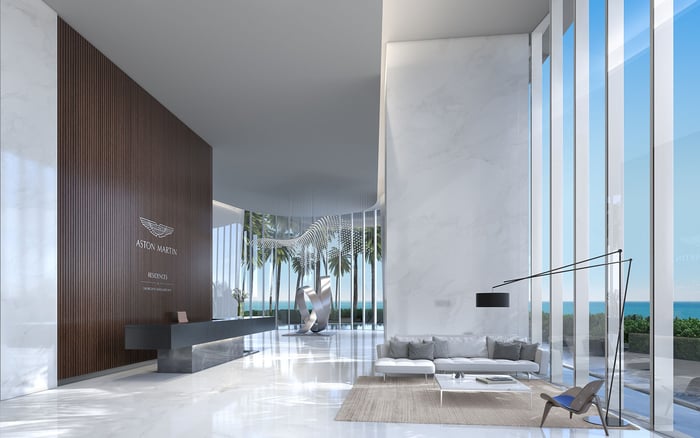
When considering Aston Martin Residences Downtown Miami, make that conversation part of your property-specific review rather than inferring capabilities from the address or presentation.
Clarify whether an image would support the task that matters to you: establishing an arrival time, distinguishing a vehicle, or reconstructing a sequence. Ask how lighting, obstructions, equipment outages, and temporary arrangements are assessed. The presence of a camera alone establishes none of those capabilities.
Access-control data warrants its own discussion. Ask whether the property maintains key-fob activity, visitor registrations, elevator-access records, or garage-entry data, and what each record captures. A credential event is not conclusive identification of the person using it without further review.
For buyers evaluating Casa Bella by B&B Italia Downtown Miami, ask whether management can explain the relationship between guest authorization and the records available after an incident. This is an inquiry, not an assertion about that project's systems.
Ask whether clocks across cameras and access systems are synchronized, how time discrepancies are handled, and who can assemble a timeline. Request separate retention schedules for each record type. Do not substitute police-record rules for a property's written policies on video, visitor registrations, elevator logs, or garage records.
Routine deletion and incident preservation are different issues. Ask for the building's current written schedule, the systems it covers, and the procedure for suspending deletion when a relevant event occurs. Do not accept a single number as the answer for every category of information.
If a retention period is quoted during your review, ask which policy it comes from, when that policy was updated, and which records it governs. Treat historical police retention figures as a separate subject, not as confirmation of a condominium's current retention policy.
For a private residence, request a written incident-hold process identifying the responsible contact, relevant time window, cameras, and associated access records. Ask for confirmation that the hold was received and implemented. Where an investigation, administrative matter, or litigation is involved, consult counsel about preservation obligations rather than relying solely on routine deletion schedules.
Residential footage and police body-camera recordings should not be treated as one archive. If an incident involves City of Miami or Miami-Dade police, ask the relevant agency to confirm its current records-request process, retention policy, and preservation procedures. Do not assume that a request to building management also reaches the police agency.
Keep the incident date, time, location, officer name or badge number, and case number when available. Ask the agency which details it needs to locate the recording and how to submit them through its designated channel.
Do not assume that submitting a request guarantees access to every recording. Ask about applicable disclosure restrictions and potential redactions. Treat a records request and an incident-preservation request as distinct steps, and seek confirmation of how each will be handled.
For residents, protection should not mean indiscriminate access to their movements. Ask who may view recordings and logs, who can export them, and whether retrieval and sharing are themselves recorded. Role-based permissions, documented approvals, and review of access activity are sensible controls to request, not verified features of every luxury building.
A buyer considering Waldorf Astoria Residences Downtown Miami should apply the same standard: seek a clear explanation of information governance without assuming that branding establishes a particular privacy policy.
Vendor arrangements deserve equal attention. Ask who hosts the data, what access contractors receive, how exported copies are controlled, and what happens when a service relationship ends. Do not treat cloud storage alone as an assurance of privacy. Request written explanations of access restrictions, deletion procedures, and the handling of incident-related disclosures.
An event-period review should remain practical. Ask management how guest permissions, temporary credentials, delivery access, and after-hours incident contacts would be handled for your household's plans. Confirm who can authorize preservation when the usual manager is unavailable. These are planning questions, not claims about special deployments at any named Miami event.
The same discipline applies when extending a search into Brickell, including Baccarat Residences Brickell. Evaluate each property's documentation independently; proximity and brand positioning do not establish identical security arrangements.
If something occurs, keep a concise incident record: time, location, people involved, relevant credentials, and any police case details. Share sensitive information through the property's designated channel rather than a broad resident discussion. Counsel should advise on disputed disclosure rights, preservation obligations, or requests involving litigation.
The strongest buyer conversation ends with clear responsibilities: who maintains the records, who approves access, who implements a hold, and who answers a privacy concern. Request those answers before treating a security presentation as complete.
Discretion is not the absence of records. It is a reason to insist that useful records are handled carefully, preserved appropriately, and shared through a defined process. For a residence serving as both private retreat and point of arrival, that clarity belongs in the purchase conversation.
Explore Downtown Miami residences with MILLION and make documented security and privacy questions part of your property review.
If branded residences are on your mind — as a home or as an allocation — we would be glad to share what we are seeing, privately.
Begin a quiet conversationRequest a controlled explanation of recorded areas, live monitoring, coverage gaps, and the kinds of details images could establish. Do not infer capabilities from camera counts alone.
Do not substitute police retention periods for a property's written policies. Ask management for current schedules covering residential cameras and access systems.
Ask which policy it comes from, when that policy was updated, and which records it governs. Do not assume one period covers every system.
Different systems may capture different events and follow different retention schedules. Ask what each log records and whether its timestamps align with camera footage.
As a due-diligence recommendation, it should identify the responsible contact, relevant time window, cameras, and associated access records. Request confirmation that preservation has been implemented.
Ask who hosts the data, what access contractors receive, and how exported copies are controlled. Request an explanation of what happens when the service relationship ends.
Ask the relevant City of Miami or Miami-Dade agency to confirm its current request and preservation procedures. Do not assume a request to building management also reaches the agency.
Keep the date, time, location, officer name or badge number, and case number when available. Ask the agency which details it needs to locate a recording.
No; ask the relevant agency about applicable disclosure restrictions and potential redactions. Seek legal advice if disclosure rights are disputed.
Ask about role-based viewing permissions, export approvals, access auditing, and vendor handling of data. These are recommended review points, not confirmed practices at the linked properties.