A private-client guide to evaluating Downtown Miami condominium amenities through the realities of family life: children’s supervision, caregiver authorization, guest privileges, and liability paperwork.

For a family purchasing in Downtown Miami, the most consequential amenity question is not simply what the building offers, but whether its spaces support the household’s daily routines: a nanny taking children downstairs, grandparents visiting for a week, or a teenager using the fitness center independently. The distinction between an appealing facility and a usable privilege deserves attention before purchase.
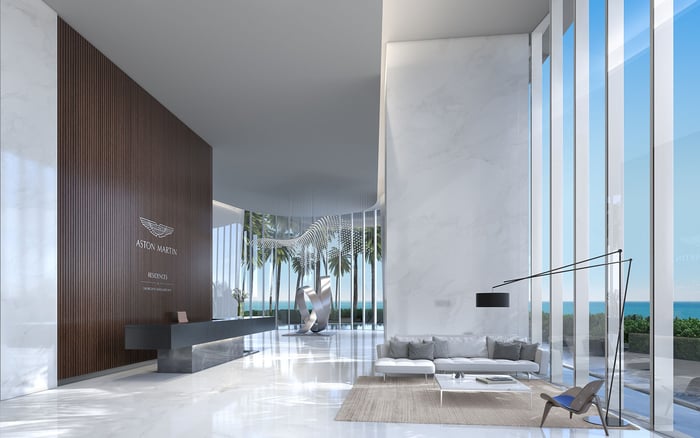
Review each condominium’s policies individually rather than assuming neighborhood-wide permissions for children, caregivers, guests, or liability releases. A buyer considering Aston Martin Residences Downtown Miami should therefore treat family access as a question of documented permissions, not an inference from the residence’s positioning.
Start with a short household profile: children’s ages, regular caregivers, expected visitors, and occasions when neither parent will be present. Give that profile to management and request written answers tied to current rules. The objective is a clear operating plan, not a general assurance that the building is family-friendly.
Ask for a written matrix showing who may enter each amenity, with whom, and under what conditions. Separate owners, resident children, registered caregivers, visiting relatives, and other guests. For each category, confirm whether the owner must be present and whether independent entry requires approval, registration, or a separate credential.
Credential-controlled access is not the same as authorization. Do not treat a key fob that opens an amenity door as confirmation that a caregiver may independently supervise children inside. Request separate confirmation of the caregiver’s permissions.
For a household evaluating One Thousand Museum Downtown Miami, the useful question is precise: may this registered caregiver take these children to this amenity while the owner is away? Ask management to identify the written provision supporting its answer. Confirm whether guest credentials expire and what happens when the regular caregiver is temporarily replaced.
An age rule for one space should never be assumed to apply throughout the building. Request separate age and supervision requirements for pool access and fitness-center admission rather than relying on a general statement about children’s privileges.
For your household, that distinction can determine whether an otherwise trusted adult qualifies to supervise under the applicable policy. Ask separately about the pool, fitness center, and any playroom, splash area, or programmed activity offered. Confirm minimum ages, permitted supervising adults, and whether supervision requires physical presence throughout the visit.
Do not equate a staffed reception desk with aquatic supervision. Confirm whether a lifeguard is provided, what emergency procedures apply, and who is responsible for direct supervision before planning a child’s first visit.
A children’s playroom is a place; childcare is a service. A playroom, kids’ club, splash pad, or shaded play lawn should not, by its name alone, be treated as a promise of professional supervision, babysitting, or permission to drop children off.
That distinction is useful when reviewing Casa Bella by B&B Italia Downtown Miami: ask what the applicable documents and operating arrangements provide, without assigning another property’s services or rules to it.
If supervised programming matters to the purchase, request confirmation of drop-off availability, the program operator, eligible ages, booking requirements, and emergency procedures. Establish whether a parent or authorized caregiver must remain nearby. Where a service is not confirmed, plan on household-provided supervision rather than treating an amenity name as a childcare commitment.
A caregiver’s ability to enter the residence does not settle amenity access. Ask whether management classifies a nanny as an employee, registered caregiver, guest, or another category, and what that classification permits. Distinguish supervision of the child from the caregiver’s own recreational use: permission to accompany a child does not necessarily permit independent use of the facilities.
For visiting family, request current rules on registration, accompaniment, guest numbers, and any reservations or charges. Ask how the policy treats grandparents supervising children without a parent present. Resolve these matters in writing rather than testing assumptions at the amenity entrance.
For disability-related caregivers and live-in aides, ask whether a reasonable-accommodation process applies rather than assuming ordinary guest privileges resolve access. Raise the issue through the appropriate management process and obtain legal advice where needed.
Household planning should address compliance as carefully as initial admission. Ask counsel to explain the condominium’s enforcement provisions, including whether violations can lead to amenity-use suspensions and what procedures and limitations apply.
Do not transfer an explanation of homeowners’ association rules to a condominium without legal review. Likewise, do not treat a general discussion of guest access as confirmation of the household’s privileges in a particular building.
When assessing Waldorf Astoria Residences Downtown Miami, ask counsel to review the applicable condominium documents and enforcement provisions rather than relying on a general explanation of association law. Clarify how violations are communicated and how the household can obtain current rules before using the facilities.
Request any liability-release and hold-harmless documents required for resident or guest amenity use before planning access. Do not treat a signature as proof that every provision is enforceable.
Have Florida counsel review each document’s scope, required signatories, treatment of minors and guests, and renewal frequency. Do not assume a caregiver can waive a child’s claims or that a parent’s signature guarantees enforceability. Keep access authorization and liability paperwork as separate checks.
Before occupancy, assemble a concise household brief containing current rules, written access permissions, supervision requirements, emergency procedures, and required forms. Reconfirm policies before important visits rather than assuming previously supplied hours and permissions remain current. For a private client, the real luxury is knowing in advance that the residence supports the family’s daily life.
For a discreet conversation about matching Downtown Miami residences to your household’s priorities, connect with MILLION.
If branded residences are on your mind — as a home or as an allocation — we would be glad to share what we are seeing, privately.
Begin a quiet conversationNo; review each building individually rather than assuming neighborhood-wide permissions. Obtain the current rules for each amenity.
It should identify permissions for owners, children, caregivers, and guests, including accompaniment requirements and any registration or credential conditions.
Not by itself. Request written confirmation of permission to supervise children or use facilities independently.
Do not assume so. Confirm age and supervision requirements separately for each amenity.
Not by its name alone. Confirm whether supervised programming exists, who operates it, and whether a parent or authorized caregiver must remain present.
That depends on the building’s guest and supervision policies. Request written confirmation covering grandparents’ access and any minimum supervising age.
Do not assume the ordinary guest category resolves their access. Ask management and counsel whether a reasonable-accommodation process applies.
Ask counsel to review the condominium’s enforcement provisions, including potential suspensions and applicable procedures and limitations. Do not rely on a general explanation of homeowners’ association rules.
Do not assume so. Florida counsel should review required signatories, the treatment of minors, and the scope and enforceability of the particular document.
Obtain current written policies before purchase and occupancy, and reconfirm them before important visits. Avoid assuming previously supplied hours and permissions remain current.