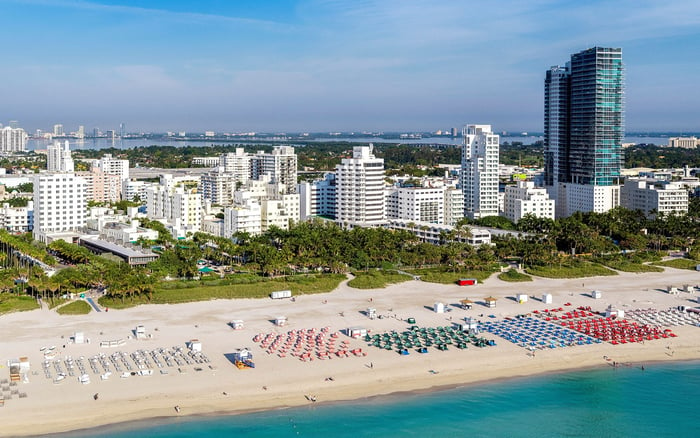
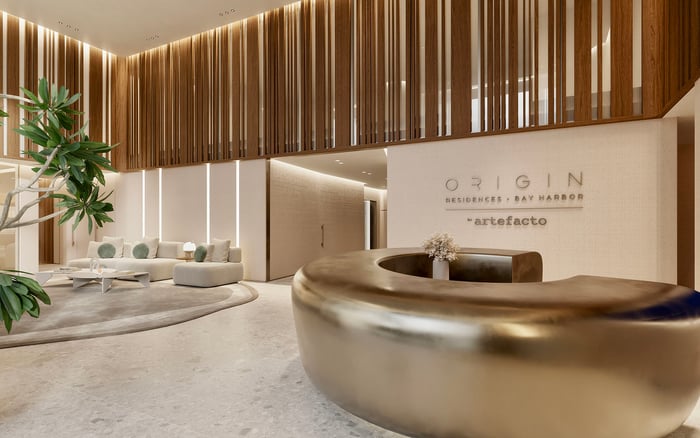
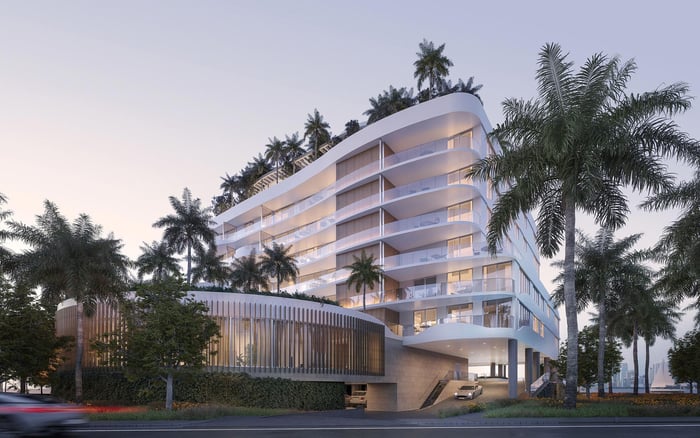
Mila’s boutique scale and private arrivals invite a closer examination of quiet. A disciplined buyer’s audit should connect acoustic specifications, equipment locations, flooring rules, and contractual protections to the exact residence under consideration.
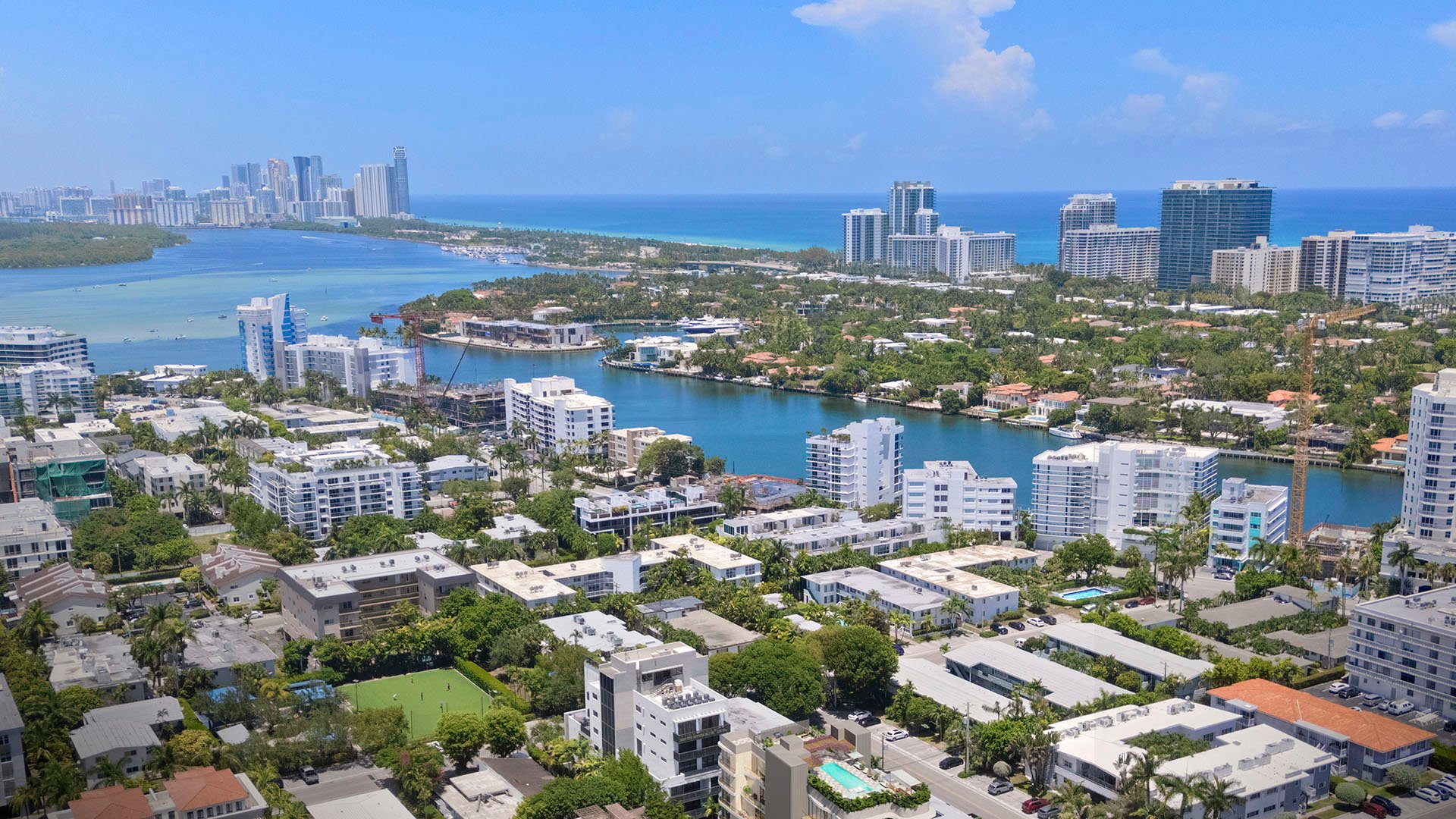
The most consequential luxury in a residence may be the one a floor plan cannot show: the ability to close the door and settle into quiet. At Mila Bay Harbor Islands, the buyer’s task is to distinguish an appealing promise of privacy from documented sound-isolation performance.
At 1125 97th Street, Bay Harbor Islands, FL 33154, Mila is described as an eight-story building with nine residences. Advertised features include two- to four-bedroom full-through layouts, private elevator arrivals, floor-to-ceiling impact glass, and generous terraces. Islands Development Group is the developer, and Kobi Karp is the designer.
Those details establish the residential proposition, not its acoustic performance. They do not establish wall or floor/ceiling Sound Transmission Class ratings, Impact Insulation Class ratings, or project-specific floor-impact test results. They also leave equipment locations relative to individual residences unresolved. This is a documentation gap-not evidence of poor acoustics or verified quiet.
Begin with the exact residence, not a representative layout. Request its architectural plans, the plans immediately above and below, and the wall and floor/ceiling assembly specifications. Ask that every acoustic statement be tied to an identifiable assembly and location.
Treat airborne-sound isolation and floor-impact performance as separate questions. Request Sound Transmission Class documentation for the relevant walls and floor/ceiling assemblies, then Impact Insulation Class documentation and any available project-specific impact testing. Have an acoustical consultant explain what each document establishes and what remains untested.
Do not substitute the phrase “impact glass” for an acoustic specification. Request the glazing’s acoustic documentation separately, including how the proposed window and door assemblies relate to the rooms under review. Likewise, ask what private elevator access means technically, beyond the arrival experience.
If Bay Harbor Towers is also on the shortlist, apply the same document request there. Comparison should rest on equivalent evidence, not an assumption that one project’s privacy language implies better sound isolation.
An adjacency audit should be clear enough to discuss across a table. Ask the developer to mark elevators, shafts, mechanical rooms, pumps, generators, trash areas, pool equipment, and rooftop equipment on coordinated plans wherever applicable. These are requested checks, not confirmed Mila installations or adjacencies.
Trace their relationship to the primary bedroom, secondary bedrooms, living room, and any intended study. Ask what sits beside, above, and below each space. Include levels beyond the residence itself; do not stop the review at the apartment boundary.
For identified equipment, request schedules and vibration-isolation details. Ask the design team to explain intended operating conditions and provisions for controlling noise and vibration. The objective is a coordinated answer linking location, equipment, and isolation design-not a general assurance that the building will be quiet.
Private elevator arrivals deserve the same scrutiny. Mila’s advertised convenience does not establish elevator noise or vibration performance. Request the relevant design details before treating private access as an acoustic benefit.
The flooring audit has two parts: what will be delivered and what owners may change later. Obtain the declaration, bylaws, flooring requirements, and alteration procedures. Mila-specific flooring standards and enforcement history remain unestablished here.
Ask whether alterations require acoustic documentation, who approves proposed assemblies, and how compliance is checked after installation. Have counsel identify any stated obligations to correct noncompliant work and the association’s authority to enforce them. Request the actual language rather than relying on verbal assurances of strict rules.
Apply the same discipline when considering Onda Bay Harbor. Compare how well each candidate’s documents answer the buyer’s flooring and enforcement questions, without presuming either project offers stronger protections.
Obtain the complaint procedure and any available violation records. Clarify how complaints are documented, who evaluates them, and what response process the governing documents provide. Ask which procedures are adopted and which remain proposed.
Ask counsel to review the current Bay Harbor Islands noise provisions, including applicable thresholds, measurement requirements, exceptions, and complaint procedures. Confirm any penalties and construction-hour restrictions before relying on them in a purchase decision or complaint.
Municipal enforcement should not replace a review of the association’s flooring rules or the building’s acoustic specifications. Ask counsel to distinguish the municipal complaint route from the rights and procedures established by the condominium documents, and ask an acoustical consultant to explain how those standards relate to the comfort you expect inside the residence.
Before signing, discuss post-completion acoustic testing with an acoustical consultant and purchase counsel. Consider negotiating measurable acceptance criteria, test locations and conditions, who conducts the testing, and how results will be delivered. Do not treat an informal listening visit as equivalent to an agreed testing protocol.
Define the response to an unsatisfactory result as carefully as the test itself. Ask counsel to address correction obligations, retesting, timing, costs, and contractual remedies where negotiable. None of these protections should be assumed to exist in Mila’s purchase documents.
For a buyer extending the search to Bal Harbour and Rivage Bal Harbour, the principle remains unchanged: require residence-specific evidence before drawing acoustic comparisons. Architectural preferences can be personal; the documentation request should be consistent.
The final decision need not demand an impossible guarantee of silence. It should establish what has been specified, what can be tested, who must respond if agreed criteria are not met, and which obligations survive future alterations. At Mila, that is the meaningful step beyond the floor plan: making quiet a defined purchase consideration rather than an inference from exclusivity.
For a considered approach to South Florida’s exceptional residences, explore MILLION.
If branded residences are on your mind — as a home or as an allocation — we would be glad to share what we are seeing, privately.
Begin a quiet conversationThe project address is 1125 97th Street, Bay Harbor Islands, FL 33154.
Mila is described as an eight-story building with nine residences. Its advertised mix includes two- to four-bedroom full-through layouts.
The project details presented here do not establish wall or floor/ceiling Sound Transmission Class ratings, Impact Insulation Class ratings, or project-specific floor-impact test results.
No. A documentation gap establishes neither poor acoustics nor verified quietness; it identifies questions for further due diligence.
No. Private elevator arrivals are advertised, but that feature alone does not establish elevator noise and vibration performance.
Request the residence’s plans, adjacent-floor plans, wall and floor/ceiling assemblies, acoustic specifications, equipment schedules, and vibration-isolation details.
Ask for applicable elevators, shafts, mechanical rooms, pumps, generators, trash areas, pool equipment, and rooftop equipment to be mapped against bedrooms and living areas.
Request the declaration, bylaws, flooring requirements, alteration procedures, complaint process, and available violation records. Mila-specific rules and enforcement history are not established here.
Ask counsel to confirm current Bay Harbor Islands noise thresholds, measurement requirements, exceptions, complaint procedures, penalties, and construction-hour restrictions. Review these separately from the condominium’s flooring rules and acoustic specifications.
A buyer can discuss negotiating post-completion testing, measurable acceptance criteria, and contractual remedies with qualified advisers. These protections should not be assumed to be included in the purchase documents.