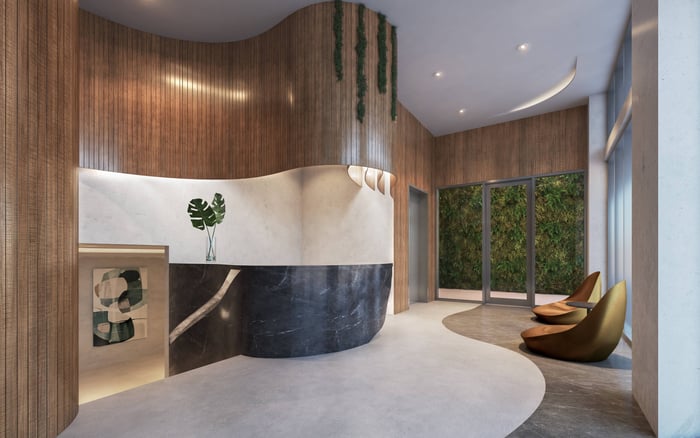
At Origin Bay Harbor Islands, marketed storage and security features are a starting point, not a complete household service plan. Buyers should establish housekeeping responsibilities, linen arrangements and access controls in writing.

For a residence to feel effortless, the arrangements behind it must be precise. Who refreshes the rooms before arrival? Where are spare linens kept? Who can enter when an owner is away? At Origin Bay Harbor Islands, these questions deserve the same attention as the floor plan and finishes.
Origin Residences by Artefacto is planned at 9760 West Bay Harbor Drive, Bay Harbor Islands, FL 33154, with VDA | Origin Miami as developer. June 2023 plans described seven stories and 27 residences with two to four bedrooms. Those historical details do not establish current completion or operating status.
The distinction for buyers is straightforward: marketed features are not defined operating commitments. Full-size laundry appliances, oversized closets and security descriptions offer useful starting points. They do not establish who handles household tasks or how personal possessions remain private.
The phrase “personalized services” does not establish whether housekeeping, turndown, laundry, wardrobe care or linen replacement is included. Treat each as an unresolved diligence item-not an included benefit or an unavailable option.
Request a written service schedule identifying the provider and contracting party. Establish whether management performs the work, coordinates an outside vendor or simply permits owners to arrange help. Then distinguish routine cleaning from bed-making, appliance cleaning, terrace care, laundry and specialist handling of delicate finishes.
Pricing should be equally explicit. Ask about included allowances, hourly or visit-based charges, minimum bookings, cancellation terms and supply costs. Confirm scheduling lead times and whether service can take place during guest stays, maintenance visits or an owner's absence.
Shared amenities do not answer these questions. The described rooftop pool, outdoor kitchens, bar and co-working space concern communal use, not the scope of work inside a private residence. Artefacto branding likewise should not substitute for a household service agreement.
Full-size, front-loading washers and dryers are marketed inside the residences. That is a practical provision, but an appliance specification is not a laundry service. The described amenities do not expressly identify a resident linen room, linen-exchange program or dedicated housekeeping storage area.
Map the full cycle before deciding whether the arrangement suits your household: delivery, use, collection, washing, drying, folding and return. Ask who supplies and inventories sheets and towels, whether laundering occurs in the residence or elsewhere, and who is responsible for missing or damaged items.
Clean storage requires a separate decision. Identify a location for fresh linens and a distinct holding area for used items. Ask whether housekeeping supplies would occupy owner closets, separate storage or another authorized space. None of these arrangements should be assumed.
If you are also considering Bay Harbor Towers, apply the same linen questions to both properties. The comparison should rest on written responsibilities and usable space, not presumed equivalence between buildings.
Origin residences are marketed with oversized walk-in closets and individual storage rooms on residential floors. These provisions offer different storage possibilities, but their practical value depends on the specific residence and assigned room.
Request a dimensioned plan showing the storage room's location, usable area, door clearance and relationship to the residence. Confirm its assignment and legal treatment in the condominium documents, along with any restrictions on transfer or use. Do not assume a particular ownership structure.
Ventilation, humidity conditions, locks, access procedures and permitted contents remain unspecified in the described storage provisions. Ask whether textiles and personal effects are permitted, what environmental conditions are maintained, and whether shelving or a safe requires approval. Have the relevant insurer explain coverage and exclusions for possessions kept outside the residence.
The Nautical Club's described paddleboard and kayak storage station with a wash-down facility serves a different purpose. It does not establish that household linen storage or secure storage for private belongings is available.
Origin is marketed with 24-hour security. That description does not establish lobby staffing, camera coverage, elevator controls, visitor verification or vendor credentialing. Buyers need those operational details to understand the boundary between shared-building security and privacy inside the home.
Ask management to distinguish routine service entry, owner-authorized visits and emergency access. Request the permission process for each, including how consent is recorded, how long it remains valid and how an owner can withdraw it. Establish whether entry is logged and whether owners can review relevant records.
Keys and temporary credentials warrant separate scrutiny. Who issues them, who holds duplicates, and how are credentials limited or revoked after a visit? Ask whether a vendor's authorization permits entry only to the residence or also to storage rooms.
When comparing Onda Bay Harbor, apply the same access checklist without assuming identical procedures. A buyer weighing Bay Harbor Islands against Bal Harbour should request equivalent documentation for every shortlisted property.
An owner who leaves clothing, documents or valuables behind needs more than permission for someone to clean. Request written policies governing whether personnel may open drawers, move possessions, photograph interiors or handle sensitive materials.
Define any restricted rooms or cupboards and ask how those instructions reach replacement personnel. Confirm whether staff confidentiality obligations exist, who supervises outside vendors and how concerns are escalated. These are proposed safeguards to verify, not established Origin procedures.
Request the process for reporting damage, loss or suspected theft, including notice requirements, documentation and the responsible contact. Review those arrangements alongside vendor insurance and the owner's coverage. The objective is to clarify responsibility before possessions are left unattended.
Obtain the latest declaration, bylaws, rules, budget, service contracts, amenity plans and storage-room plan. Ask counsel to identify which commitments are binding, which depend on a separate agreement and which remain marketing descriptions. Confirm current delivery and operating status independently of historical plans.
Keep three decisions separate: whether the physical storage works, whether the available services fit the household, and whether access controls meet the owner's privacy expectations. A satisfactory answer to one does not resolve the others.
Before committing, request written scenarios for arrival preparation, a guest departure and a maintenance visit while the owner is away. Each should identify who enters, what they do, where linens go and how belongings are protected. That exercise turns broad service language into a practical ownership decision.
For a discreet perspective on your South Florida residence search, connect with MILLION.
If branded residences are on your mind — as a home or as an allocation — we would be glad to share what we are seeing, privately.
Begin a quiet conversationThe planned address is 9760 West Bay Harbor Drive, Bay Harbor Islands, FL 33154. VDA | Origin Miami is the developer.
No defined housekeeping scope is established by the broad personalized-services language. Buyers should request written confirmation of availability, tasks, provider and charges.
Yes, full-size, front-loading washers and dryers are marketed inside the residences. That provision does not establish a staffed laundry service.
The described amenities do not expressly identify either arrangement. Buyers should confirm who supplies, launders, inventories and stores linens.
Oversized walk-in closets and individual storage rooms on residential floors are marketed. Buyers should verify the room assigned to their residence and its usable dimensions.
The described storage provisions do not specify humidity control, ventilation, locks or access procedures. These details require written confirmation.
The described facility is a paddleboard and kayak storage station with a wash-down area. It does not establish storage for household linens or private belongings.
No. The marketed security provision does not define unit-entry permissions, visitor verification, vendor credentialing or entry logs.
Ask about moving or photographing possessions, opening drawers, handling valuables and documents, and staff confidentiality. Also obtain the procedures for damage, loss or theft claims.
Request the latest declaration, bylaws, rules, budget, service contracts, amenity plans and storage-room plan. Have counsel distinguish binding commitments from marketing descriptions and confirm current operating status separately.