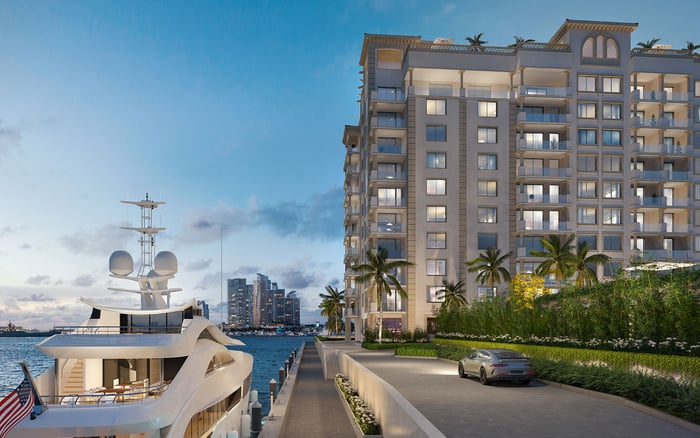
A buyer-focused guide to comparing Downtown Miami and Brickell waterfront residences for boat-show convenience, crew logistics, marina proximity, and practical vessel access.
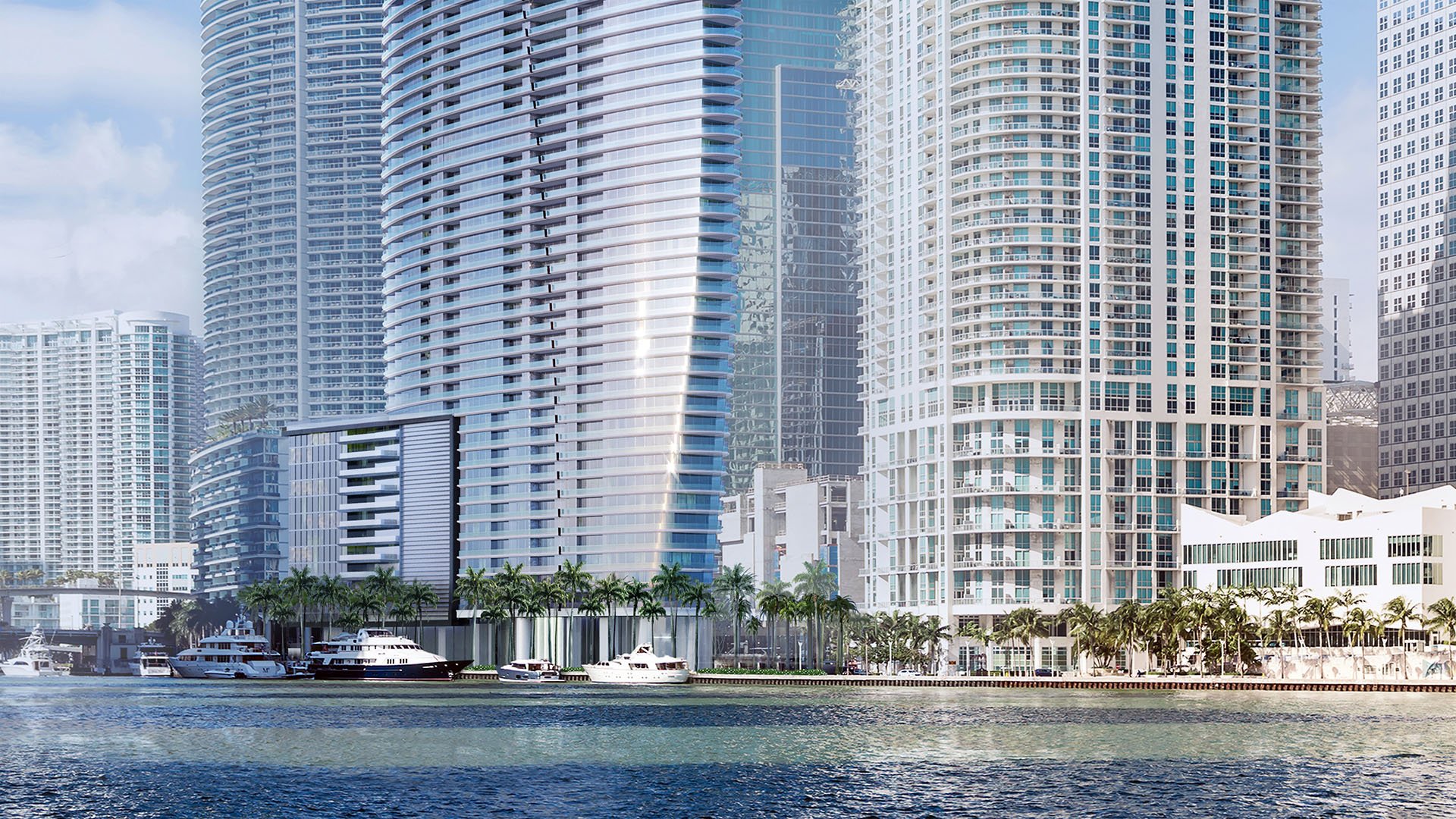
For buyers focused on boat-show access, a waterfront view is only the beginning of the evaluation. The more useful question is how a residence fits the owner’s complete operating brief, including vessel access, guest movements, captain coordination, provisioning, security, and transfers between water and land.
Marina proximity and residential dock access should be reviewed separately. A nearby marina does not establish rights at a residential dock, while access to a dock does not by itself confirm long-term berthing. Written project documents and marina agreements should govern the analysis.
Aston Martin Residences Downtown Miami is a relevant starting point for buyers comparing Downtown Miami waterfront residences. Buyers should verify the current dock program, berth availability, vessel restrictions, access procedures, and any separate costs directly through the applicable documents.
Baccarat Residences Brickell belongs in a Brickell-focused comparison of waterfront living and marine convenience. The due-diligence review should distinguish between residential amenities, temporary vessel access, transportation services, and any rights associated with dockage.
Viceroy Brickell may also be considered by buyers prioritizing a Brickell residence near the waterfront. Before relying on boat access, confirm reservation procedures, permitted vessel types, loading arrangements, operating hours, and the rules affecting captains, crew, guests, and vendors.
The first decision is whether the residence must support long-term berthing, short visits, tender pickups, or simple proximity to a separately arranged marina. Each use case creates a different set of legal, physical, and operational requirements.
Owners should map a typical arrival from vessel to residence. That review can include passenger transfer, luggage handling, vehicle staging, guest clearance, elevator access, and communication with building personnel. Crew needs may involve separate entry procedures, deliveries, maintenance access, waste handling, and vendor approvals.
Boat-show periods can add another layer of complexity. Buyers should ask how reservations, temporary calls, guest arrivals, and service access are handled when marine and road traffic are concentrated. The most suitable residence is the one that supports the intended routine under the property’s actual rules.
Request written confirmation of whether any dockage is deeded, leased, licensed, reservation-based, transient, or controlled under a separate agreement. Review the duration of use, assignment rights, renewal terms, fees, insurance obligations, and procedures for guests or chartered vessels.
Confirm the physical and utility requirements for the intended vessel, including permitted length, beam, draft, clearance, shore power, water, fueling limitations, and tender arrangements. Specifications should be verified rather than inferred from photographs, marketing language, or the presence of nearby yachts.
The operational review should also cover security, crew credentials, vendor access, provisioning, loading, maintenance, deliveries, parking, storage, and after-hours procedures. If a professional captain or yacht manager is involved, that person should review the relevant rules before the residential purchase is finalized.
What should a buyer verify first when comparing waterfront residences? Determine whether the requirement is long-term berthing, temporary dock access, tender pickup, or proximity to a separate marina.
Is a waterfront residence guaranteed to include a boat slip? No. Any slip or dock right should be confirmed in the governing documents and applicable marina agreement.
Is marina proximity the same as residential dock access? No. A nearby marina and a residence’s own access arrangements are separate considerations.
Which vessel dimensions should be checked? Verify permitted length, beam, draft, clearance, and any other limits stated in the applicable documents.
What utility details matter at a dock? Buyers should confirm available shore power, water, and other services required by the intended vessel.
What should captains review before a purchase? Captains should examine navigation requirements, access procedures, operating hours, security rules, and service limitations.
Which crew logistics deserve attention? Review credentials, entry points, parking, deliveries, provisioning, maintenance access, waste handling, and vendor approvals.
How should buyers assess boat-show convenience? Test the complete itinerary, including vessel movements, shoreside transfers, guest arrivals, traffic, and building access.
Why must berth rights be documented? Written documents clarify the form, duration, restrictions, costs, and transferability of any access arrangement.
What is the best way to shortlist comparable options for touring? Start with location fit, delivery status, and daily lifestyle priorities, then compare stacks and elevations to validate views and privacy.
For a confidential assessment and a building-by-building shortlist, connect with MILLION.
If branded residences are on your mind — as a home or as an allocation — we would be glad to share what we are seeing, privately.
Begin a quiet conversation