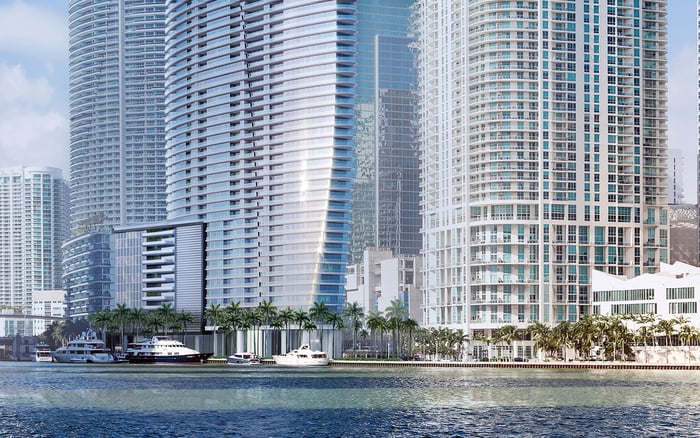
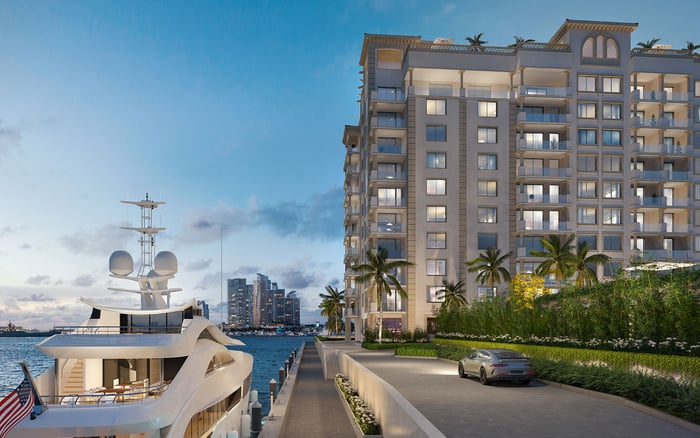
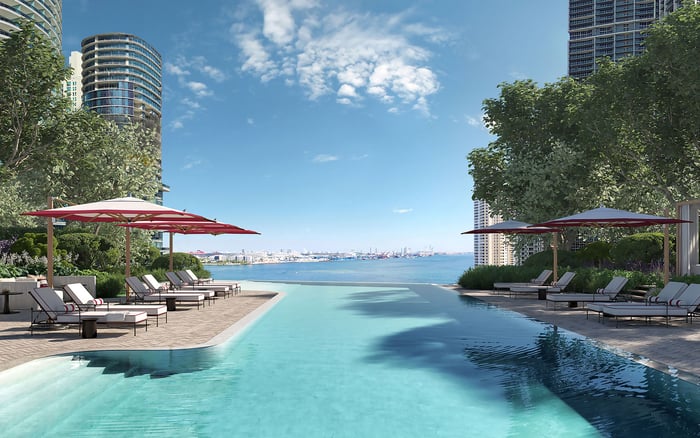
A yacht-to-residence arrival in Downtown Miami requires more than a waterfront address. Buyers should test the entire transfer, from vessel clearance and bridge windows to berth access, chauffeur coordination, luggage handling, and building security.
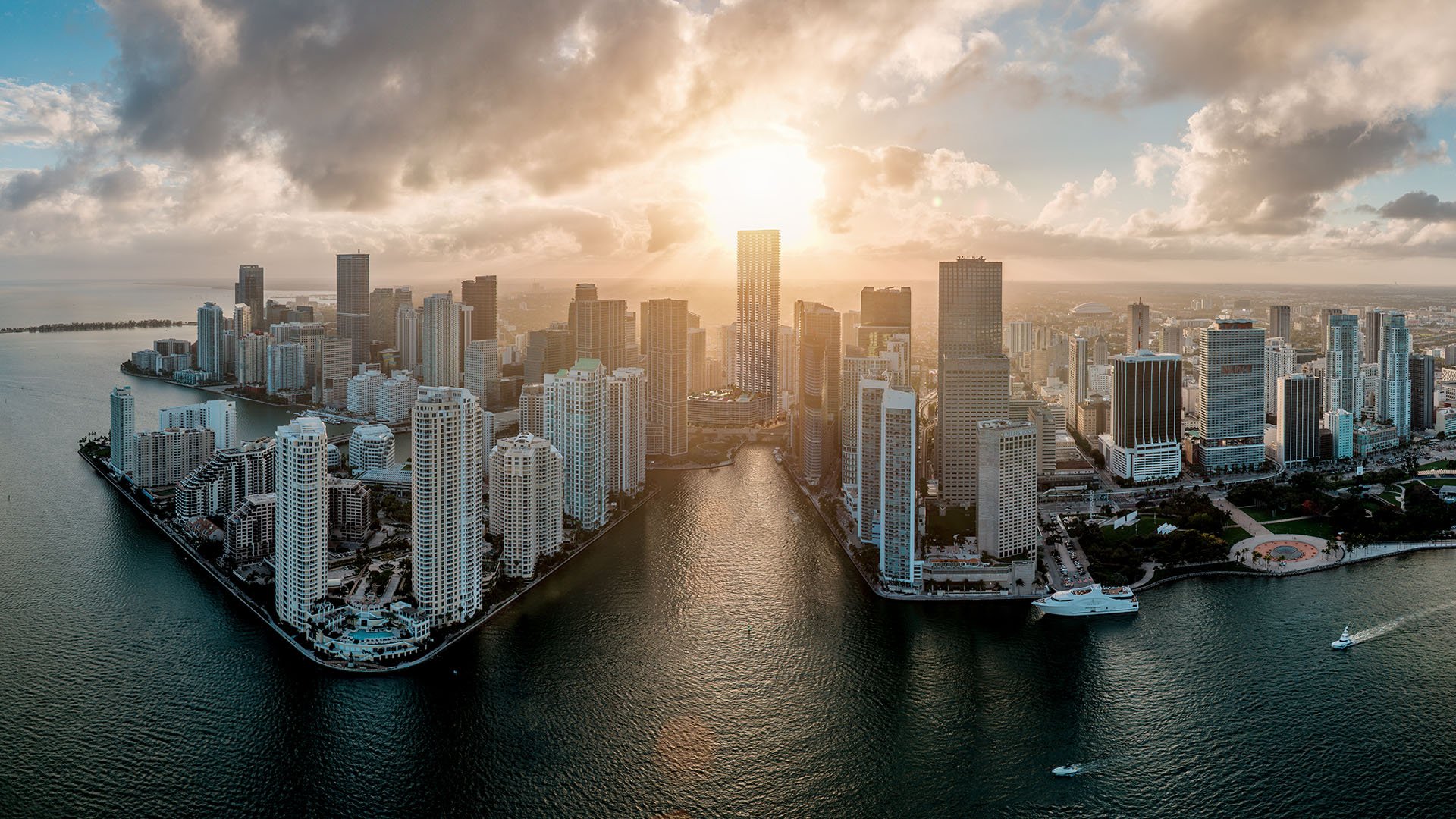
A water-facing residence can offer a compelling setting without resolving the practical question of how an owner arrives from a yacht. In Downtown Miami, that journey warrants its own due diligence: vessel passage, docking, shore pickup, luggage movement, and building entry are separate steps that must work together.
For buyers considering Aston Martin Residences Downtown Miami, the useful question is not whether an arrival looks effortless, but whether the intended transfer can be confirmed in writing. Neither a project name nor a waterfront outlook establishes berth availability, direct lobby access, or permission for crew to accompany belongings upstairs.
The most discreet arrival is planned before departure. Treat the route as part of the residence's suitability for your household, not a detail to resolve on the first visit.
Closed-clearance figures are approximately 24 feet for the Brickell Avenue Bridge and 21 feet for the South Miami Avenue Bridge. These are planning references, not assurances that a particular yacht can pass safely.
Ask the captain to confirm maximum air draft, including antennas and other equipment, against the conditions expected during passage. Tide, vessel draft, beam, maneuvering limitations, every bridge on the proposed route, and the intended berth belong in the same assessment. Adequate clearance at one bridge does not validate the entire journey.
Keep this assessment separate from the residential purchase presentation. When evaluating Baccarat Residences Brickell, for example, request a transfer plan for your actual yacht and chosen landing point. A Brickell address alone does not resolve the marine approach.
During weekday daytime operations, the Brickell Avenue Bridge generally opens on the hour and half-hour, subject to restricted periods. Do not treat it as an unrestricted, on-demand connection.
For ordinary vessel passage, that bridge need not open from 7:35 to 8:59 a.m., 12:05 to 12:59 p.m., and 4:35 to 5:59 p.m. on weekdays, excluding federal holidays. The Miami Avenue and Southwest Second Avenue bridges have the same weekday restricted periods.
Farther along the river, bridges from Southwest First Street through Northwest 27th Avenue generally need not open from 7:35 to 8:59 a.m. and 4:45 to 5:59 p.m. on weekdays, excluding federal holidays. The different afternoon start matters when several bridges form part of one itinerary.
Have the captain verify the applicable operating arrangements before departure. Marine VHF Channel 09 is identified for bridge monitoring. Special passage provisions exist for designated public vessels, tugs, and vessels whose delay would endanger life or property; an ordinary residential arrival should not depend on those exceptions.
Plan the transfer around feasible bridge passage, then allow time for docking, unloading, the road journey, and the building's receiving window. A chauffeur reservation should not become the fixed point around which the captain must improvise.
A berth and a residence do not necessarily form one continuous arrival environment. Confirm the actual landing address, permission to use the berth, the route from vessel to vehicle, and where guests can wait securely. Ask whether luggage follows the same path or requires separate handling.
Berth feasibility extends beyond vessel length. Miami River navigation rules generally prohibit moored or rafted vessels from extending more than 54 feet into the main river from the dock without permission from the Captain of the Port. Minimum channel widths of 65 feet and 45 feet apply in specified sections. These are navigation constraints, not universal berth dimensions or assurances of maneuvering room.
For a buyer comparing Waldorf Astoria Residences Downtown Miami with other residences, the relevant comparison is the confirmed dock-to-door route. Verify each connection independently. Do not assume a project has a marina, dedicated landing, or integrated yacht service.
Passenger and luggage arrivals may require different arrangements. Obtain written instructions for the service entrance, loading-dock vehicle clearance, available luggage carts, elevator dimensions, reservation procedures, and permitted delivery hours. Ask whether luggage handlers require credentials or contractor insurance.
Describe the intended load rather than simply saying that bags will arrive. The building needs to know whether the transfer involves a few personal cases or a larger household movement to confirm the appropriate receiving process. Do not assume lobby staff can accept everything while the owner proceeds upstairs.
When reviewing Casa Bella by B&B Italia Downtown Miami, include these operational questions in the purchase discussion. The aim is to establish the applicable procedures, not to imply that any particular elevator access or handling service is available.
Give the driver the precise dock address, gate instructions, named contact, vehicle details, arrival window, and backup meeting point. Confirm where the vehicle may wait and how the driver will be notified that guests are ready to disembark. A general marina name is not a complete pickup instruction.
Security planning should distinguish residents, guests, yacht crew, household staff, drivers, and luggage handlers. Ask who must be preregistered, what identification is required, and who can authorize access if the owner has not yet arrived. Do not assume a guest invitation covers the people moving belongings.
Visitor logging, resident access, delivery control, contractor credentialing, and service-entrance controls are distinct security functions. Confirm their implementation with the individual building; they are not universal condominium policies. Ask specifically whether private garage or service-elevator arrivals are permitted and what approvals they require.
A missed bridge opening can disrupt the entire receiving sequence. Arrange an alternate shore pickup and a revised building arrival slot in advance, with a clear contact chain linking the captain, chauffeur, household representative, and building staff.
Weather requires a broader contingency. During tropical-storm preparations, Miami River drawbridges may close sequentially. Reopening depends on winds falling to 38 mph or less, structural inspections, and Captain of the Port authorization. A lower wind reading alone does not establish that passage has resumed.
Before committing to a residence, request a written arrival plan and walk through each handoff. The luxury is not merely proximity to the water; it is confidence that the transition ashore respects your time, belongings, and privacy.
Explore residences with an eye for both setting and practical arrival planning at MILLION.
If branded residences are on your mind — as a home or as an allocation — we would be glad to share what we are seeing, privately.
Begin a quiet conversationThe closed clearance is approximately 24 feet. The captain must assess the yacht's actual air draft and expected conditions rather than treating that figure as a passage guarantee.
The closed clearance is approximately 21 feet. Equipment height, tide, and the rest of the route still require vessel-specific assessment.
During weekday daytime operations, it generally opens on the hour and half-hour, subject to restricted periods. An ordinary yacht arrival should not assume unrestricted opening.
For ordinary passage, it need not open from 7:35 to 8:59 a.m., 12:05 to 12:59 p.m., and 4:35 to 5:59 p.m. These weekday restrictions exclude federal holidays.
Marine VHF Channel 09 is identified for Miami River bridge monitoring. The captain should verify applicable operating arrangements before departure.
No such guarantee should be assumed. Confirm the berth, landing address, shore transfer, and authorized building entrance separately.
Obtain written instructions covering service entrances, loading-dock clearance, carts, elevator dimensions, reservations, and delivery hours. Ask about handler credentials and any contractor insurance requirements.
Provide the exact dock address, gate instructions, contact person, vehicle details, arrival window, and backup meeting point. Confirm where the driver may wait and how pickup readiness will be communicated.
Do not assume that guest permission also covers crew or luggage handlers. Confirm separate registration, identification, and access procedures with the building.
Reopening depends on winds falling to 38 mph or less, structural inspections, and Captain of the Port authorization. The wind threshold alone does not guarantee resumed passage.