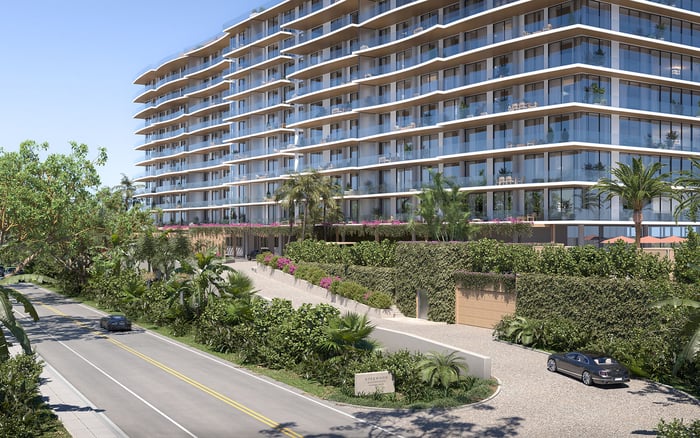
Boutique waterfront ownership in Broward calls for more than an appealing residence. The strongest purchase candidates pair intimate scale with insurance, reserve, inspection, and assessment records that withstand close review.

Broward County offers buyers a varied waterfront search spanning Fort Lauderdale, Pompano Beach, Hillsboro Beach, and Hallandale Beach. For those drawn to boutique scale, the appeal often lies in a more intimate ownership environment. The financial structure, however, deserves the same attention as the architecture, views, and amenities.
When a building has fewer residences, significant shared obligations may be distributed across a smaller ownership base. Roof work, waterproofing, structural repairs, insurance deductibles, and other common expenses can therefore create meaningful exposure for each owner. The relevant issue is not whether boutique scale is inherently better or worse, but whether the association’s records make that exposure understandable.
Insurance and reserve transparency should be treated as part of the residence’s overall quality. A polished presentation cannot substitute for current documents, consistent financial reporting, and a clear account of anticipated work.
In boutique waterfront ownership, transparency is not paperwork; it is part of the asset.
The best residence is not necessarily the one with the lowest monthly charge. A stronger candidate is one whose physical condition, insurance program, reserve planning, and current budget present a coherent picture. Fees may reflect current maintenance and advance funding, while unusually low charges may warrant closer questions about deferred obligations.
Buyers should examine whether reserve recommendations are visible in the adopted budget and whether anticipated projects have identifiable funding sources. If the documents refer to an inspection, engineering review, repair program, loan, or assessment, the related records should be requested and compared.
The review should also distinguish between money held for future work and money already committed to a project. A reserve balance viewed alone may not explain the association’s position if contracts, claims, or major repairs are pending.
In Fort Lauderdale, Auberge Beach Residences & Spa Fort Lauderdale and St. Regis® Residences Bahia Mar Fort Lauderdale can serve as reference points for a waterfront search. Their inclusion should begin, rather than conclude, the inquiry. Buyers should request the governing, insurance, inspection, and financial records for the specific association connected to the residence under consideration.
Farther north, Armani Casa Residences Pompano Beach may be assessed through the same framework. Branding and design do not establish the condition of an association’s reserves, the effect of insurance deductibles, or the status of planned work. Those questions require current documents and professional review.
At Broward’s northern and southern reaches, Rosewood Residences Hillsboro Beach and 2000 Ocean Hallandale Beach provide additional names for a coastal shortlist. No project name alone establishes insurance adequacy, reserve strength, or assessment history. Applying one consistent standard across every candidate allows the buyer to compare the ownership structures rather than relying on presentation alone.
Condition reports and reserve materials address related but distinct issues. An inspection or engineering report may describe physical findings and recommended work, while reserve documents address how anticipated costs may be funded over time. Reading one without the other can leave important questions unanswered.
A complete request can include available structural or engineering reports, reserve studies, the current annual budget, reserve schedules, assessment records, association debt information, insurance declarations, replacement-cost documentation, claims information, and recent meeting minutes. The precise records available will vary, so buyers should ask their advisers which documents matter for the building and transaction.
Meeting minutes may add context to financial statements by showing how the board has discussed bids, repairs, claims, reserve decisions, financing, or potential assessments. They can also help identify matters that do not yet appear as completed projects or finalized obligations.
The essential discipline is comparison. A reserve schedule may look substantial until it is read beside a major repair scope. A policy may show meaningful coverage while also carrying a deductible that deserves analysis. A completed study offers limited comfort if the current financial plan does not clearly address its recommendations.
Buyers should ask not only how much money is reserved, but also how planned obligations are expected to be funded. Potential sources may include recurring owner charges, special assessments, association borrowing, or a combination of approaches. Each structure can affect the timing and concentration of an owner’s exposure.
If the association has reduced or changed reserve contributions, request the related records and explanation. A temporary change connected to an active repair program may carry different implications from a pattern of postponing funding without a documented plan.
Outstanding loans and credit facilities also deserve attention. The principal balance, repayment terms, purpose, and allocation among owners can influence carrying costs even when the immediate project has already been completed. Buyers should confirm how any obligation would affect the specific residence and whether payments are included in current charges.
The annual insurance premium is only one part of the association’s risk profile. A useful review considers the named insured, covered property, policy limits, deductibles, exclusions, valuation materials, and known claims. The goal is to understand both the protection in place and the costs that may remain with the association or individual owners.
Deductibles deserve particular scrutiny in a boutique building because the association’s share may ultimately be allocated across fewer residences. Buyers can ask an insurance professional to explain how the master policy relates to the coverage they may need for the individual residence, improvements, contents, liability, loss assessment, and temporary displacement.
Insurance documents should also be read alongside association liquidity. A deductible that appears manageable at the building level may still require an assessment or other funding response if readily available funds are limited. This is why insurance, reserves, debt, and assessments should not be evaluated as isolated categories.
Monthly charges are a starting point rather than a verdict. To compare boutique waterfront candidates, buyers can model the potential share associated with a significant deductible, planned work, existing debt, or a contemplated assessment. The association’s allocation method and the residence’s governing documents should guide that analysis.
Past assessments can provide useful context, but they do not predict future costs. The more important questions are why an assessment was imposed, whether the related work is complete, whether additional phases remain, and how the board now approaches maintenance and funding.
A persuasive file should make it possible to trace major obligations from the underlying report or contract into the budget, reserve schedule, assessment, or financing plan. Conflicting figures, missing attachments, unexplained reserve changes, and repeated references to unresolved work call for follow-up before the buyer relies on the financial picture.
Before the applicable review period ends, buyers should define the required records, identify unresolved questions in writing, and direct each issue to the appropriate legal, insurance, engineering, or financial professional. The objective is not to eliminate every aspect of coastal ownership risk. It is to determine whether that risk is visible, measurable, and compatible with the buyer’s priorities.
For a discerning Broward buyer, boutique waterfront value combines privacy and design with an association that communicates clearly about condition, insurance, reserves, debt, and anticipated costs. Consistent scrutiny across Fort Lauderdale, Pompano Beach, Hillsboro Beach, and Hallandale Beach can help separate an attractive residence from a well-understood ownership opportunity.
For discreet guidance through South Florida’s most considered waterfront opportunities, connect with MILLION.
If branded residences are on your mind — as a home or as an allocation — we would be glad to share what we are seeing, privately.
Begin a quiet conversationSignificant common expenses may be distributed among fewer owners. Buyers should evaluate the potential exposure allocated to the specific residence.
Request available budgets, reserve materials, insurance documents, inspection reports, assessment records, debt information, and recent meeting minutes.
Inspection records may identify physical needs, while reserve documents show how anticipated costs may be funded. Comparing them can reveal gaps between planned work and available resources.
No. Lower charges may be attractive, but buyers should confirm whether they support current operations, maintenance, and reserve planning.
Review policy limits, deductibles, exclusions, valuation materials, covered property, and known claims with an appropriate insurance professional.
A significant association obligation may be shared across a smaller ownership base. The potential allocation to the residence should be evaluated.
Review the purpose, outstanding balance, repayment structure, and effect on the specific residence. Confirm whether payments are included in current owner charges.
Minutes may provide context about repairs, bids, claims, reserve decisions, financing, and potential assessments that financial statements do not fully explain.
No. They provide context, but buyers should focus on the reason for each assessment, the status of the related work, and any remaining obligations.
A strong file allows major recommendations and planned costs to be traced into the current budget, reserve schedule, assessment, or financing plan.