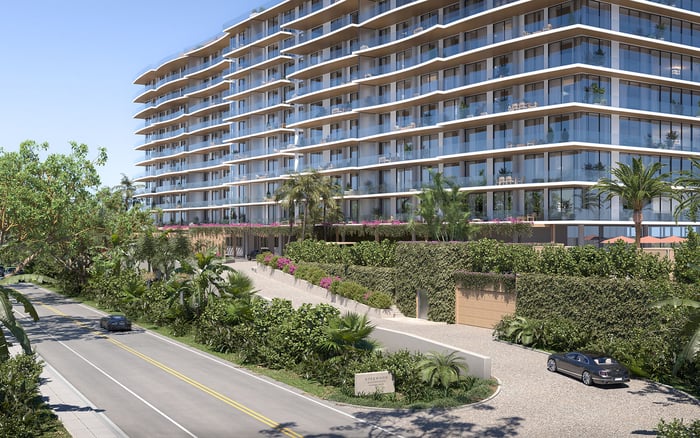
A Hillsboro Beach acquisition should be evaluated as both a residence and a future disposition. This guide frames FIRPTA exposure, Broward transfer and financing taxes, title insurance, homestead benefits, portability, and the contract terms that determine who pays what at closing.
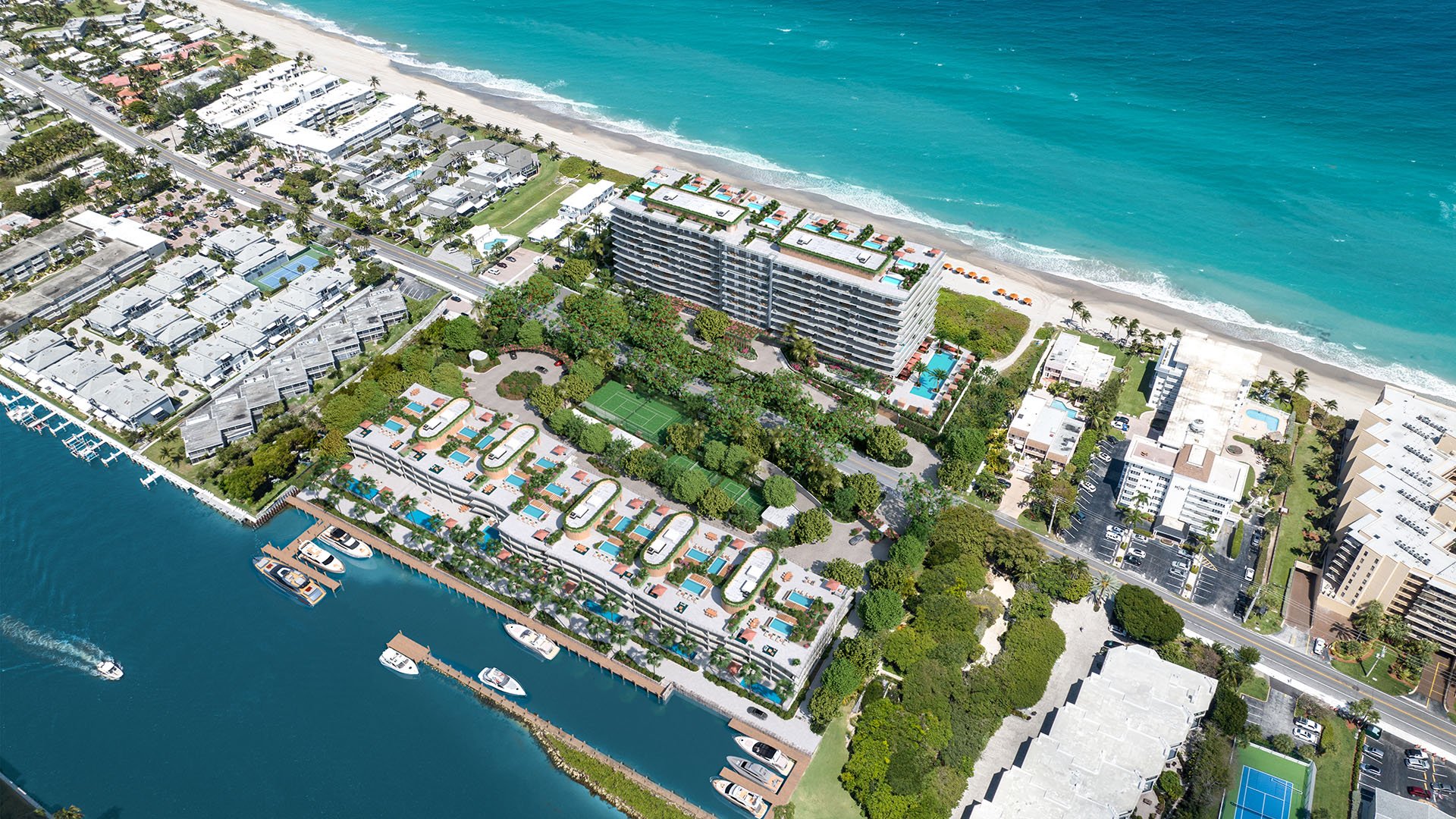
Hillsboro Beach invites an emotional response, but an ultra-premium acquisition demands a disciplined financial framework. The most consequential questions often concern not the residence itself, but the seller’s tax status, the contractual allocation of closing costs, title protection, financing taxes, ownership structure, homestead eligibility, and eventual resale.
This edition of MILLION’s Buyer’s Guides considers the purchase across the complete ownership cycle. That perspective is particularly relevant to an oceanfront residence, a second-home acquisition, or an investment held through an entity. Buyers considering Rosewood Residences Hillsboro Beach should model the same issues that apply to a private resale: cash required at closing, annual tax posture, and net liquidity upon departure.
The most elegant acquisition plan accounts for the eventual sale before the purchase contract is signed.
FIRPTA generally requires the buyer of U.S. real property from a foreign seller to withhold 15% of the amount realized. In most transactions, that means the gross sale price-not the seller’s gain. On a $5 million transaction, the general calculation would therefore indicate $750,000 of withholding, even when the seller’s actual taxable gain is far smaller.
The withholding is a collection mechanism, not the seller’s final tax bill. A foreign seller files a U.S. tax return and may seek a refund when the amount withheld exceeds the tax ultimately due. The timing difference can nevertheless be material, particularly for a highly leveraged property or a sale producing only a modest gain.
Crucially, the buyer is legally responsible for withholding and remitting the funds when FIRPTA applies. A title company or settlement officer may administer the mechanics, but the underlying obligation remains with the buyer. The contract, seller certification, closing instructions, and tax forms should be coordinated well before funds are due.
Residential exceptions are narrow. No withholding is required when an individual buyer acquires a residence for $300,000 or less. A 10% rate may apply when the amount exceeds $300,000 but does not exceed $1 million and the individual buyer will use the property as a residence. Above $1 million, the general 15% rate applies even with intended residential use. Most luxury Hillsboro Beach purchases therefore fall outside the reduced residential thresholds.
A foreign seller may request an IRS withholding certificate, including through Form 8288-B, when standard withholding would exceed the expected tax liability. This possibility should be identified early because it affects documentation, timing, and the flow of funds at closing.
In Broward, deeds are generally taxed at $0.70 per $100 of consideration, equivalent to 0.7% of the purchase price. A $5 million transfer consequently produces approximately $35,000 in deed documentary stamp tax. Local custom typically assigns this expense to the seller, but custom is no substitute for an executed contract.
Financing creates a separate layer of state taxes for the buyer. Florida generally taxes a promissory note at $0.35 per $100 of the financed amount, or 0.35%, and imposes a nonrecurring intangible tax of 0.2% of the mortgage obligation. On a $3 million mortgage, those charges are approximately $10,500 and $6,000, respectively-a combined $16,500 before recording and lender charges.
These figures make financing structure part of the acquisition analysis, not a last-minute banking decision. A buyer comparing Hillsboro Beach with Armani Casa Residences Pompano Beach or Auberge Beach Residences & Spa Fort Lauderdale should request property-specific closing statements for each contemplated loan scenario. Geographic proximity does not make separate contracts, title histories, or loan structures interchangeable.
An owner’s title policy protects the insured ownership interest, subject to its terms, exclusions, and exceptions. In Broward, local custom generally assigns the owner’s policy cost to the buyer, although the purchase agreement can allocate it differently. The title agent, policy amount, survey, lien review, entity documents, and permitted title exceptions should all be settled during the contractual diligence period.
Florida title insurance premiums follow a progressive promulgated schedule. For the portion of coverage above $5 million through $10 million, the rate is $2.25 per $1,000. That rate applies only to that layer, not to the policy’s full insured amount. A credible estimate must calculate every applicable tier rather than multiply the entire purchase price by a single marginal rate.
The same discipline applies when considering 2000 Ocean Hallandale Beach as a coastal alternative. Project branding does not replace a review of the precise interest being insured, the contract’s title standard, or the exceptions that will remain after closing.
A qualifying Broward primary resident may receive a Florida homestead exemption that reduces assessed value by up to $50,000, with different treatment for school and non-school taxes. Save Our Homes then caps annual assessment growth on homesteaded property at the lesser of 3% or the applicable change in the Consumer Price Index.
Eligible owners may also transfer up to $500,000 of accumulated Save Our Homes benefit when the new Florida residence receives homestead status within three tax years after the prior homestead is sold or abandoned. The portability application should accompany the new homestead application.
For the 2026 tax year, Broward’s timely homestead deadline was March 2, 2026, and the absolute late-filing deadline is September 18, 2026. Eligibility should be confirmed rather than assumed, especially when occupancy, ownership entities, trusts, or multiple residences complicate the facts.
Foreign ownership demands particular attention to exit liquidity. Because FIRPTA withholding is generally calculated against gross proceeds, a future seller should model the potential cash holdback alongside deed documentary stamp tax, brokerage, title clearance, renovation, and other transaction costs. Looking only at projected capital gain can materially overstate the cash available at closing.
Ownership through an individual, corporation, LLC, or trust should be selected only after coordinated U.S. tax and estate-planning advice. FIRPTA is one component of the analysis, not a complete ownership strategy. The structure selected at acquisition may influence administration, succession planning, and the mechanics of a later transfer.
A useful exit model should include at least three sale-price scenarios, the owner’s expected tax status at disposition, debt payoff, potential gross-price withholding, contractually assigned transfer costs, and a reserve for title issues or pre-sale work. It should then distinguish withholding from final tax liability and show the potential timing gap before any refund.
Before signing, ask counsel and tax advisers to confirm the seller’s FIRPTA status, any required withholding, and whether a withholding-certificate application is contemplated. Request a closing-cost estimate detailing deed tax, loan documentary stamp tax, intangible tax, recording, title premiums by tier, and other transaction charges. Confirm in writing who selects and pays the title agent and owner’s policy.
Finally, document the intended use, review homestead and portability eligibility, and preserve records supporting basis and improvements. In a high-value coastal purchase, precision is not an administrative detail. It is the framework that protects present enjoyment and future optionality.
For discreet guidance on a Hillsboro Beach acquisition and its full ownership cycle, connect with MILLION.
If branded residences are on your mind — as a home or as an allocation — we would be glad to share what we are seeing, privately.
Begin a quiet conversationThe general rate is 15% of the amount realized, typically the gross sale price rather than the seller’s gain.
The buyer, as transferee, is legally responsible when FIRPTA applies, even if a title company handles the process.
No. It is a collection mechanism, and the seller may claim a refund after filing a U.S. return if withholding exceeds tax due.
Generally not. Above $1 million, the general 15% rate applies even when an individual buyer intends to use the property as a residence.
The general rate is $0.70 per $100 of consideration, equivalent to 0.7% of the purchase price.
Local custom typically assigns it to the seller, but the executed purchase contract should expressly confirm responsibility.
Florida generally imposes note documentary stamp tax of 0.35% and a nonrecurring intangible tax of 0.2% of the mortgage obligation.
They use progressive pricing tiers. The $2.25 per $1,000 rate applies only to coverage above $5 million through $10 million, not the full policy.
An eligible owner may transfer up to $500,000 when the new Florida residence receives homestead status within three tax years.
Model gross-price FIRPTA withholding together with debt payoff, deed tax, brokerage, title clearance, renovation, and other transaction costs.