
Sixth & Rio pairs boutique New River living with advertised dockage, but serious yacht owners should treat vessel access as a separate acquisition review. Bridge clearance, route depth, city dock terms and crew servicing all require written, vessel-specific confirmation before closing.
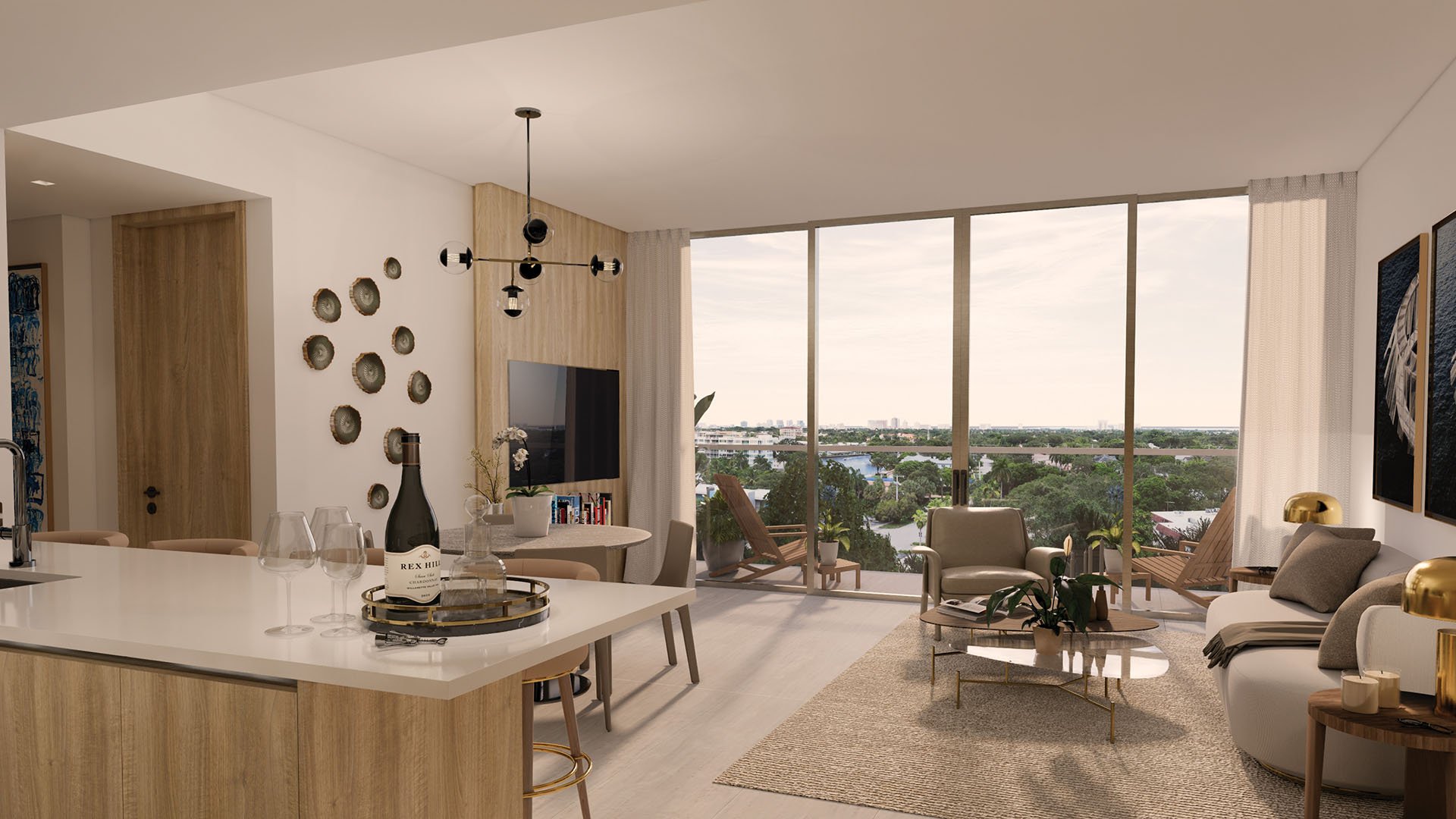
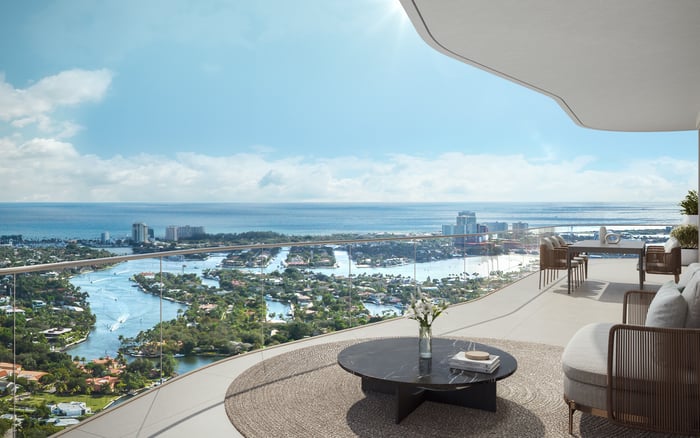
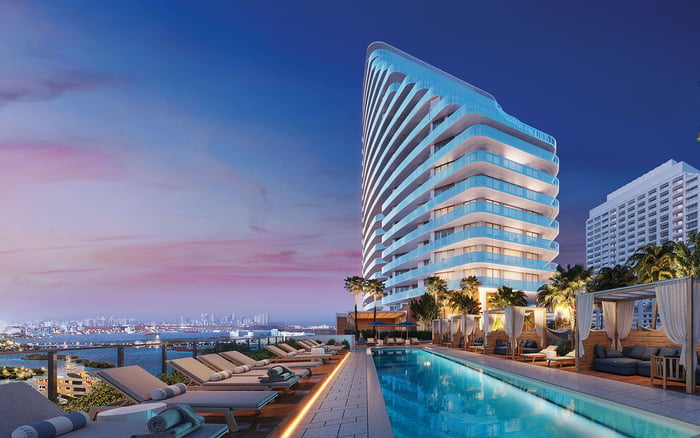
At 501 SE 6th Avenue, Sixth & Rio Fort Lauderdale occupies the south side of the New River, where Rio Vista meets downtown. The eight-story boutique condominium is planned with 94 residences and delivery in 2026. Its appeal is clear: protected river access, proximity to central Fort Lauderdale and a residential amenity program that includes a sky terrace, infinity pool, fitness facilities, club space and outdoor lounges.
For a yacht owner, however, the residence and berth must be evaluated as related but distinct assets. Advertised New River dockage does not prove that a particular vessel can reach, occupy or operate from the site. Nor does it establish that a slip is conveyed with the condominium. Dockage is described as available to rent through the City of Fort Lauderdale, rather than deeded and automatically included with every home.
A waterfront purchase works only when the residence, route, berth and operating rules align.
This distinction makes the property a useful case study in waterfront buying. The architectural and lifestyle decision may be emotional; the navigational decision is technical. A prudent contract strategy should allow sufficient time to examine both.
No numerical bridge-clearance data is specified. Buyers therefore need a route-specific bridge analysis from the intended inlet or cruising ground to the proposed berth. Every bridge along that route matters, not simply the structure nearest the building.
The correct starting point is the yacht's actual operating air draft. That measurement should include antennas, outriggers and other equipment in their normal operating positions. A builder's nominal specification may not account for later additions or the vessel's current configuration. If equipment can be lowered, the owner should document the procedure, resulting height and operating conditions rather than assume theoretical clearance will be practical on every passage.
Clearance should be assessed under the conditions in which the yacht will actually travel. Written confirmation from appropriate marine professionals and relevant authorities carries more weight than an informal assurance. The objective is not to determine whether the boat can pass in an idealized scenario, but whether it can make the trip safely and repeatedly within the owner's expected schedule.
Air draft is only half of the access equation. Approach-channel and dockside depths are not stated. A buyer should obtain a site-specific depth survey and compare it with the vessel's fully loaded draft, including the required operating clearance beneath the keel.
The review must follow the entire route to the berth. Adequate water at the dock cannot cure a shallow point encountered earlier, and a charted or quoted depth is no substitute for current, location-specific verification. The yacht's loaded condition matters as well. Fuel, water, stores, equipment and normal cruising inventory can affect its operating draft.
Berth geometry warrants equal attention. Confirm permitted vessel dimensions, usable slip length and width, maneuvering room, dock configuration and any constraints created by neighboring vessels. For readers accustomed to evaluating a boat slip as a headline amenity, Sixth & Rio demonstrates why four separate questions are essential: Can the yacht arrive, fit, remain and depart under the intended conditions?
Because dockage is described as city-rented, buyers should request the current dock agreement rather than assign residential value to a presumed permanent right. The review should cover eligibility, assignment priority, lease term, renewal rights, rates and permitted vessel dimensions. It should also establish what happens if ownership of the residence changes or a requested slip is unavailable.
Use restrictions can be equally consequential. Obtain written answers regarding overnight stays aboard, charter activity, commercial use, crew occupancy and frequent provisioning. City requirements and condominium rules may both apply; one approval should not be assumed to override the other. This is where a buyer's-guide mindset proves valuable: translate every attractive amenity statement into a document, dimension, rule or responsible counterparty.
A buyer comparing river-oriented residences might also consider Riva Residenze Fort Lauderdale within a broader local search. The point is not to presume equivalent dock rights, but to compare each property's legal structure, vessel access and operating limitations on its own written record.
Sixth & Rio is a luxury condominium, not a full-service commercial marina. Its location can nevertheless support selected crew movements. A free Water Trolley dock is steps from the building, with service toward Las Olas Boulevard and downtown. Walking and bicycle paths may assist with short local trips, while access to Brightline and Fort Lauderdale-Hollywood International Airport may simplify crew rotations and specialist visits.
Convenience outside the gate does not resolve servicing questions at the dock. The captain or yacht manager should inspect vehicle parking, loading access, delivery procedures, waste removal, shore power, potable water and after-hours entry. Frequent provisioning can impose different demands than an owner's occasional dayboat use. Confirm where service vehicles may stop, how equipment reaches the vessel and whether crew can access the berth without disrupting residential operations.
For a large crewed yacht, compare the arrangement with a nearby full-service marina before deciding where the primary vessel should berth. A residence may still suit the owner beautifully even if the yacht is kept elsewhere. Buyers drawn to a hospitality-led coastal experience can include Four Seasons Hotel & Private Residences Fort Lauderdale in the residential comparison, while St. Regis® Residences Bahia Mar Fort Lauderdale offers another relevant reference point. These comparisons should center on the owner's desired balance of downtown access, protected water, residential services and boating infrastructure, without assuming identical vessel accommodations.
With completion planned for 2026, pre-closing diligence should revisit the finished dock rather than rely solely on early plans or marketing. Confirm the as-built layout, utility connections, slip count and then-current city agreements. Walk the route from parking and loading areas to the berth, test access procedures and have the captain assess maneuvering conditions.
The final file should contain the yacht's verified air draft and loaded draft, a bridge-by-bridge route review, current depth information, berth dimensions, city rental terms, condominium rules and written clarification of crew operations. Any future yacht purchase should trigger the analysis again because compatibility belongs to the vessel-and-route combination, not to the residence alone.
Sixth & Rio may be especially compelling for an owner who values protected New River access and downtown life over direct open-ocean frontage. The sophisticated decision is not whether dockage appears in the amenity narrative. It is whether the specific yacht, crew pattern and legal rights work together with sufficient certainty.
For discreet guidance on Fort Lauderdale waterfront residences and acquisition diligence, connect with MILLION.
If branded residences are on your mind — as a home or as an allocation — we would be glad to share what we are seeing, privately.
Begin a quiet conversationNo. Dockage has been described as available to rent through the City of Fort Lauderdale, not as a deeded slip automatically conveyed with each residence.
No. Compatibility depends separately on bridge clearance, route depth, berth dimensions, maneuvering space and operating rules.
Use the yacht's actual operating air draft, including antennas, outriggers and other equipment, rather than relying only on a nominal builder specification.
No numerical bridge-clearance data is specified. Every bridge on the intended route should be checked for the specific vessel.
Approach-channel and dockside depths are not stated. A current survey helps test the yacht's fully loaded draft and required under-keel clearance.
Confirm eligibility, assignment priority, lease term, renewal rights, rates, permitted vessel dimensions and the consequences of a residence transfer.

Do not assume so. Obtain written confirmation of city and condominium rules concerning overnight stays, crew occupancy, charter activity, commercial use and provisioning.
Review parking, loading access, waste removal, shore power, water, delivery procedures and after-hours entry at the completed property.
No. It sits on the south side of the New River and offers protected river access rather than direct open-ocean frontage.
Reverify the as-built dock layout, utility connections, slip count, berth dimensions, access procedures and then-current city agreements.