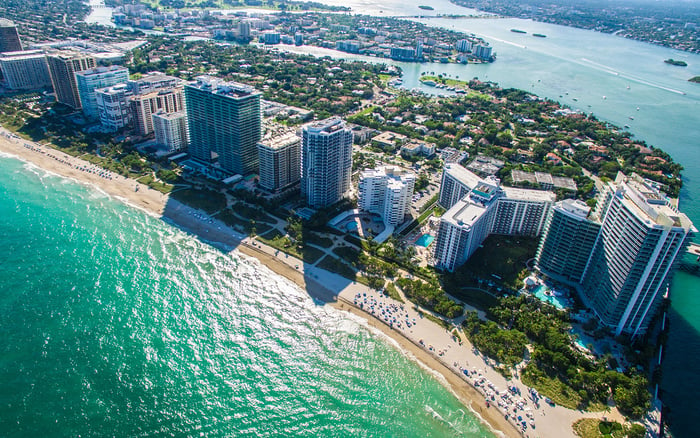
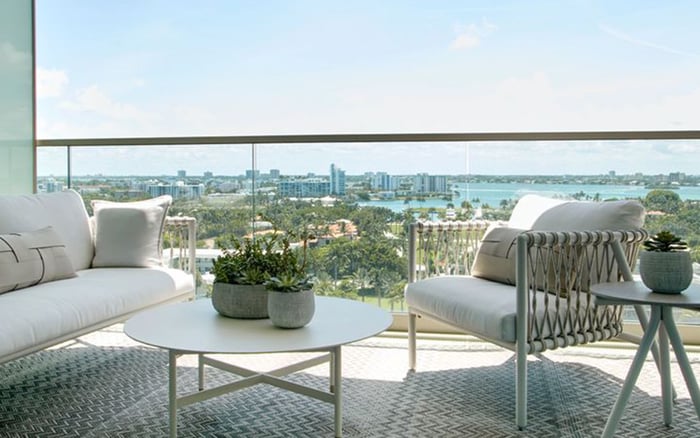
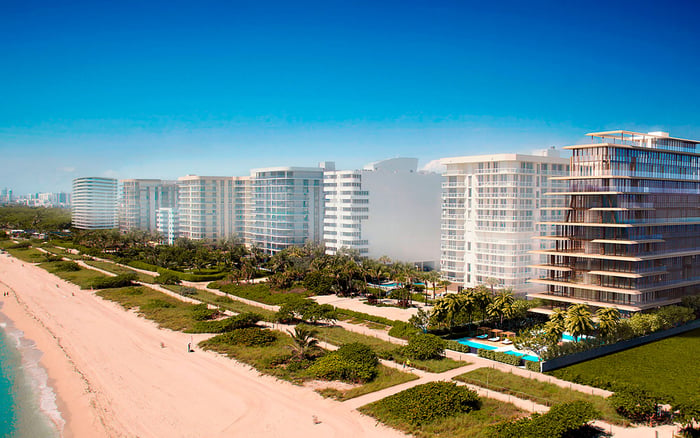
Rivage offers the strongest preliminary fit for a lower-density, privacy-oriented Bal Harbour purchase. Palace, Bal Harbour 101, Oceana and the One Bal Harbour and Ritz-Carlton components warrant different questions about ownership scale, shared access and everyday amenity use.
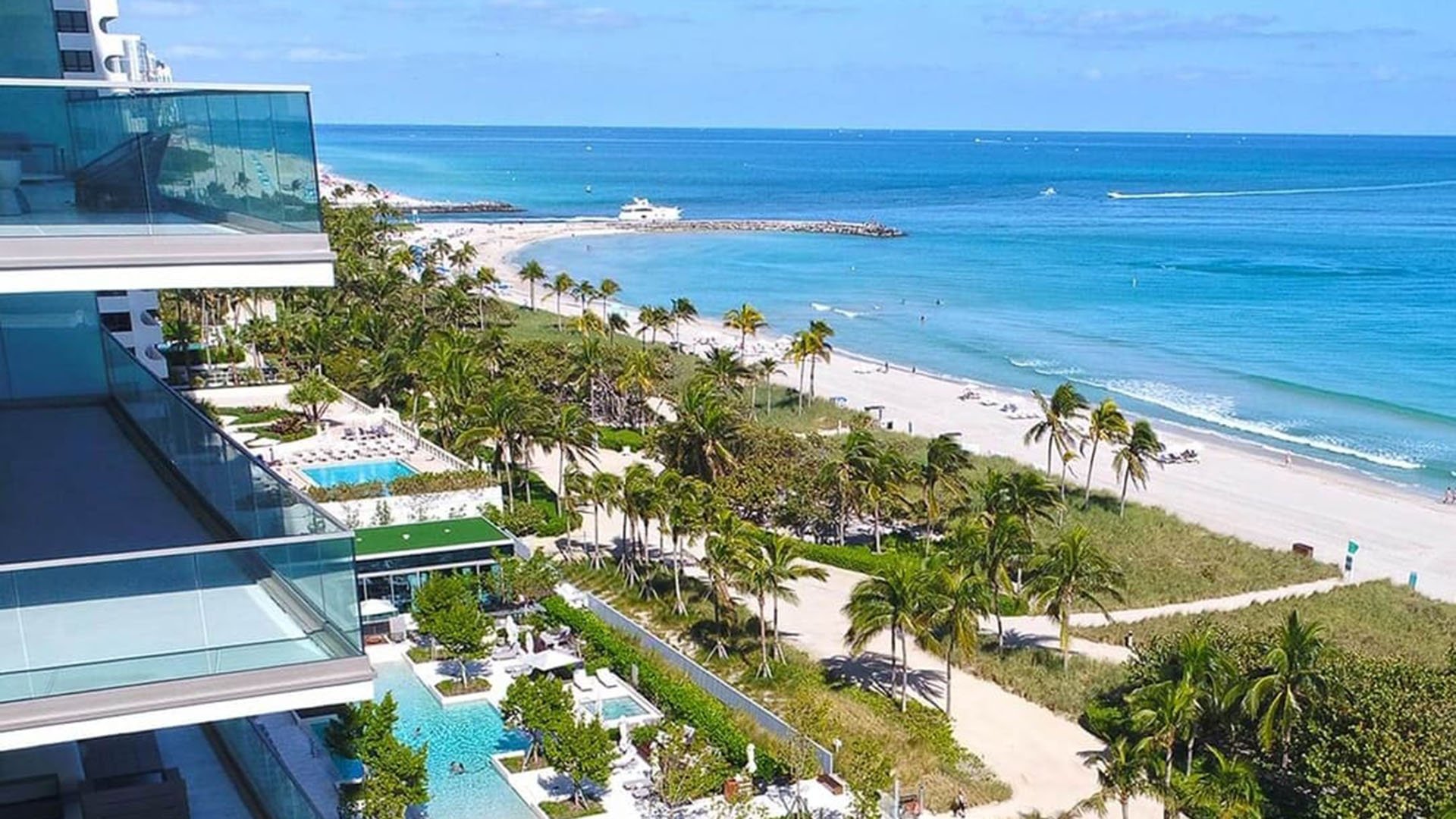
For a buyer seeking a quieter waterfront home in Bal Harbour, the decisive luxury is not necessarily the longest amenity menu. It is the ability to arrive discreetly, use shared spaces comfortably and return to a residence removed from the building's wider circulation. A smaller ownership base can support that ambition, but it cannot establish the daily experience on its own.
Among the properties considered here, Rivage is the strongest preliminary fit for a low-unit-count, privacy-oriented purchase. Palace at Bal Harbour offers a completed-building comparison with a relatively modest condominium count. Bal Harbour 101 and Oceana have larger ownership populations, while One Bal Harbour and The Ritz-Carlton Bal Harbour require particular care in distinguishing residential and hospitality components.
This shortlist is therefore not a ranking of the quietest pools. It is a selection of buildings whose ownership structure, arrival arrangements and amenity access warrant closer examination.
At 10245 Collins Avenue, Rivage Bal Harbour is planned as a 24-story beachfront tower with a stated count of 61 residences. Three- to eight-bedroom layouts span approximately 3,300 to 12,600 square feet, making it relevant to buyers seeking a substantial waterfront home rather than a compact seasonal apartment.
The more persuasive privacy details are the planned three residences per floor and private elevators. These features address the journey from arrival to front door-an important distinction for buyers who place discretion above lobby spectacle. They are design indicators, however, not proof of sound isolation, visitor control or uninterrupted elevator availability.
An ownership-count discrepancy also needs resolution: the stated totals include both 61 and 56 residences. Either figure places Rivage below the other candidates discussed here by stated unit count, but buyers should confirm the final count in current offering documents.
Planned specifications must remain separate from demonstrated operations. Buyers should verify the final elevator configuration, access controls and amenity arrangements rather than treating a small residence count as a promise of uncrowded service.
Palace at Bal Harbour is a beachfront building completed in 1994, with 105 condominiums across 21 stories. For a buyer seeking an established building with fewer residences than several larger alternatives, it is a useful starting point.
Its appeal in this comparison is specific: a completed building and a comparatively limited ownership count. Neither its age nor its unit total establishes the condition of shared facilities, staffing levels or the number of people using them at any given time. A tour should test that headline count against the actual arrangement of entrances, elevator lobbies and leisure spaces.
Bal Harbour 101 is an oceanfront condominium with 172 units. Its larger ownership base should not automatically exclude it from a privacy-focused search. An individual residence's relationship to elevator landings and shared circulation may matter greatly to the buyer's experience.
For both buildings, request applicable guest and leasing rules, current budgets, reserve information and details of any planned work. These are diligence requests, not assumptions about either property. The objective is to understand both the day-to-day setting and the obligations that accompany ownership.
Oceana Bal Harbour presents a different comparison. The stated figures differ: 240 condominiums across 28 stories, or 239 waterfront residences on 5.54 acres. The small count discrepancy warrants confirmation, but it does not change the broader conclusion: Oceana has a higher stated residence total than the other candidates here.
That does not settle the question of crowding. Site scale matters because the number of homes says little about how shared space is distributed. Acreage alone is equally incomplete; buyers need to understand which areas are usable, how residents reach them and who else has access.
For buyers whose first requirement is the fewest fellow owners, Oceana is not the leading fit within this selection. For those willing to consider a larger community if its physical arrangement feels comfortable, it remains a worthwhile comparison. A visit during a period representative of intended use is more informative than assuming either calm or congestion from the unit count.
One Bal Harbour has a stated inventory of 183 condominiums. The Ritz-Carlton Bal Harbour, at 10295 Collins Avenue, has a stated count of 124 units across 26 stories, but those units are also characterized as studios and executive suites. That distinction makes a simple numerical comparison with conventional private condominiums unreliable.
Before treating these names as independent alternatives, establish precisely which residential, hotel or condo-hotel component a prospective purchase belongs to. Then identify which amenities, entrances and service arrangements are shared, and with whom.
For privacy-oriented buyers, the critical issue is not the hospitality name itself. It is the access structure attached to the particular residence. Confirm ownership classification, applicable rental arrangements, guest privileges and any boundaries between residential and hotel circulation. Without that clarity, a nominally smaller count can misrepresent everyday activity.
Three separate questions should guide the final comparison. How many homes share the property? How many people can use the amenities? How much control does the owner have over the path from arrival to residence? The available unit counts directly address only the first.
Request written explanations of guest allowances, reservation systems, operating hours and any access granted beyond residents. Ask how beach-chair service works where offered, rather than assuming ocean frontage means restricted public beach access. Private elevators likewise warrant questions about visitor authorization and service access.
If the search expands to Surfside and The Delmore Surfside, carry those same questions forward. Assess it separately rather than presuming it equivalent to the Bal Harbour candidates on density or privacy.
Rivage remains the strongest preliminary fit for its planned ownership scale and arrival design, with Palace providing a useful completed-building counterpoint. The final choice should rest on verified access rules, current documents and direct observation-not a promise that fewer residences automatically mean fewer interruptions.
For a discreet conversation about your waterfront priorities, connect with MILLION.
If branded residences are on your mind — as a home or as an allocation — we would be glad to share what we are seeing, privately.
Begin a quiet conversationRivage is the strongest preliminary fit in this selection because of its comparatively small planned residence count, marketed three residences per floor and private elevators. Its final specifications and operating arrangements require confirmation.
Published specifications differ between 61 and 56 residences. Buyers should confirm the final ownership count in current offering documents.
Rivage's planned residences are described as approximately 3,300 to 12,600 square feet, with three to eight bedrooms.
Palace offers a completed beachfront building with 105 condominiums across 21 stories. It provides a comparatively lower-unit-count alternative to several larger properties in this selection.
Bal Harbour 101 has a published count of 172 units. That figure alone does not establish its level of amenity crowding or privacy.
Oceana's published count of 239 or 240 residences is higher than the other candidates discussed. Its stated 5.54-acre site makes spatial arrangement relevant to the comparison, without proving uncrowded amenities.
Not without clarification, because those units are also described as studios and executive suites. Buyers should establish the ownership classification and applicable hospitality arrangements.
Identify the residential, hotel and condo-hotel components before treating them as independent alternatives. Confirm which amenities, entrances and services are shared.
No. Residence counts do not establish pool occupancy, beach-chair availability, staffing ratios or guest traffic.
Review guest and leasing rules, elevator access controls and amenity eligibility. For completed buildings, visit during a period representative of your intended use.