A buyer-focused framework for evaluating Bal Harbour residences through resale depth, line quality, view durability, and the practical rhythms of seasonal ownership.
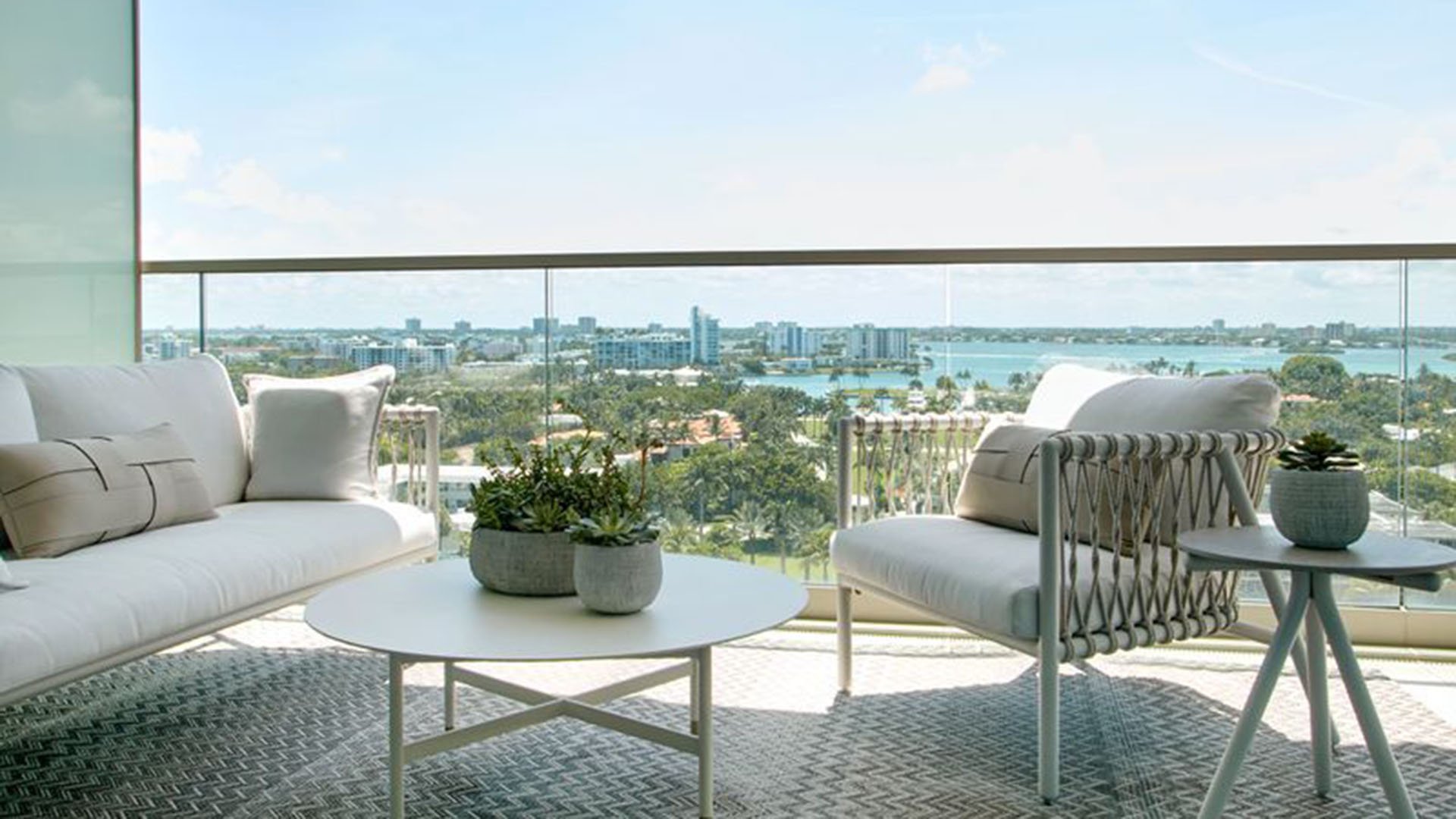
For a seasonal owner, the most consequential feature of a Bal Harbour residence may never appear in the sales gallery. It is the depth of the future buyer pool for that specific home: its line, elevation, exposure, condition, privacy, and view.
An elegant lobby and polished service proposition can shape the arrival experience. On their own, they do not make two residences equally liquid. Buyers comparing Oceana Bal Harbour should therefore look beyond the building name and examine how individual homes differ within it. The central question is not simply whether a property is desirable, but how many credible alternatives a future buyer could consider at the same time.
That distinction is especially relevant to second-home ownership. A residence used for part of the year must perform beautifully during occupancy, remain manageable while vacant, and retain a clear identity when it eventually returns to market.
Resale depth describes the breadth and resilience of demand for a particular property. It is not the same as general interest in Bal Harbour, nor is it guaranteed by a recognizable address.
Begin by mapping substitutes. If several homes offer similar size, outlook, floor height, and condition, a buyer may have negotiating leverage now, while a seller may face greater competition later. If the residence occupies a genuinely differentiated position, its audience may be narrower but more motivated. Scarcity is useful only when buyers can recognize and value it.
A disciplined resale review should assess current competition, likely future competition, renovation requirements, and how readily the home can be understood during a short showing. Highly personalized interiors can be exquisite, yet a clear plan and an immediately legible view may translate more effectively across changing tastes.
The exercise is comparative. Measure an available home against other lines in the same building, then against nearby alternatives such as Rivage Bal Harbour. The purpose is not to declare one universally superior. It is to determine where the subject residence sits within a buyer’s realistic decision set.
A building is an address; a line is the lived asset. Line selection governs the relationship among rooms, light, terraces, neighboring structures, and the horizon. These qualities can be difficult-or impossible-to alter after closing.
Walk the plan in sequence. Consider the arrival view, the outlook from principal rooms, the position of bedrooms, and whether circulation consumes space that could otherwise support daily life. Test furniture placement rather than relying on stated room labels. A generous area can feel constrained when doors, columns, glazing, or passageways limit usable walls.
Balcony depth and orientation deserve equal scrutiny. A terrace that photographs well may not suit the owner’s preferred hours or style of entertaining. Check privacy from seated and standing positions, not only from the center of a room.
High floors can provide greater separation and broader outlooks, but elevation should not be treated as an automatic verdict. A lower residence may establish a compelling relationship with the water or landscape. The better choice is the line whose complete visual and spatial experience is hardest to replicate.
“Water view” is too broad a term for serious underwriting. Separate the view into components: width, depth, angle, foreground, privacy, and permanence. Two homes facing the same direction may deliver markedly different experiences.
Study the outlook from every important room and from the positions where people will actually sit. A dramatic standing view can become partial from a sofa or bed. Side angles, terrace walls, neighboring balconies, and reflections may matter as much as the central panorama.
Oceanfront is a location description, not a complete view analysis. Ask what makes the outlook scarce within the building and among nearby properties. A protected-feeling panorama, balanced horizon, or unusually private terrace can create meaningful differentiation. Buyers should remain cautious about assuming any view will remain unchanged unless they have independently examined the surrounding context.
Seasonal ownership changes the hierarchy of value. Operational ease may outrank novelty. Before committing, examine arrival procedures, access for household staff and guests, delivery handling, storage, parking routines, and the steps required to prepare or close the residence for an extended absence.
The useful question is not how many amenities exist, but which ones the owner will use repeatedly. Consider service quality through ordinary scenarios: a late arrival, a guest visit, a maintenance request while away, or reopening the residence after months without occupancy.
Costs also deserve a normalized view. Separate recurring ownership obligations from discretionary services and potential interior work. This allows a buyer to compare homes with different amenity structures without mistaking a longer feature list for greater personal value.
A focused comparison set sharpens judgment. Nearby Fendi Château Residences Surfside and The Surf Club Four Seasons Surfside can be considered alongside Bal Harbour options when they align with the buyer’s location preferences and ownership brief.
Keep the comparison residence-specific. Record the line, exposure, terrace utility, privacy, condition, and visual experience of each candidate. Then identify which attributes can be replaced through design and which belong permanently to the property. Finishes can change. Orientation, structural geometry, and the fundamental outlook generally cannot.
An offer should express both enthusiasm and discipline. If several close substitutes exist, the buyer can place greater weight on condition, carrying obligations, and certainty of execution. If the home’s line and view are unusually difficult to reproduce, waiting for a nominally better bargain may mean losing the more important asset.
Before signing, revisit the residence at a different time if feasible, review the relevant property materials with qualified advisers, and confirm that the operational reality matches the intended pattern of use. The strongest purchase is not necessarily the home with the most elaborate brochure. It is the one whose scarce qualities remain persuasive after the brochure is set aside.
What does resale depth mean for a Bal Harbour condo? It is the breadth of likely demand for the specific residence, based on its line, view, condition, and available substitutes.
Why is line selection so important? The line shapes orientation, privacy, room relationships, terrace experience, and outlook-most of which cannot be materially changed.
Is a higher floor always better? No. Elevation can improve separation or broaden the view, but a lower home may offer a more engaging relationship with its surroundings.
How should a buyer compare two views? Compare width, angle, foreground, privacy, seated sightlines, and the possibility that surrounding conditions could change.
Do amenities add resale value? They can support desirability, but their relevance depends on buyer demand, recurring cost, service execution, and actual use.
What should a seasonal owner prioritize operationally? Focus on access, residence management, deliveries, storage, parking, guest procedures, and support during extended absences.
Should interiors outweigh a superior line? Buyers should generally distinguish changeable design elements from permanent attributes such as orientation, geometry, and outlook.
How broad should the comparison set be? It should be broad enough to capture realistic substitutes, yet narrow enough to reflect the buyer’s actual location and lifestyle brief.
What makes a view scarce? Scarcity may derive from its angle, privacy, visual balance, relationship to the water, or limited availability among competing homes.
What should be checked before making an offer? Reassess the line, view, condition, ownership logistics, recurring obligations, relevant property materials, and credible alternatives.
For a tailored shortlist and next-step guidance, connect with MILLION.
If branded residences are on your mind — as a home or as an allocation — we would be glad to share what we are seeing, privately.
Begin a quiet conversation