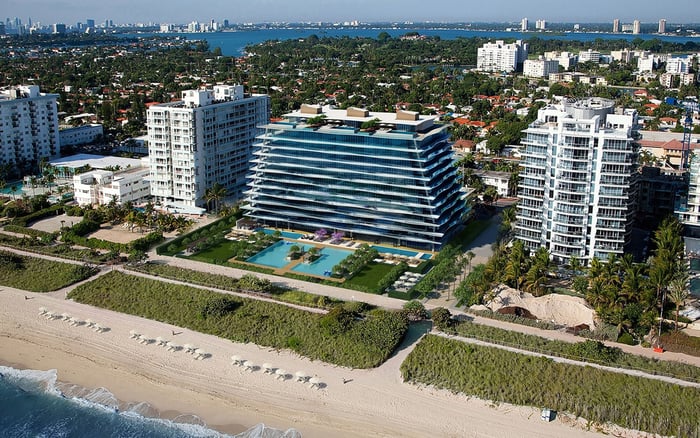
A discreet buyer’s framework for assessing Surfside residences through the practical demands of seasonal ownership, from arrival readiness to closing diligence.

For the seasonal buyer, luxury is not simply a matter of finishes or a coveted shoreline position. It is the ability to return after months away and find the residence prepared, secure, comfortable, and uncomplicated. In Surfside, that means evaluating a home through the rhythm of intermittent use rather than the routines of full-time occupancy.
The right second-home purchase should minimize the decisions required before, during, and after each stay. Access procedures, residence monitoring, maintenance coordination, package handling, vendor entry, parking, and departure protocols can matter as much as the interior itself. A beautiful home that requires constant remote management may prove less luxurious in practice than one supported by clear, dependable systems.
This edition of MILLION Buyer's Guides focuses on that operational standard. It treats waterfront and oceanfront appeal as the beginning of the conversation, then turns to the quieter details that define seasonal ownership.
These names are ranked as focused starting points for buyer diligence. The order reflects the questions a seasonal owner should prioritize, not an unsupported comparison of undisclosed services or building performance.
1. The Surf Club Four Seasons Surfside: service structure first
Begin by establishing precisely which residential services are included, which are available separately, and how requests are handled while an owner is outside Florida. Request the governing documents and written schedules defining responsibilities, access, charges, and notice periods.
2. Fendi Château Residences Surfside: residence care first
Examine the complete protocol for routine inspections, climate monitoring, leak response, vendor access, and pre-arrival preparation. Clarify who may hold keys or credentials and how each entry into the residence is documented.
3. Arte Surfside: privacy and access first
Review guest registration, household staff access, deliveries, contractor approvals, and parking procedures. The practical objective is discreet control without unnecessary friction for family members, trusted staff, or authorized service providers.
4. Ocean House Surfside: operating clarity first
Request a complete account of recurring obligations and building procedures before comparing the residence with alternatives. Seasonal ownership is easier when approvals, communications, billing, maintenance responsibilities, and emergency contacts are unambiguous.
5. The Delmore Surfside: future-use planning first
Confirm the residence's current status, anticipated ownership timeline, deposit structure where relevant, and the documents governing future use. Align any acquisition with your preferred season, furnishing plan, and tolerance for timing uncertainty.
Treat each tour as an operational rehearsal. Imagine arriving in the evening with luggage, receiving guests the next morning, authorizing a repair while abroad, and closing the home for several months. Ask who handles each step, how quickly requests are acknowledged, and whether the procedure is written or informal.
When considering Ocean House Surfside, request the full ownership package rather than relying on visual impressions. Apply the same discipline to The Delmore Surfside, with particular attention to timing, contractual obligations, and the path from acquisition to a usable residence.
For Arte Surfside and Fendi Château Residences Surfside, the relevant comparison extends beyond branding. Assess how the governing documents, staffing arrangements, access controls, maintenance policies, and owner costs align with your pattern of use. Apply the same written, item-by-item review to The Surf Club Four Seasons Surfside.
Before making an offer, prepare a one-page brief describing how the home will function in practice. Note the months you expect to occupy it, who may use it in your absence, whether household staff will require access, how vehicles will be managed, and which professional will oversee the residence locally.
Then ask counsel and the appropriate property professionals to test that brief against the condominium documents, insurance requirements, financial materials, service arrangements, and any restrictions affecting your intended use. Confirm current charges and policies directly in the transaction documents, as terms can differ and may change.
Translate lifestyle priorities into practical specifications. If effortless mornings are essential, examine the route from residence to shoreline. If privacy matters most, study arrival, elevator, guest, and delivery procedures. If extended absences are expected, prioritize monitoring and emergency-response protocols over amenities that will rarely be used.
The strongest seasonal purchase is the residence whose rules, services, costs, and physical condition remain intelligible even when the owner is far away. The final choice should withstand legal and financial review, an inspection, an insurance assessment, and a realistic rehearsal of arrival and departure.
In that sense, low-friction ownership is not passive. It is carefully designed in advance, documented at closing, and supported by a reliable local team. The reward is a Surfside home that feels composed from the first hour of every stay.
What defines a low-friction seasonal residence? It combines clear access, dependable residence care, straightforward rules, and well-defined owner responsibilities.
Should service levels be confirmed in writing? Yes. Distinguish documented obligations from optional services and informal practices.
What should I ask about extended absences? Ask about inspections, climate monitoring, emergency entry, leak response, key control, and owner notification.
How should I compare recurring costs? Review current financial materials and identify what each charge includes, excludes, or may require separately.
Do guest rules matter for a second home? Yes. Registration, access, parking, and occupancy procedures can materially shape family and guest stays.
What should be reviewed before making an offer? Consider the condominium documents, financial materials, insurance position, physical condition, and fit with your intended use.
How important is local residence management? It can be central for owners who need inspections, vendor coordination, preparation, and emergency response while away.
Should furnishing be part of the acquisition plan? Yes. Establish timing, delivery access, installation rules, storage needs, and oversight before committing to a schedule.
Can rental flexibility be assumed? No. Confirm all leasing restrictions, approval procedures, minimum terms, and related costs in the governing documents.
What is the final test before closing? Confirm that the residence can be opened, occupied, maintained, and secured with minimal remote intervention.
When you're ready to tour or underwrite the options, connect with MILLION.
If branded residences are on your mind — as a home or as an allocation — we would be glad to share what we are seeing, privately.
Begin a quiet conversation