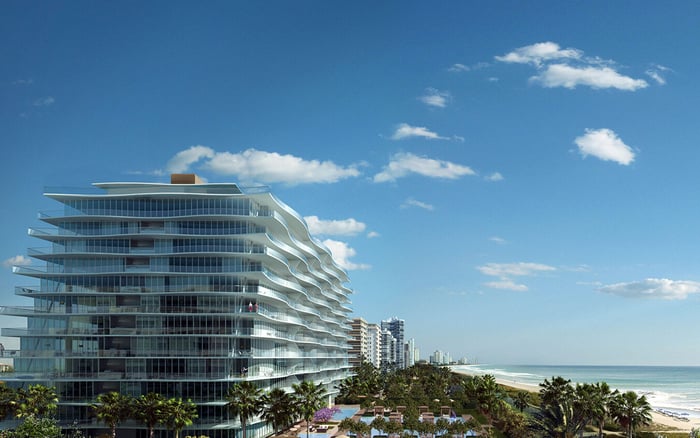
A collector-focused guide to evaluating Surfside waterfront residences for seasonal Miami stays, with attention to art placement, privacy, servicing, and ownership logistics.

For a collector arriving in Miami for Art Basel and Miami Art Week, a residence is more than a place to sleep between fairs, previews, dinners, and studio visits. It must provide a calm, private setting, support the safe display of meaningful works, and remain manageable while the owner is elsewhere.
Surfside is compelling for this brief, pairing a residential identity with a place in the broader Miami Beach cultural orbit. Yet the right choice cannot be made on a building name or waterfront view alone. Collectors should evaluate the specific residence: its light, walls, circulation, privacy, service model, and operating rules. Waterfront and oceanfront settings can be visually exceptional, but art stewardship demands a more disciplined inspection.
A focused search can begin with several Surfside names, each considered a candidate for detailed, unit-specific due diligence rather than a universal answer.
Arte Surfside belongs on the calendar for buyers considering how a residence’s design and architecture might interact with a tightly edited collection. During a showing, test the arrival sequence, identify uninterrupted wall planes, and note whether the rooms allow art to be experienced from different distances. Confirm every operational detail directly before assigning the property a role in a seasonal ownership plan.
The Surf Club Four Seasons Surfside merits evaluation through the lens of service and continuity. An owner who travels frequently should ask who can receive approved vendors, coordinate access, supervise routine residence care, and respond while the home is unoccupied. The relevant question is not simply whether service exists, but whether its scope aligns with the owner’s expectations and insurance requirements.
At Fendi Château Residences Surfside, the collector’s tour should focus on spatial compatibility. Bring dimensions for works likely to travel to Miami, examine elevator and corridor clearances, and identify potential installation routes. Large-scale pieces, framed photography, and sculpture each impose different demands; replace assumptions with measurements and written approvals.
Ocean House Surfside offers buyers another Surfside reference point for comparing layouts and ownership conditions. When possible, review the specific residence at the same hour on different days. Light, glare, privacy, and visual calm can shift substantially, influencing both display decisions and daily comfort.
A visit to The Delmore Surfside can complete the comparison. Rather than treating newer presentation materials as a substitute for diligence, request precise answers about delivery condition, customization boundaries, art lighting, window treatments, technology, and the timeline for any buyer-selected work. The objective is a residence prepared for the collector’s actual lifestyle, not merely a persuasive presentation.
The first test is wall utility. Buyers should map usable wall width, ceiling transitions, outlets, controls, vents, and doors. A broad wall may be less functional than it appears once switches and circulation are taken into account. For sculpture, assess floor area, viewing distance, structural questions, and the practical route from loading point to final position.
Natural light deserves equal scrutiny. Water-facing glass can produce shifting brightness and reflections, while direct exposure may be unsuitable for sensitive material. Ask an independent art adviser or conservator to review proposed locations and recommend protection appropriate to each work. Investigate lighting controls, shades, glazing conditions, and backup power rather than presuming their suitability.
A second home also needs a secure staging strategy. Determine where crates, tools, packing materials, and works awaiting installation could be held without disrupting living spaces. Confirm building procedures for installers, photographers, conservators, and couriers, including insurance documentation, scheduling, supervision, and freight access.
The best residence should make an intense week feel composed. Begin with transportation planning, guest arrivals, household staffing, dining reservations, and the possibility of schedule changes. Then distinguish between services controlled by the building and those requiring private staff or outside vendors.
Review privacy in operational terms. Ask how guests and vendors are registered, how deliveries are handled, and which records or approvals are required. Collectors who host should also examine the flow of entertaining without compromising private rooms or art-security zones.
Finally, budget beyond acquisition. Window treatments, specialist lighting, environmental monitoring, installation, insurance, storage, staffing, and periodic inspections may be essential to the ownership experience. The strongest choice is the residence whose physical plan and management framework can be aligned with the collection through documented, professional planning.
No single Surfside address is automatically best for every collector. One buyer may prioritize discreet service, another uninterrupted walls, and a third an easy lock-and-leave routine. Compare shortlisted residences against the same written brief, repeat the same questions, and involve legal, insurance, tax, design, and conservation advisers before committing.
The result should be a home that supports art without becoming a private gallery at the expense of comfort. In the most successful examples, the collection, water, architecture, and daily rituals coexist with restraint.
Why consider Surfside for Miami Art Week? It can serve as a residential base within the wider Miami Beach cultural orbit while providing a setting distinct from the week’s busiest venues.
Should a collector choose a building before selecting a unit? No. Building-level considerations matter, but light, walls, access, privacy, and circulation must be assessed in the specific residence.
What should be measured during a showing? Measure wall planes, ceiling conditions, doorways, elevators, corridors, and installation routes for any works likely to occupy the home.
How should natural light be evaluated? Visit at different times and have a qualified adviser assess exposure, glare, shades, glazing conditions, and the sensitivity of intended works.
Can building staff manage art deliveries? Capabilities and rules may differ, so buyers should confirm access, supervision, insurance, scheduling, and freight procedures in writing.
What is essential for a lock-and-leave residence? Prioritize documented inspection routines, controlled access, environmental monitoring, emergency protocols, and clearly assigned responsibility.
Should art storage be inside the residence? Only when the space and environmental conditions are appropriate. Specialist off-site storage may be preferable for certain works or crates.
How important are window treatments? They can be central to comfort, privacy, glare control, and art protection, but their suitability should be reviewed for the specific collection.
What documents deserve close review? Counsel should examine governing documents, vendor rules, alteration procedures, insurance obligations, leasing provisions, and other ownership restrictions.
Who should join the buyer’s advisory team? The team may include legal, tax, insurance, design, security, conservation, and art-advisory professionals suited to the buyer’s circumstances.
To compare the best-fit options with clarity, connect with MILLION.
If branded residences are on your mind — as a home or as an allocation — we would be glad to share what we are seeing, privately.
Begin a quiet conversation