Arte Surfside and The Surf Club present two distinct ownership models for buyers prioritizing unit care, storm support, and humidity oversight.
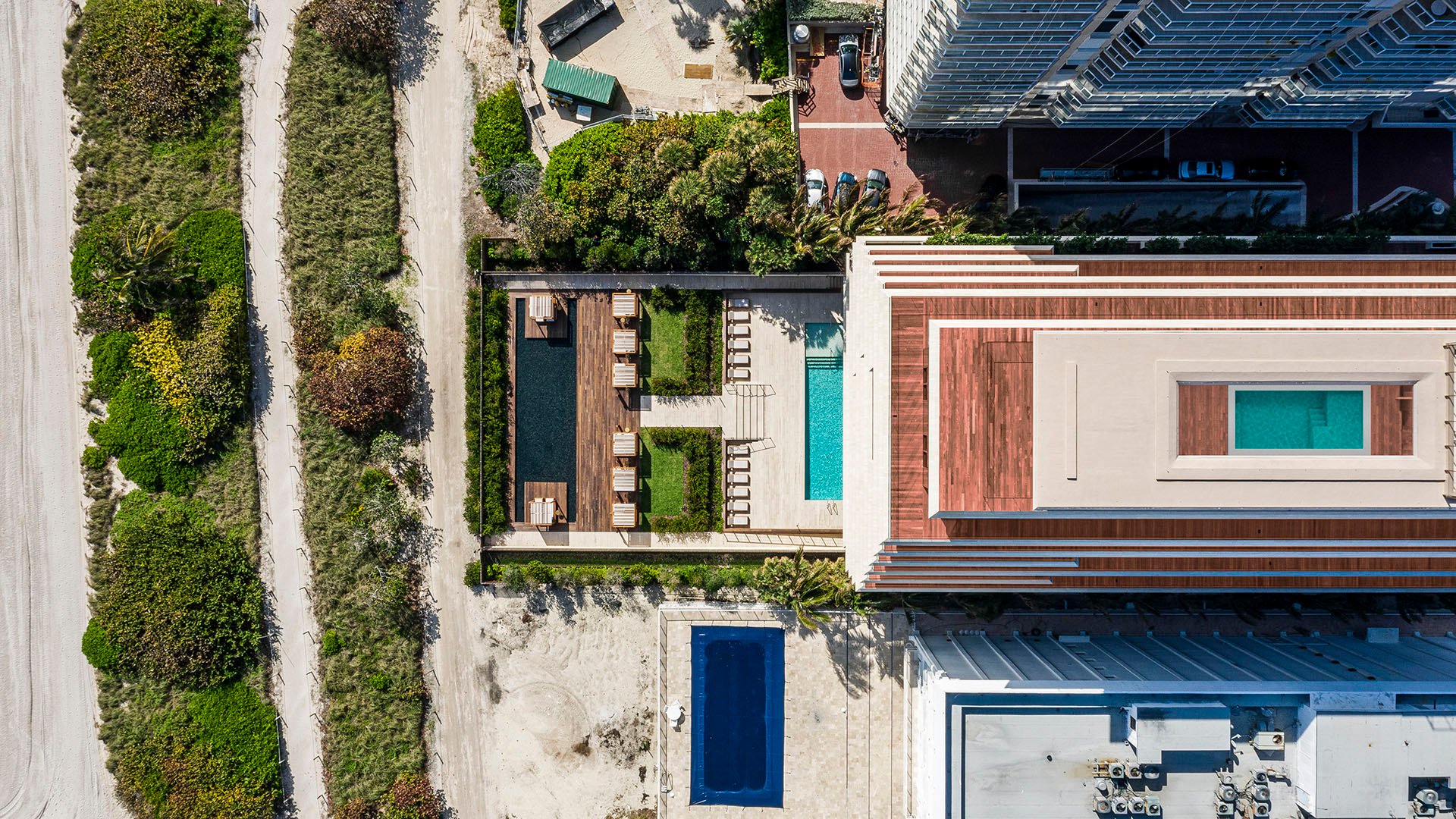
A Surfside residence may be chosen for its architecture, privacy and proximity to the Atlantic, but its performance as a seasonal home depends on less visible systems. Unit-level oversight, storm preparation, post-event communication and summer moisture control can matter as much as the arrival experience, particularly when an owner spends extended periods away.
The most relevant comparison is between Arte Surfside and The Surf Club Four Seasons Surfside. Both occupy rarefied oceanfront settings, yet they present distinct operational propositions. Arte makes the stronger case for owner-selected, bespoke management. The Surf Club is distinguished by an established Four Seasons hospitality environment, complemented by access to specialist residential managers.
This is not simply a choice between boutique and branded residences. It is a decision about where responsibility begins and ends, who enters the home in the owner's absence and how quickly reliable information reaches the owner after severe weather.
The best operational model is the one whose responsibilities remain clear when the owner is away.
1. Arte Surfside: best for customizable unit-level care
Arte is an oceanfront boutique condominium at 8955 Collins Avenue. Its clearest operational advantage is the availability of multiple third-party management options for individually owned residences. Services include tenant placement, rent collection, repairs and hurricane preparedness, as well as personalized property management and detailed home care.
That flexibility suits an owner who wants a service plan tailored to the residence rather than relying solely on a building concierge. A buyer can establish a defined inspection cadence, authorize spending thresholds and designate contacts for repairs or storm response. The critical distinction is that availability does not guarantee scope. Every requested duty should be specified in the management agreement.
2. The Surf Club: best for a branded hospitality setting
The Surf Club Four Seasons Private Residences occupies 9001 and 9111 Collins Avenue, combining private residences with the Four Seasons resort and the historic Surf Club setting. Designed by Richard Meier, the modern 12-story development integrates with the historic clubhouse.
The broader property includes round-the-clock hospitality infrastructure, including 24-hour in-room dining at the resort. Specialist residential management is also available for residences at 9111 Collins Avenue. For buyers, the appeal is a layered model: a branded environment surrounding the residence, with the option to investigate additional unit-specific care. Buyers should still distinguish hotel or building services from obligations performed inside a privately owned home.
Florida condominium boards must adopt hurricane-protection specifications for every residential or mixed-use condominium building they operate. Those specifications may address shutters, impact glass, code-compliant windows and other protective systems, including characteristics such as style and color. Subject to statutory approval requirements, an association may install protection or require owners to install compliant systems.
A unit manager performs a different role. Before a storm, practical tasks can include protecting openings where applicable and bringing outdoor furniture inside or securing it. A robust scope should also identify who documents the residence before the event, confirms completion, maintains keys or credentials and reports unresolved conditions.
After an evacuation, no property manager can independently determine when owners may return. Government restrictions and safety conditions control access. Meaningful re-entry support is therefore not a promise of privileged or faster access. It is the ability to communicate accurately, follow emergency procedures, inspect the unit when access is legally and safely available and coordinate approved vendors afterward.
Buyers should request the building's emergency procedures and ask how resident communications function if power, mobile service or normal staffing is disrupted. The response should identify responsible parties and escalation channels rather than rely on a general assurance that the property is fully serviced.
At either residence, buyers should not assume complete specifications for whole-home dehumidification, remote humidity sensors, vacant-unit condensation monitoring or summer HVAC set points. These features and duties cannot be inferred from an oceanfront address, a concierge desk or a hospitality brand.
A summer-care protocol should begin with the residence's HVAC engineering information. Buyers should request relevant summaries and determine whether the system, controls and any dedicated moisture-management components are maintained by the association, the owner or separate vendors. They should also establish what happens after an alert, loss of cooling or evidence of condensation.
The management agreement can then convert equipment into accountability. It should state who monitors available readings, how often the residence receives physical inspections, which conditions trigger owner notification and whether the manager may dispatch an HVAC technician without prior approval. It should also address vendor access, documentation of interior conditions and follow-up after repairs.
Remote data can be useful, but it is no substitute for a person assigned to investigate. Conversely, periodic visits without defined environmental checks may leave a gap. The strongest arrangement combines appropriate building systems, unit-level monitoring and a clear response chain, all verified for the specific residence under consideration.
The buyer's written scope should cover pre-storm preparation, post-storm inspection, repairs, vendor access and emergency communications. It should also clarify routine inspections, key custody, insurance documentation, spending authority, after-hours response and reporting. If leasing is contemplated, tenant placement and rent collection should be addressed separately from physical home care.
Applicable condominium inspection records deserve equal scrutiny. Buyers should verify that required inspections were signed by a licensed architect or engineer and obtain the supporting documents. Those records do not replace a residence-specific inspection, but they help frame questions about the association's responsibilities and the condition of common building components.
A carefully planned property tour can include Ocean House Surfside and The Delmore Surfside as additional comparison points. The purpose is not to assume equivalent services, but to assess every candidate against the same written operational checklist. Consistency makes differences in management structure easier to discern.
Arte is the more compelling choice for a buyer who values the ability to appoint a specialist for highly customized unit oversight, including expressly offered hurricane preparation. The Surf Club is better aligned with an owner who places greater weight on a Four Seasons hospitality setting while retaining the ability to explore specialist management for the private residence.
Neither model eliminates the need for due diligence. Concierge access is not identical to unit management, storm preparation is not the same as post-evacuation access, and cooling is not automatically a complete humidity strategy. Before committing, the buyer should align the condominium's policies, the residence's mechanical systems and the manager's contract into one practical plan.
For discreet guidance on selecting and evaluating a Surfside residence, connect with MILLION.
If branded residences are on your mind — as a home or as an allocation — we would be glad to share what we are seeing, privately.
Begin a quiet conversationArte Surfside has the clearest documented advantage for owner-selected, third-party unit management, including repairs, home care and hurricane preparedness.
The Surf Club combines private residences with the Four Seasons resort and historic Surf Club setting, creating the stronger documented branded-hospitality proposition.
No. Government access restrictions and prevailing safety conditions determine when re-entry is permitted.
It should address pre-storm preparation, post-storm inspection, emergency communication, vendor access, repair coordination and documentation.
Not necessarily. Buyers should separate building or hospitality services from duties performed inside the privately owned residence.
The reviewed details do not establish complete specifications for whole-home dehumidification, remote sensors, HVAC set points or vacant-unit condensation monitoring.
Buyers should request relevant HVAC engineering information and a written protocol covering monitoring, inspections, alerts, vendor dispatch and repair follow-up.
Arte Surfside is an oceanfront boutique condominium at 8955 Collins Avenue in Surfside, Florida.
The private residences occupy 9001 and 9111 Collins Avenue in Surfside.
Buyers should obtain applicable supporting records and verify that required condominium inspections were signed by a licensed architect or engineer.