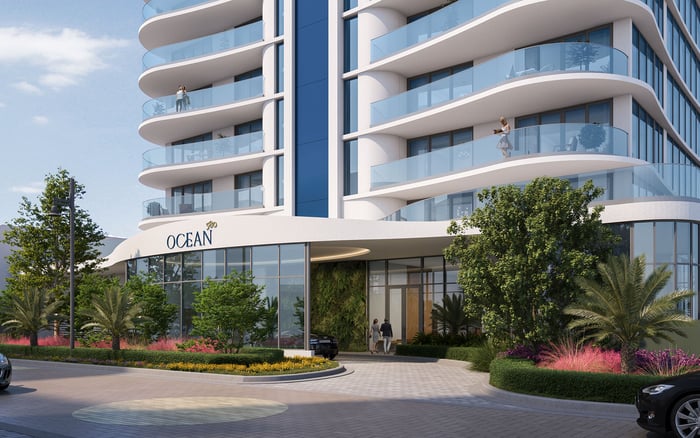
A discreet buyer’s field guide to evaluating arrival, elevator, amenity, beach, spa, restaurant, parking, and guest-access separation at Auberge Beach.

At Auberge Beach Residences & Spa Fort Lauderdale, the first due-diligence question is conceptual: who, precisely, qualifies as a guest? Ask management to distinguish among residence owners, owner-invited visitors, permitted tenants, service providers, and patrons of any public-facing venues. If hotel operations or hotel guests are mentioned during a tour, request a precise explanation of where those operations occur and which spaces those guests may enter.
Each user group may encounter a different registration process, credential, arrival route, parking arrangement, and amenity boundary. A polished showing may not reveal how circulation functions when several user groups arrive at once. Request a separate explanation for every category rather than relying on a general assurance that residential areas are private.
Privacy is not a single door; it is the continuity of controlled access from arrival to residence.
Begin at the vehicle entrance and follow the complete resident journey through the drop-off area, lobby, elevator, garage, and residence. Then repeat the exercise from the perspective of an invited visitor and a patron arriving for a restaurant, spa, or other venue. Observe whether these users share a drive, valet queue, reception point, waiting area, or elevator core.
Ask whether residential arrivals have a dedicated lane, podium, lobby threshold, or other controlled transition. The explanation should cover routine operations, busy periods, after-hours arrivals, and temporary disruptions. Buyers should also ask how rideshare drivers, deliveries, contractors, and household staff are directed without gaining unnecessary access.
Buyers comparing branded living in Broward can conduct the same exercise at Four Seasons Hotel & Private Residences Fort Lauderdale. The objective is not to assume that one operating model is superior, but to identify which arrangement best matches the household’s expectations for discretion, activity, and service.
Do not rely on a general description of private elevator access. Request a live demonstration of the credential system and ask whether authorization is assigned by building area, floor, or residence. Determine whether an invited visitor can call an elevator independently or requires approval from the owner, security team, or front desk.
Examine the spaces surrounding each elevator. A controlled cab provides limited separation if an unrestricted corridor leads directly to its vestibule. Ask whether venue patrons can approach residential elevator landings and whether service or emergency circulation creates crossover points. Buyers for whom privacy is essential should request the current access map and written procedures instead of relying solely on a verbal summary.
A comparison tour at The Ritz-Carlton Residences® Fort Lauderdale can help a household refine its elevator questions, particularly when planning for family visits, staff access, deliveries, and extended absences.
Walk from every public-facing venue identified by management toward the residential lobby, amenity areas, outdoor spaces, and beach route. Note staffed checkpoints, gates, shared corridors, unmarked openings, and locations where users may converge. Ask which controls are physical, which depend on staff, and which rely on resident or visitor credentials.
For pools, cabanas, beach services, fitness areas, lounges, and other shared spaces, confirm eligibility for owners, tenants, invited visitors, and venue patrons. Ask how reservations are handled, whether guest limits apply, what identification is required, and whether access changes during private events. Each amenity should have an explicit current rule rather than an assumed residential character.
The same review should address children’s areas, business facilities, social rooms, and any specialty spaces presented during the tour. Request a demonstration of how entry is controlled and how unauthorized crossover is handled in practice.
If a spa or restaurant serves people who are not residents, establish where that access begins and ends. Ask whether an appointment or reservation permits entry only to the booked venue or also to adjacent facilities. Identify the entrances, restrooms, waiting areas, elevators, parking routes, and valet operations used by patrons.
Fitness and wellness spaces require the same analysis. Management should explain the current eligibility rules and show how entry is controlled. Buyers should avoid assuming that proximity to a hospitality-oriented venue either grants broader access or compromises residential privacy; the relevant evidence is the operating procedure and the physical route.
For another Broward comparison, St. Regis® Residences Bahia Mar Fort Lauderdale provides a setting in which to examine the relationship between hospitality-facing activity and private residential circulation. Focus on who enters, where each group waits, what they may access, and which checkpoint prevents them from proceeding farther.
An oceanfront setting requires close attention to transitions between the shoreline, beach services, outdoor amenities, and residential areas. Walk every route that management identifies, including beach paths, service gates, access points, and connections to pool or amenity spaces.
Ask how staff distinguish residents and registered visitors from other beachgoers approaching the property edge. Confirm where credentials are checked, whether gates are staffed, and how access is managed when residents host visitors. A secluded atmosphere should not be treated as proof of controlled access.
Garage separation deserves the same scrutiny as lobby separation. Determine whether residents use assigned spaces, credentials, valet service, or another system. Ask whether venue patrons can enter residential parking areas and whether residential and public-facing vehicles share holding zones, ramps, elevators, or pickup points.
The most revealing questions concern exceptions. Ask how access is handled when an owner lends a vehicle, hosts a gathering, authorizes a vendor, or accommodates overnight visitors. Determine who approves after-hours entry and whether guest and vehicle registrations can be reviewed. Clear procedures indicate that privacy depends on repeatable operations rather than informal recognition.
Request the condominium association’s current leasing and guest rules, including any applicable registration requirements, occupancy conditions, and amenity privileges. Do not infer present rental, visitor, parking, cabana, beach, fitness, restaurant, or spa policies from marketing language or an informal conversation.
Before contract, reconcile the governing documents, current management procedures, physical access map, and what is demonstrated during an in-person tour. If privacy is a priority, visit at different times and observe how the property handles overlapping arrivals. The decisive issue is whether residential circulation remains controlled while guests, service providers, and public-facing venue patrons are present.
For discreet guidance on evaluating access, privacy, and ownership fit at South Florida’s premier residences, connect with MILLION.
If branded residences are on your mind — as a home or as an allocation — we would be glad to share what we are seeing, privately.
Begin a quiet conversationBuyers should ask management to define the property’s current operating model and clarify whether hotel operations or hotel guests are present.
Review residence owners, invited visitors, permitted tenants, service providers, and patrons of any public-facing venues separately.
No. Buyers should test credential controls and inspect the vestibules, corridors, and service routes surrounding the elevators.
Confirm registration, identification, parking, elevator authorization, amenity eligibility, and after-hours access procedures.
Current access should be confirmed directly with management. Buyers should also ask which areas a spa booking permits a client to enter.
Inspect patron entrances, waiting areas, restrooms, valet operations, parking routes, corridors, and elevators for crossover with residential paths.
Management should explain current eligibility and credential rules for owners, tenants, invited visitors, and other users.
Verify entry controls, reservation procedures, guest limits, visitor credentials, and any changes during private events.
Obtain the association’s current leasing and guest rules, including applicable registration conditions and amenity privileges.
Confirm how resident, visitor, service, and venue vehicles are routed and whether they share ramps, elevators, holding areas, or pickup points.