A buyer-focused MILLION guide to selecting South Florida waterfront condos where wellness is treated as daily infrastructure rather than a decorative amenity layer.
For the South Florida waterfront buyer, wellness has moved from supporting feature to central purchasing criterion. The conversation is no longer limited to whether a building offers a gym, a spa room, or a resort-style pool. Serious buyers now ask whether the entire residential experience supports sleep, movement, recovery, privacy, nutrition, fresh air, and the quiet discipline of daily routine.
That distinction matters. A beautiful amenity deck can photograph well and still fail the owner who trains before sunrise, hosts family for extended stays, works across multiple time zones, or wants recovery spaces that feel calm rather than performative. The best waterfront condos for wellness are not defined by excess. They are defined by coherence: spaces that are easy to use, services that are consistent, and a physical environment that encourages better habits without creating friction.
South Florida’s appeal is especially strong because water, light, and outdoor living are already embedded in the region’s architecture. The most compelling buildings use that setting with restraint. They allow residents to move from residence to terrace, pool, fitness, spa, and waterfront promenade without feeling as if they have entered a public resort. For buyers accustomed to private clubs, hotels, and global residences, that sense of controlled ease is often the real luxury.
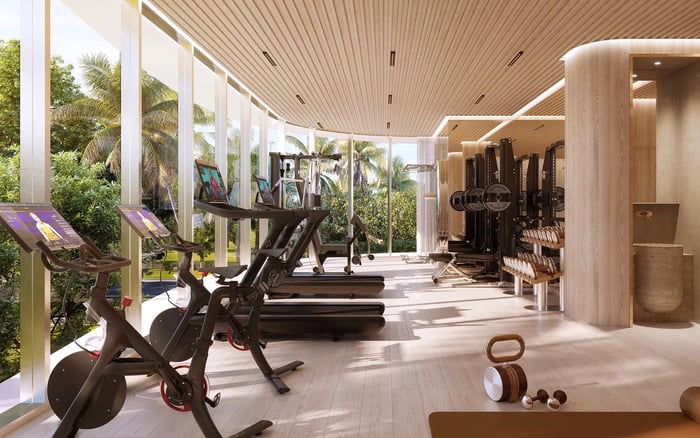
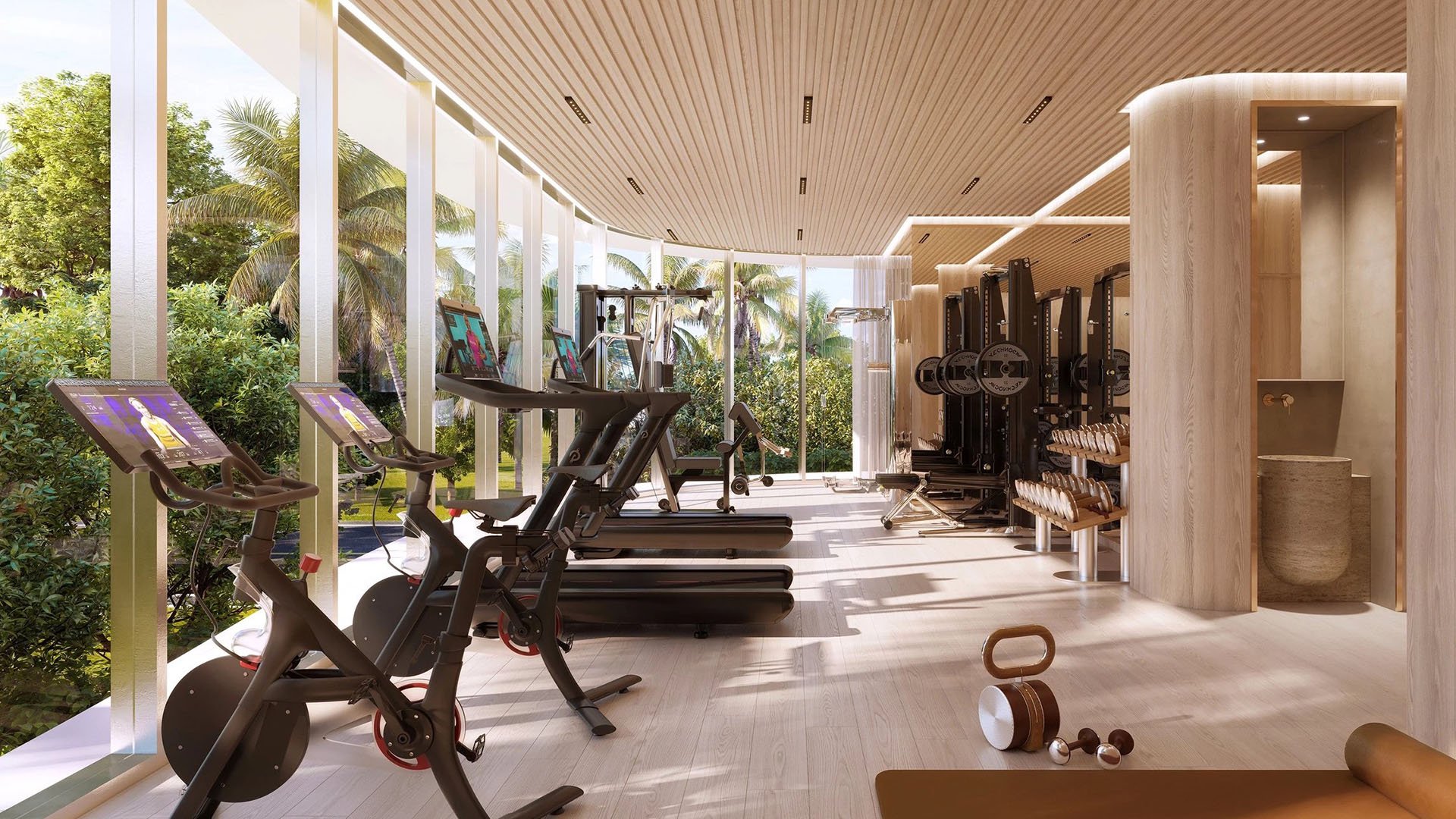
A serious wellness amenity program begins with daily usability. Buyers should evaluate whether the fitness spaces can support strength training, cardio, stretching, and private instruction without congestion. They should ask whether recovery is treated as part of the program through spa, sauna, steam, cold or heat rituals where available, and quiet lounge areas that encourage decompression rather than spectacle.
The next layer is programming. Wellness becomes more valuable when a building can support recurring routines: personal training, movement classes, massage, meditation, outdoor exercise, and healthy hospitality. Not every building needs every element, but the strongest programs feel curated rather than improvised. They create a framework for owners who want health embedded in the week.
Privacy is equally important. A wellness buyer may want to train hard, recover quietly, and move through the building without turning every visit into a social moment. That is why circulation, elevator strategy, locker areas, treatment rooms, and the separation between public-facing and resident-only spaces can matter as much as the amenities themselves.
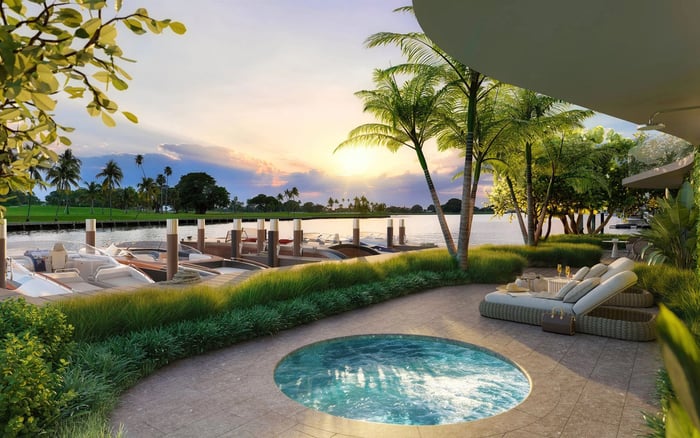
Waterfront living has an inherent wellness advantage when the building is designed to make the setting part of daily life. Waterview residences can shift the tone of a morning routine, while terraces, breezeways, and outdoor lounges can extend wellness beyond the gym. The goal is not simply to look at the water. It is to live in a rhythm shaped by air, horizon, and a calmer pace.
In Miami Beach, a buyer considering 57 Ocean Miami Beach is typically weighing an oceanfront lifestyle against the practical question of whether the building’s wellness environment fits year-round use. The right question is not whether the building feels impressive on a first tour. It is whether an owner would still use the fitness, recovery, and outdoor spaces consistently after the novelty has passed.
Sunny Isles appeals to buyers who want vertical waterfront living with a more residential rhythm than the most active urban cores. A project such as St. Regis® Residences Sunny Isles belongs in the wellness conversation because buyers in this corridor often prioritize service, privacy, views, and a building culture that can support frequent use without sacrificing discretion.
Wellness does not mean the same thing in every South Florida neighborhood. In Miami Beach, it may mean immediate coastal routines, morning light, and a residence that can function as both retreat and social base. In Brickell, wellness may mean the ability to train, recover, dine, work, and entertain without giving up the intensity of the financial district. For some buyers, proximity to work and restaurants is itself a wellness feature because it removes time and logistical strain.
That is why Brickell should not be dismissed by waterfront-focused buyers. The strongest urban waterfront propositions pair skyline energy with a more restorative private life above it. Buyers looking at Una Residences Brickell, for example, are often comparing the value of water-oriented living with the convenience of an established urban neighborhood. The question becomes whether the building can deliver quiet on demand.
Bay Harbor Islands offers a different proposition: a more measured residential setting within reach of major luxury corridors. Wellness-focused buyers considering The Well Bay Harbor Islands are often drawn to the idea of a residence where health is part of the brand language from the start. That positioning can be meaningful when the buyer wants wellness to guide the daily experience rather than sit at the edge of it.
The most common mistake is comparing amenity counts instead of amenity quality. A long list can be seductive, but it does not tell a buyer whether the gym will be pleasant at 7 a.m., whether treatment rooms feel private, whether outdoor areas are shaded, or whether the spa sequence is intuitive. A serious buyer should tour the wellness areas at the time of day they expect to use them.
The second mistake is ignoring residence design. Wellness is not confined to shared spaces. Ceiling heights, natural light, acoustics, primary suites, terrace depth, kitchen functionality, and the ability to create a calm work environment all influence how healthy a home feels. A building with excellent wellness amenities can still disappoint if the residence itself does not support rest and routine.
A third consideration is household complexity. A couple using the residence seasonally has different needs than a family living full-time, a buyer with staff, or an owner who entertains frequently. Some will value treatment rooms and private fitness most. Others will prioritize beach access, kids’ areas, food and beverage service, or an amenity plan that supports guests without overwhelming residents.
Wellness-first expectations are also shaping non-waterfront conversations across the region. Buyers comparing coastal and village settings may look at The Well Coconut Grove as part of a broader lifestyle benchmark, even if their final decision remains focused on waterfront living. The lesson is that wellness has become a framework for choosing how a residence should feel every day.
The best South Florida waterfront condo for a wellness buyer is not necessarily the one with the largest spa or the most dramatic amenity renderings. It is the one that matches the owner’s personal operating system. The right building makes training easy, recovery private, outdoor living natural, and service nearly invisible. It should feel restorative without feeling isolated, sophisticated without feeling staged.
For high-net-worth buyers, this is where advisory discipline becomes essential. A wellness program must be evaluated alongside view corridors, residence layouts, service culture, privacy, building scale, neighborhood tempo, and long-term flexibility. The result should be a home that supports performance and retreat in equal measure.
What makes a waterfront condo strong for wellness buyers? It should combine useful fitness, recovery, outdoor, and privacy features with a residence layout that supports rest, light, and routine.
Is a large amenity deck always better? No. A smaller, better-managed wellness environment can be more valuable than a larger space that feels crowded or unfocused.
Should I prioritize oceanfront living or neighborhood convenience? It depends on your daily rhythm. Some buyers need direct coastal access, while others gain more wellness value from reduced travel time.
How important is privacy in a wellness amenity program? Very important. The ability to train, recover, and move through the building discreetly is central for many luxury buyers.
Does Brickell work for wellness-focused buyers? Yes, if the building offers a calming private environment that balances the energy and convenience of Brickell.
Are branded residences better for wellness? Not automatically. The brand can signal service expectations, but buyers still need to evaluate the actual spaces and daily operations.
What should I look for during a wellness amenity tour? Visit at your likely usage time and assess crowding, privacy, acoustics, equipment quality, spa flow, and outdoor comfort.
Can waterview residences support wellness even without elaborate amenities? Yes. Light, horizon, quiet, and terrace usability can materially improve the feeling of daily life.
Should seasonal buyers think differently about wellness amenities? Seasonal buyers should focus on ease of use, guest comfort, lock-and-leave service, and amenities that work immediately upon arrival.
How do I narrow the best options? Start with your real weekly routine, then compare buildings by privacy, service, wellness depth, residence design, and neighborhood fit.
To compare the best-fit options with clarity, connect with MILLION.
If branded residences are on your mind — as a home or as an allocation — we would be glad to share what we are seeing, privately.
Begin a quiet conversation