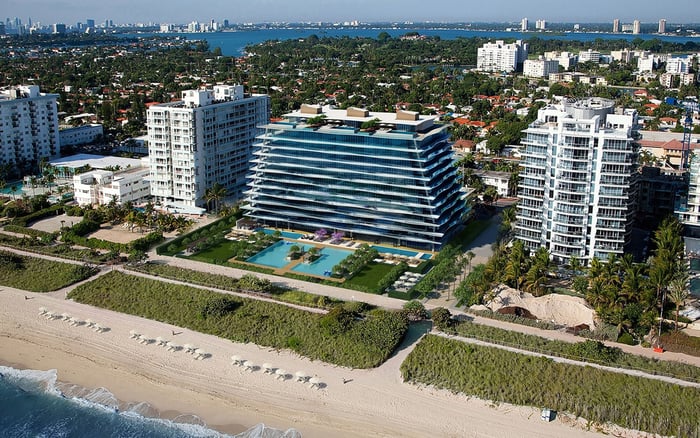
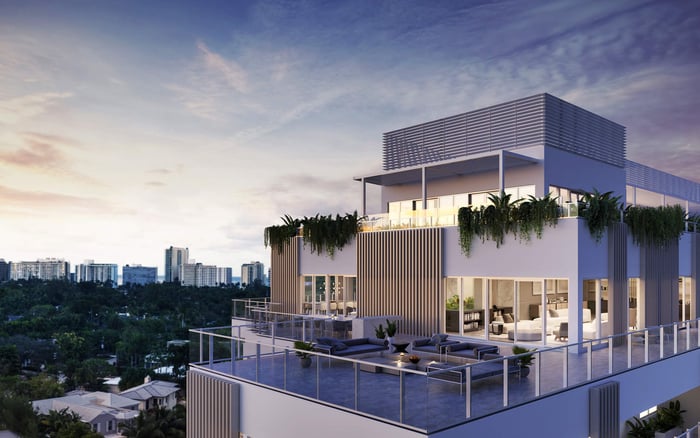
For penthouse buyers, quiet is a function of architecture, circulation and operations. The Surf Club Four Seasons Surfside presents the strongest documented case, but every residence still requires plan-level and on-site scrutiny.
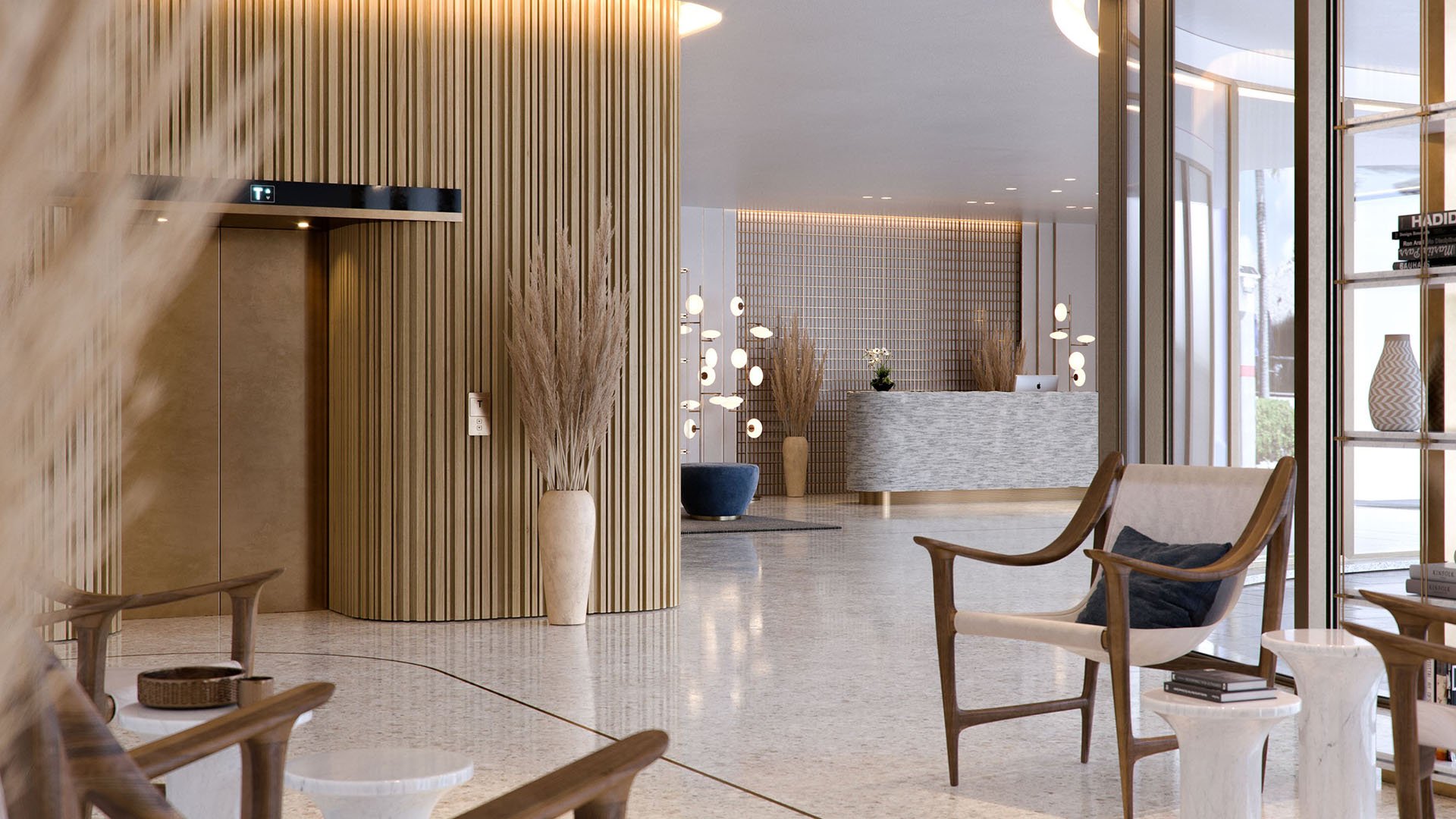
South Florida’s most coveted penthouses are often judged first by elevation, water views and terrace scale. Yet for owners who work from home, sleep lightly or simply expect privacy, the more consequential luxury may be what cannot be seen: separation from elevator machinery, service circulation, waste infrastructure and active public venues.
In oceanfront and hospitality-led buildings, a spectacular setting can coexist with complex operations. Restaurants, pools, ballrooms, loading areas and housekeeping routes generate activity at different hours. Branded residences may offer refined service, but buyers should distinguish the prestige of the flag from the acoustic performance of a particular home. Quiet is ultimately unit-specific, shaped by glazing, structural paths, adjoining rooms and the location of the private suite within the floor plate.
Quiet is ultimately unit-specific, shaped by glazing, structural paths and circulation.
1. The Surf Club Four Seasons Surfside: acoustic glazing and residential circulation
The Surf Club Four Seasons at 9011 Collins Avenue in Surfside presents the strongest documented case for quiet interiors. Its residences use double laminated-insulated low-iron glass intended to reduce exterior noise and support quieter bedrooms. A private entrance from a dedicated residential elevator core also helps residents avoid public hotel circulation.
That pairing matters. High-performance glazing addresses sound entering through the exterior envelope, while separate residential circulation reduces exposure to hotel guests and public movement. Neither feature guarantees that every penthouse will perform identically. Buyers should still examine the precise plan, locate equipment and service spaces, and test conditions inside the specific residence at different times.
Elsewhere in Surfside, buyers considering Eighty Seven Park Surfside or Ocean House Surfside can apply the same discipline: request a marked floor plan and evaluate every boundary surrounding the bedrooms, office and primary living spaces. The exercise is comparative, not cosmetic.
A quiet-focused review extends beyond the residence walls. Ask for plans showing elevator cores, machine rooms, electrical rooms, trash chutes, service corridors and back-of-house spaces. A beautifully finished bedroom directly beside elevator or mechanical infrastructure is inherently disadvantaged, regardless of the building’s overall construction quality.
Elevators can transmit low-frequency mechanical sound and vibration through concrete, making the relationship between the core and quiet rooms especially important. Distance helps, but intervening spaces can be equally valuable. Closets, baths, galleries and storage rooms can provide useful separation between sleeping areas and active building systems.
Trash infrastructure requires similar attention. A chute can generate recurring impact noise throughout the day and evening. Buyers should determine whether it shares a wall with a bedroom, study or main living area, and whether the collection room or service route sits above, below or beside the residence. A penthouse label does not neutralize these adjacencies.
Public amenities require vertical as well as horizontal review. A penthouse may sit well above a restaurant or ballroom yet still encounter sound through structural connections, shafts or exterior areas. Pool decks and hospitality spaces can also introduce music, furniture movement and shifting patterns of occupancy.
In Bal Harbour, residences such as Oceana Bal Harbour and Rivage Bal Harbour belong in a buyer’s broader comparison set, but no project name should substitute for residence-level diligence. Request plans identifying public venues and service paths, then consider whether bedrooms and offices occupy the protected side of the layout.
Dedicated residential circulation is particularly valuable in a mixed-use or hotel environment. Its purpose extends beyond exclusivity on arrival. A separate core can reduce incidental encounters, door activity and corridor traffic associated with public operations. Buyers should confirm exactly which elevators serve the residence, where staff enter and whether service traffic crosses the private arrival sequence.
Even a well-planned penthouse can be affected by how a building is occupied and managed. A high concentration of short-term or transient rentals can correspond with increased corridor traffic and louder daily conditions. Review the rental policy, current rental mix, established quiet hours and the association’s enforcement practices before committing.
Complaint history offers another layer of intelligence. Ask whether the seller or neighboring owners have submitted noise complaints during the previous two years. Association complaint logs may expose recurring issues near elevator cores, mechanical rooms or shared infrastructure that a brief daytime tour will not reveal.
Read these records alongside meeting materials, building rules and any available engineering documentation. Look for patterns rather than isolated comments. Repeated references to vibration, door slams, equipment cycling or late-night corridor activity can guide further testing and negotiation.
The central principle is simple: operational quiet must be verified in practice. Rules matter only when management applies them consistently, and acoustic assemblies matter only when correctly detailed and maintained.
Noise mitigation itself deserves technical scrutiny. At the St. Regis Bal Harbour, vinyl noise-barrier material installed around building pipes was identified as the source of alleged off-gassing in a penthouse dispute. The episode underscores a broader lesson: buyers should investigate not only whether mitigation exists, but also the materials and installation methods involved.
Ask for relevant specifications, renovation records and details of any acoustic retrofits. Where warranted, engage qualified advisers to assess both performance and material suitability. Concealed assemblies are part of the residence’s environmental quality, even when they never appear in a marketing presentation.
Visit more than once if access permits. Spend quiet time in the primary bedroom, secondary suites and office with televisions, music and ventilation distractions minimized. Listen near walls adjoining the core, corridor or service spaces. Note equipment cycles, elevator movement, doors and waste activity.
Evening conditions may differ substantially from a midday showing, particularly where public venues or transient occupancy are present. Test with exterior doors closed, since glazing performance matters most under normal interior conditions. A specialist can help investigate low-frequency vibration or intermittent sound that is difficult to assess during a conventional tour.
The best choice is not necessarily the highest residence or the one with the most elaborate amenity program. It is the penthouse where envelope, floor plan, circulation and management work together, supported by evidence that substantiates the promise of calm.
For confidential guidance on evaluating South Florida penthouses through an acoustic and lifestyle lens, connect with MILLION.
If branded residences are on your mind — as a home or as an allocation — we would be glad to share what we are seeing, privately.
Begin a quiet conversationThe Surf Club Four Seasons Surfside stands out for its acoustic glazing and dedicated residential elevator core.
No. Glazing can reduce exterior noise, but interior quiet also depends on layout, structural paths, equipment locations and operations.
Elevators can transmit low-frequency mechanical noise and vibration through concrete, especially into nearby bedrooms and offices.
Locate the chute and collection areas on building plans, then listen from principal rooms during more than one visit.
Yes. Ask about complaints from the seller or neighboring owners during the previous two years and review association logs.
A high concentration of transient rentals can correspond with more corridor traffic and louder everyday conditions.
Review rental policies, the current rental mix, quiet hours and how consistently management enforces them.
They can reduce exposure to public hotel circulation, guest movement and associated corridor activity.
Yes. Buyers should examine both the materials used and their installation methods, not merely the existence of mitigation.
Visit at different times, including when public venues and building operations are active, and consider specialist testing.