A buyer-focused guide to evaluating private elevator arrivals, guest routing, service circulation, and privacy protocols in Fisher Island residences.
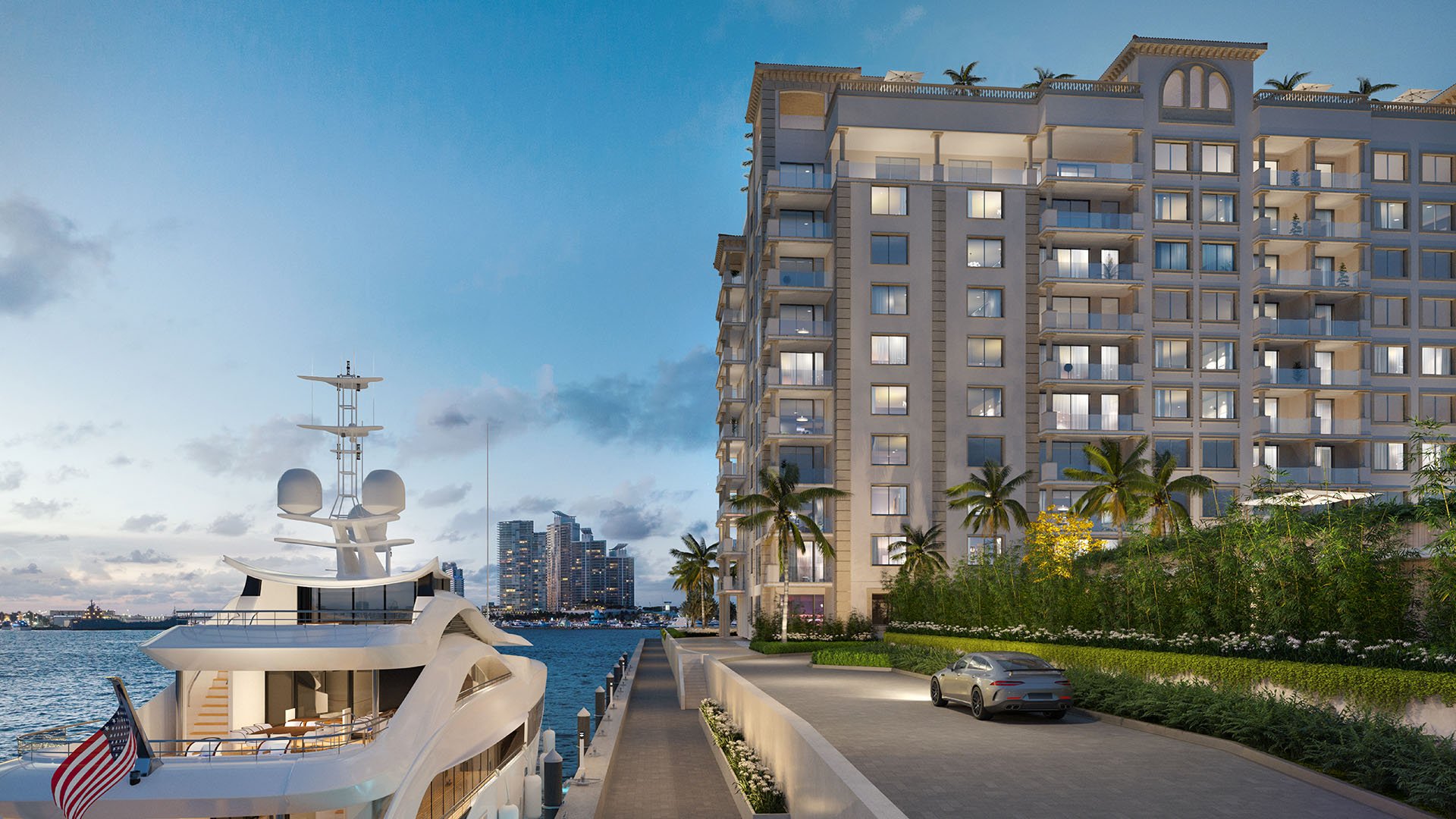
In Fisher Island’s upper tier, a private elevator is more than an amenity. It is part of an arrival sequence designed to protect residents’ movements, receive guests elegantly, and prevent household operations from crossing the principal path. The strongest residence is not necessarily the one with the most dramatic elevator lobby, but the one in which architecture, access control, staffing, and daily circulation function as a coherent system.
That distinction matters when evaluating new inventory. Marketing language may describe an elevator as private even when residents share a cab, pass through a common corridor, or arrive in a vestibule with limited separation. Buyers should examine every threshold: who can authorize a trip, where a visitor waits, and how deliveries reach the home.
For this brief, “best” is a measure of fit rather than a universal ranking. A principal who entertains frequently may value a composed guest vestibule and intuitive wayfinding. A family with staff may prioritize a clearly separated service route. A buyer who uses the residence intermittently may place greater weight on remote permissions, credential management, and reliable oversight while away.
The most useful comparison begins with three layers. First, physical separation: elevator banks, vestibules, corridors, and service doors. Second, operational control: credentials, visitor authorization, staff procedures, and after-hours handling. Third, experiential quality: lighting, acoustics, sightlines, finishes, and the ease with which guests understand where to go without unnecessary exposure.
Terminology also demands disciplined interpretation. A new-construction label does not confirm a particular access arrangement, while pre-construction plans may remain subject to change. Likewise, gated-community and waterfront descriptions provide context, not proof of residence-level privacy. Every condition should be confirmed for the specific Fisher Island home under consideration.
A focused search can begin with The Residences at Six Fisher Island, treating the private-arrival sequence as a central due-diligence issue. Buyers should request the relevant floor plan and trace the route from controlled entry through elevator access, vestibule, and residence door. The review should distinguish dedicated equipment from the controlled use of shared equipment.
Established island names can sharpen the comparison. Palazzo del Sol and Palazzo della Luna are natural points of inquiry for buyers comparing residential approaches and operating environments within the same broader market. Privacy should not be assumed to be equivalent. Each available residence merits individual examination because its position within the building can affect adjacency, exposure, and circulation.
For buyers open to comparing condominium living with an estate format, The Links Estates at Fisher Island introduces another perspective on privacy. It should not be viewed as an elevator-led substitute. Instead, it can clarify whether the buyer’s true priority is a vertical private arrival, greater control over the entire threshold, or a particular balance between service and social access.
Begin with a marked plan. Identify the principal elevator, any service elevator, stairs, common corridors, refuse path, loading route, and every door between the arrival point and the residence. Determine whether the elevator opens directly into the home, a private vestibule, or a controlled shared area. Then establish whether the vestibule is deeded, designated for exclusive use, or common space.
Security should be assessed without compromising comfort. Confirm how residents, family members, staff, and recurring guests receive credentials. Ask what happens when credentials expire, a visitor arrives early, or multiple parties are expected at once. A sophisticated system should keep permissions narrow, comprehensible, and easy to revoke.
Physical details can be equally consequential. Study the elevator door’s sightline into living areas, acoustic separation from bedrooms, package placement, camera positions, and the possibility of one guest observing another’s arrival. Hardware should support daily convenience without encouraging informal workarounds that weaken the intended protocol.
Discreet access should never feel inhospitable. Guests need a clear sequence: authorization, arrival, a dignified place to pause when necessary, and an intuitive transition into the entertaining rooms. The ideal route minimizes confusion while preventing direct views into private family areas.
Service circulation requires a separate review. Map the routes for catering, housekeeping, luggage, floral deliveries, maintenance, and packages. Determine where personnel wait, which entrance they use, and whether their path intersects with guests or the principal suite. If separation depends primarily on staff timing rather than architecture, the buyer should understand that operational burden before committing.
Privacy conditions also shift during an event. Ask how multiple arrivals are staged, whether temporary credentials can be issued, and how vendors depart once the principal elevators resume normal residential use. The relevant standard is not secrecy for its own sake, but controlled hospitality.
Before contractual milestones expire, request the current plans, access-control description, applicable rules, and written clarification of any exclusive-use spaces. Review representations concerning elevators and vestibules with the appropriate legal and technical advisers. For an unbuilt or evolving residence, verify what may change and what is contractually fixed.
Finally, test the experience in person whenever possible. Walk the guest route, stand at the elevator threshold, inspect the sightlines, and listen for operational noise. A brief arrival can reveal more than an extended amenities presentation. The right choice will align the floor plan with the household’s actual patterns-not an abstract idea of luxury.
Does “private elevator” always mean a dedicated elevator cab? No. It may refer to controlled access or a private landing, so the precise arrangement should be verified.
What is the first document a buyer should request? Request the current residence and circulation plans, including principal and service routes.
Why does vestibule ownership matter? Ownership or use rights can affect control, furnishing, maintenance, and permissible alterations.
Should guest and service elevators be separate? Separation can improve discretion, but buyers should confirm how both routes function in practice.
How should recurring household staff receive access? Prefer individually managed credentials with defined permissions and a clear revocation process.
What should buyers check about deliveries? Confirm acceptance, storage, notification, and the route from receipt to the residence.
Can a floor plan establish complete privacy? No. Staffing procedures, access technology, building rules, and resident habits also matter.
What matters most when entertaining? Look for clear visitor authorization, a comfortable arrival space, and limited exposure to private rooms.
How should a buyer compare the Fisher Island options? Apply the same arrival, guest, service, security, and contractual checklist to every residence.
When should advisers review elevator and access claims? They should review material claims and governing documents before the relevant contractual deadlines.
If you'd like a private walkthrough and a curated shortlist, connect with MILLION.
If branded residences are on your mind — as a home or as an allocation — we would be glad to share what we are seeing, privately.
Begin a quiet conversation