An entertaining-first guide to evaluating Coconut Grove new construction, from kitchen support and guest circulation to terraces, privacy, staffing, and building rules.
For buyers who host regularly, the best residence is rarely defined by a dining-room photograph alone. Private dinners, cocktail gatherings, family celebrations, and catered events each place distinct demands on a home. The essential considerations are circulation, kitchen support, acoustics, storage, guest privacy, and the relationship between interior and exterior spaces.
That distinction is especially important in a new-construction purchase, where polished presentation can obscure practical differences between floor plans. In Coconut Grove, an entertaining-first search should begin with how a residence functions before, during, and after guests arrive. Lifestyle appeal matters, but operational ease is what makes hospitality feel effortless.
A formal table is only one component. Buyers should trace the route from the entry to the principal entertaining area, noting whether guests must pass through private bedroom corridors. A powder room should be readily accessible without compromising the household’s more personal spaces. Coat storage, serving surfaces, and dedicated places for floral arrangements or wine service can be equally consequential.
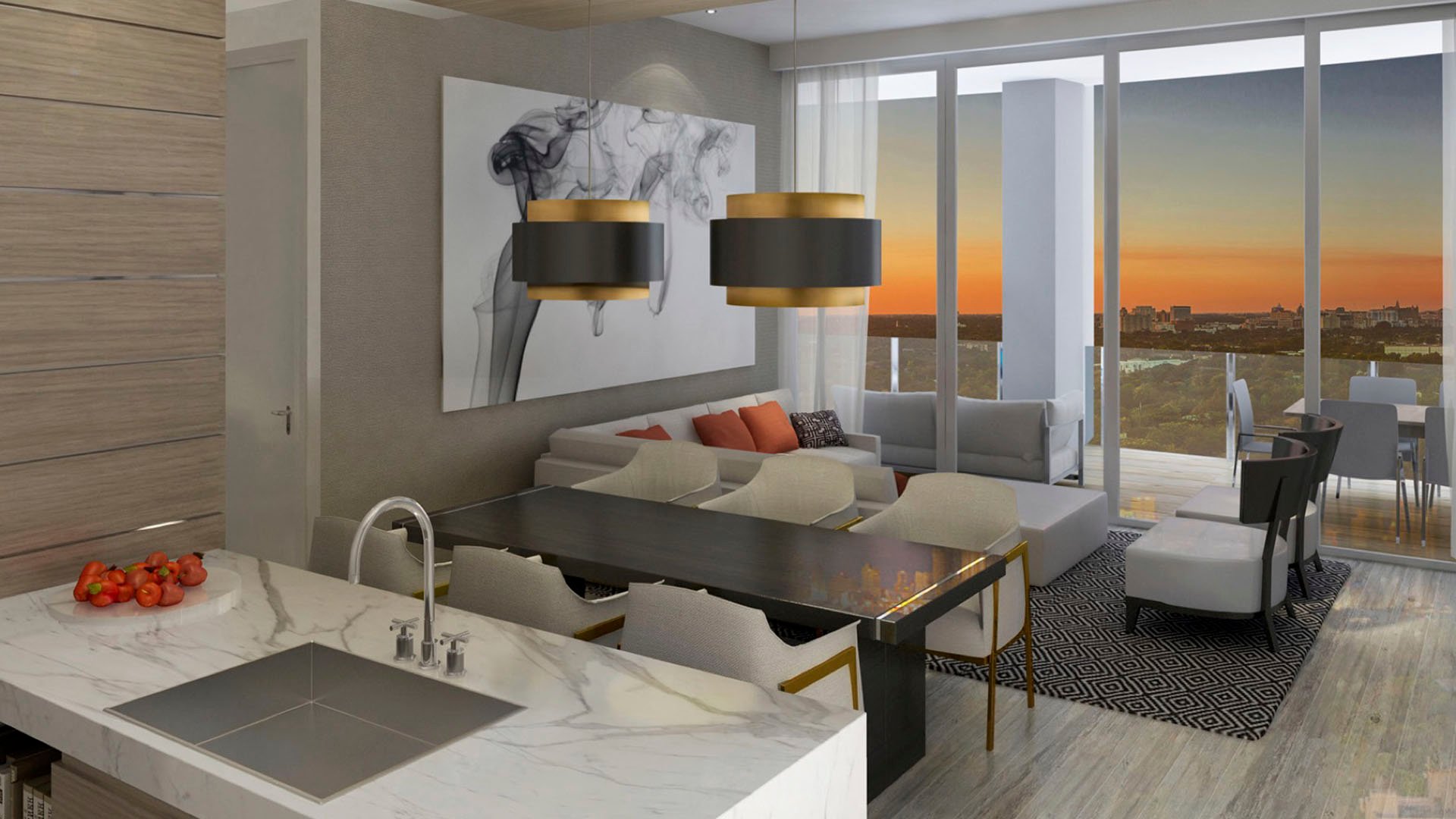
The kitchen warrants closer scrutiny than its finishes alone. Ask whether preparation can remain discreet, whether catering staff can work without interrupting conversation, and whether refrigeration, pantry storage, refuse handling, and cleanup capacity are proportionate to the scale of intended events. An open kitchen may suit intimate evenings, while larger occasions can benefit from separation between presentation and production.
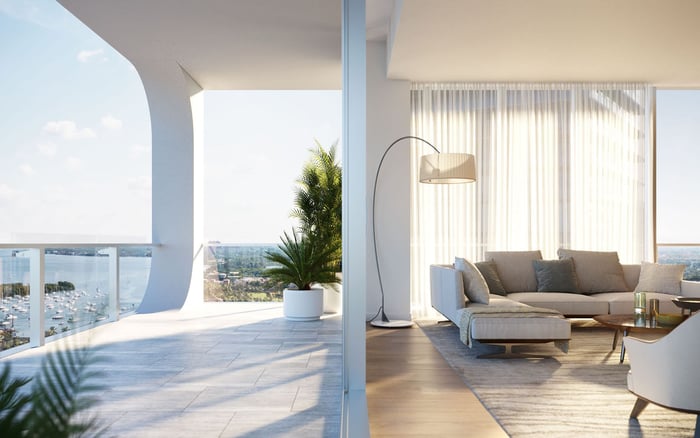
Outdoor space should be judged by usability rather than headline dimensions. Balcony depth, door placement, exposure, furniture clearances, and shelter from changing weather all determine whether dining can genuinely move outside. A terrace succeeds when it feels like an extension of the living room rather than a disconnected viewing platform. Waterfront outlooks may shape the atmosphere, but orientation and comfort determine how often exterior space is used.
For buyers seeking a hospitality-led home, Four Seasons Residences Coconut Grove and Arbor Coconut Grove are sensible names for an initial comparison. The purpose is not to assume a common amenity standard, but to test available residences against the same private-dining brief, using plans and written disclosures rather than impressions alone.
A second review can place Opus Coconut Grove alongside The Well Coconut Grove. Buyers should compare the exact residence under consideration, since entertaining performance can change materially with layout, level, orientation, and outdoor configuration. The most persuasive plan will usually create a graceful guest sequence while preserving a separate domestic rhythm for owners, family members, and staff.
Ziggurat Coconut Grove can be evaluated through the same lens. Rather than treating these projects as interchangeable, purchasers should create a room-by-room matrix for their preferred homes. Record dining capacity, kitchen separation, pantry potential, powder-room placement, terrace access, storage, elevator arrival, and likely furniture zones. This turns an aesthetic tour into a disciplined comparison.
Begin at the arrival point. Consider whether guests can enter comfortably in groups and whether the transition into the social rooms feels intuitive. Then walk the service path from the kitchen to the dining area, imagining occupied furniture, open doors, and guests standing in conversation. Narrow pinch points often become apparent only when a plan is considered in use.
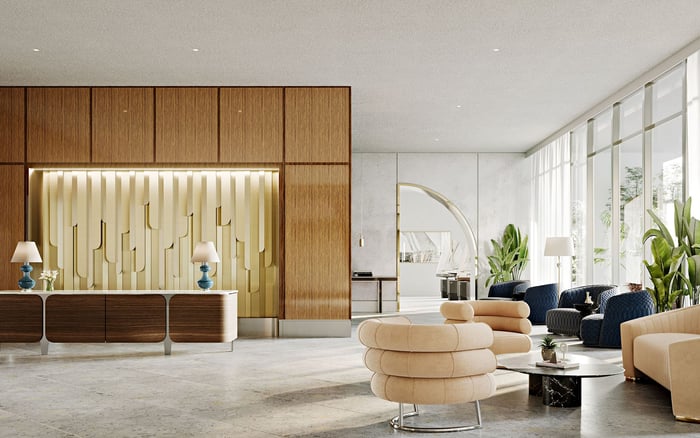
Next, test the boundary between public and private rooms. The ideal arrangement does not require the owner to close off half the home whenever guests arrive. Bedrooms, offices, family rooms, and personal storage should remain discreet, while the principal reception spaces feel generous and connected.
Finally, assess acoustics and lighting. Hard surfaces can amplify sound, while extensive glazing may create reflections after dark. Buyers should identify where layered lighting, window treatments, art, rugs, or acoustic materials may be needed. These are not merely decorative decisions; they determine whether a room remains comfortable as an evening progresses.
A residence can have excellent proportions and still be constrained by building procedures. Before committing, review applicable rules governing deliveries, vendors, elevator reservations, valet coordination, guest access, music, terrace use, and event timing. Confirm which approvals or insurance documents outside caterers may need and how refuse is removed after an event.
Staffing also changes the brief. Owners who rely on household personnel should examine back-of-house circulation, storage, laundry access, and opportunities for discreet setup. Those who entertain without staff may prefer a kitchen-and-dining relationship that reduces steps and keeps hosts connected to guests. Neither model is universally superior; the right choice follows the household’s established habits.
The strongest entertaining home supports both special occasions and ordinary life. A vast reception room is less compelling if daily seating feels awkward, while an oversized terrace adds limited value if weather, exposure, or circulation restricts its use. Prioritize adaptable proportions, practical service zones, privacy, and written clarity around building operations.
Buyers should also distinguish between what is delivered, what is presented as an option, and what would require later approval. Confirm dimensions against current documents, review finish and appliance specifications, and determine whether desired millwork, lighting, shading, or outdoor cooking elements are permitted. Precision at this stage protects both the hosting experience and the integrity of the purchase.
What makes a residence suitable for private dining? A strong plan combines comfortable table placement, discreet preparation, intuitive guest circulation, accessible powder rooms, and practical cleanup.
Is a separate dining room essential? No. An open dining area can work beautifully when its proportions, lighting, acoustics, and relationship to the kitchen are carefully resolved.
How should buyers evaluate terrace dining? Review depth, access, exposure, furniture clearances, lighting possibilities, and any building restrictions affecting outdoor use.
Why does kitchen circulation matter? It determines whether hosts or staff can prepare, serve, and clear courses without crossing the primary guest conversation areas.
Should catering access be reviewed before purchase? Yes. Confirm vendor entry, elevator procedures, insurance requirements, delivery timing, staging space, and refuse removal in writing.
How much storage does an entertaining home need? Storage should accommodate tableware, linens, serving pieces, beverages, occasional furniture, and event supplies without crowding daily-use cabinetry.
What role do acoustics play in entertaining? Balanced acoustics allow conversation and music to coexist, particularly in rooms with glass, stone, or other reflective finishes.
Can a balcony function as a dining space? Potentially, but usable depth, door swing, exposure, furniture arrangement, and applicable rules matter more than the label.
Are building amenities a substitute for in-residence capacity? No. Shared spaces can complement a home, but owners should separately assess reservation policies, privacy, service, and availability.
What should buyers verify in the contract documents? Verify the residence plan, dimensions, specifications, options, alteration limits, building rules, and any provisions affecting deliveries or events.
For a tailored shortlist and next-step guidance, connect with MILLION.
If branded residences are on your mind — as a home or as an allocation — we would be glad to share what we are seeing, privately.
Begin a quiet conversation