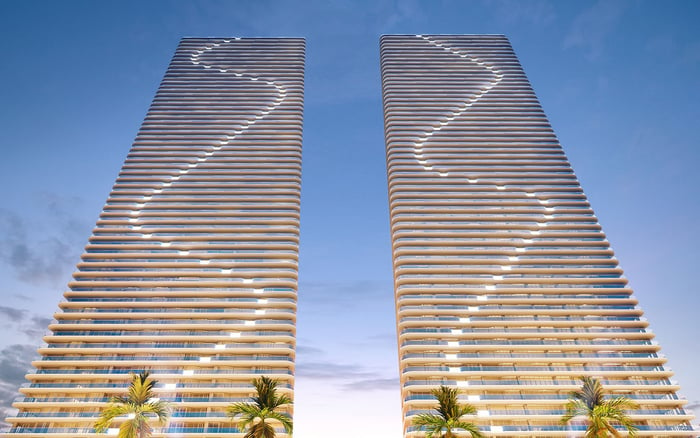
A buyer-focused edit of Miami Beach waterfront options, balancing private-island estates and elite condominiums with reserve, assessment, insurance, and property-level diligence.
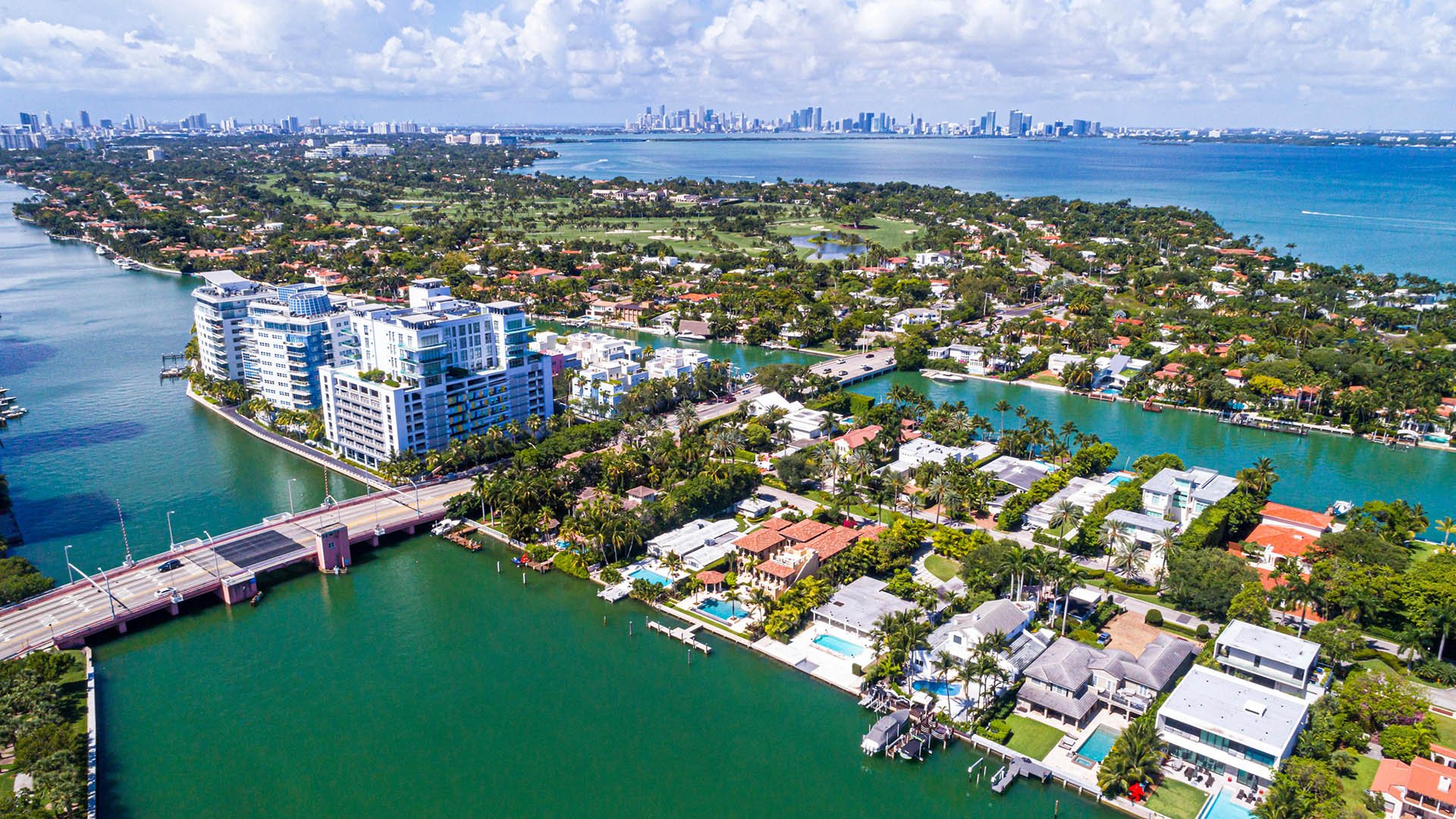
For a Miami Beach waterfront buyer, cash can streamline execution, remove lender conditions, and reduce financing uncertainty. It does not, however, neutralize an underfunded condominium association, pending assessment, inadequate insurance, or deferred capital work. The most sophisticated purchase is not simply the residence with the finest view. It is the one whose ownership structure, physical condition, and financial obligations remain persuasive under close review.
That distinction separates private-island estates from condominium residences. A single-family owner avoids condominium-association reserve exposure but assumes direct responsibility for insurance, structure, flood considerations, seawalls, and ongoing maintenance. A condominium distributes certain obligations through the association while introducing collective financial and governance risk.
The following shortlist places ownership clarity first. It is not a building-level reserve rating; exact exposure can be established only through current association documents and property-specific diligence.
1. Venetian Islands - breadth and single-family control
With more than 300 homes, the Venetian Islands encompass lots ranging from roughly 6,000 to 27,000 square feet and prices from about $2.5 million to $40 million. That breadth offers more entry points than Miami Beach's most exclusive trophy-home enclaves.
For reserve-conscious buyers, the principal attraction is structural: a house carries no condominium-association reserve exposure. The tradeoff is direct responsibility for every major component, particularly waterfront infrastructure and insurance.
2. Star Island - limited-supply trophy positioning
Star Island ranks among Miami Beach's leading waterfront communities, prized for privacy, limited supply, and direct Biscayne Bay access. It suits buyers who favor property-level control over the shared liabilities of a condominium association.
Cash does not replace physical diligence. Structural condition, insurance, flood exposure, seawall integrity, and maintenance planning remain central to the acquisition.
3. Palm Island - private-island ownership
Palm Island pairs the appeal of an established private-island setting with direct access to Biscayne Bay. For buyers focused on avoiding association reserve uncertainty, its single-family format can provide a clearer line between purchase price and future capital responsibility.
That responsibility is concentrated rather than eliminated. Buyers should underwrite the residence and its waterfront systems as carefully as they would an association balance sheet.
4. Hibiscus Island - privacy with direct bay access
Hibiscus Island shares the limited supply and privacy that distinguish Miami Beach's private-island communities. It is a compelling address for cash buyers prepared to manage property-specific obligations directly.
The proper comparison is not zero risk versus reserve risk. It is individual asset risk versus collective association risk, with insurance and long-term capital needs relevant in both cases.
5. Apogee - a cash-heavy condominium benchmark
Apogee recorded eight sales during the year, with approximately 90% completed in cash. That concentration illustrates how limited financing risk can be at the top of the condominium market.
Yet a cash-heavy owner base is no substitute for reserve diligence. Association finances, assessments, insurance, governance, and restrictions still determine the durability of ownership.
The broader Miami Beach market can be misleading. Waterfront inventory spans trophy estates, luxury towers, and older units at dramatically different price and quality levels. Snapshot counts have ranged from 1,271 to 1,418 listings, while a broad search showed a median asking price of $659,000. Those figures encompass property types well beyond the ultra-premium segment and should not anchor a luxury acquisition.
For condominiums, request current financial statements, reserve information, budgets, assessment records, insurance materials, governance documents, and rental restrictions. Examine what has been funded, what remains deferred, and how future work could be allocated. Public listings cannot establish exact reserve exposure.
For estate and single-family purchases, replace the association review with a rigorous property-level inquiry. Seawalls, structure, flood conditions, insurance availability, and maintenance obligations can create substantial capital needs even when no HOA reserve account exists.
A cash buyer comparing South Beach options may begin with Apogee South Beach and Continuum on South Beach, then examine The Ritz-Carlton Residences® South Beach and The Perigon Miami Beach. Together, they define a relevant residential comparison set, but none should be presumed to have superior reserves without current building records.
Resale buyers should also distinguish completed obligations from anticipated ones. Investment logic must account for recurring charges, possible assessments, insurance pressure, use restrictions, and the owner's intended holding period. For a second-home purchase, convenience and service matter, but financial transparency remains part of the luxury proposition.
The clearest route away from condominium reserve exposure is a private-island house, particularly when the buyer values direct control and can absorb property-specific capital work. The cleaner condominium purchase is not necessarily the newest or most expensive residence. It is the one supported by intelligible finances, credible governance, adequate insurance, and a realistic plan for future obligations.
In both formats, waterfront ownership rewards selectivity. Cash strengthens negotiating certainty, but disciplined diligence protects the asset after closing.
Does paying cash eliminate reserve exposure? No. Cash removes financing risk, but condominium reserves, assessments, insurance, and governance remain relevant.
Can a listing reveal a building's exact reserves? No. Exact exposure generally requires current building-level financial and association documents.
Why consider a private-island home? It avoids condominium-association reserve exposure and offers direct control over property decisions.
Does single-family ownership remove all waterfront risk? No. The owner remains responsible for structure, insurance, flood considerations, seawalls, and maintenance.
Why does Venetian Islands lead the shortlist? It combines single-family control with a broader documented range of home prices and lot sizes.
Is a high percentage of cash sales reassuring? It can indicate limited financing risk, but it does not establish reserve strength or eliminate assessments.
What association documents deserve priority? Review finances, reserves, budgets, assessments, insurance, governance materials, and rental restrictions.
Are broad Miami Beach waterfront statistics useful? They provide context, but mixed property types make them a weak guide to ultra-premium value.
Should buyers compare houses and condos directly? Yes, but they should compare individual property obligations with collective association obligations.
What defines the best cash purchase? It combines address quality with transparent liabilities, sound physical condition, and manageable future capital needs.
For a confidential assessment and a building-by-building shortlist, connect with MILLION.
If branded residences are on your mind — as a home or as an allocation — we would be glad to share what we are seeing, privately.
Begin a quiet conversation