A buyer-focused framework for evaluating Key Biscayne penthouses through the practical lenses of terrace usability, security, privacy, and long-term resale depth.
The most persuasive Key Biscayne penthouse is not necessarily the residence with the largest stated footprint or the most dramatic first impression. For a buyer focused on terrace use, security, and resale depth, the better choice is the one whose defining qualities retain their value after the novelty of a viewing has passed.
That begins with a disciplined brief. Outdoor space should support the buyer’s actual routines. Security should be evaluated as a complete sequence, not a single amenity. Resale should reflect the breadth of future buyers who could appreciate the residence without accepting highly personal compromises.
In this context, “best” is not a universal designation. It is the result of matching a particular penthouse to a clearly ordered set of priorities, then verifying the physical, operational, and financial details before making an offer.
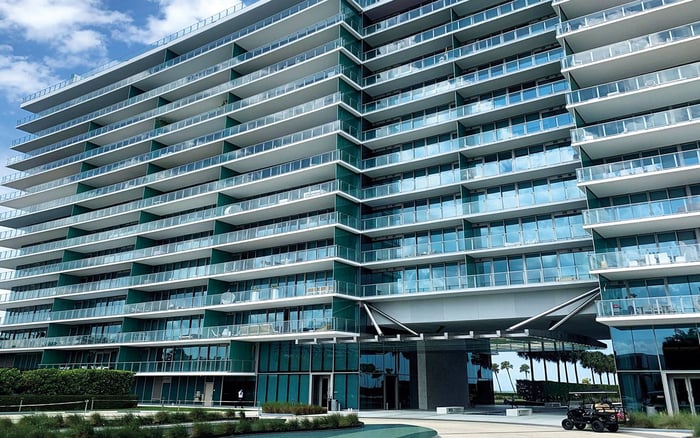
A focused search should begin with currently available penthouses and top-floor combinations that can be evaluated on equal terms. Oceana Key Biscayne is an appropriate project to include in that initial review, but project recognition should never replace residence-level diligence.
Request comparable information for every candidate: interior and exterior plans, terrace orientation, door and window specifications, access procedures, building rules, recent assessments, maintenance obligations, parking arrangements, storage, and the treatment of outdoor improvements. The objective is not to reward the longest feature sheet. It is to identify the residence with the fewest meaningful compromises.
A useful shortlist can address three buyer profiles. The first prioritizes frequent outdoor dining and entertaining. The second values privacy, controlled access, and seamless arrivals. The third places greater weight on future marketability. One penthouse may lead in all three categories, but buyers should be prepared to distinguish an exceptional terrace from an exceptional overall acquisition.
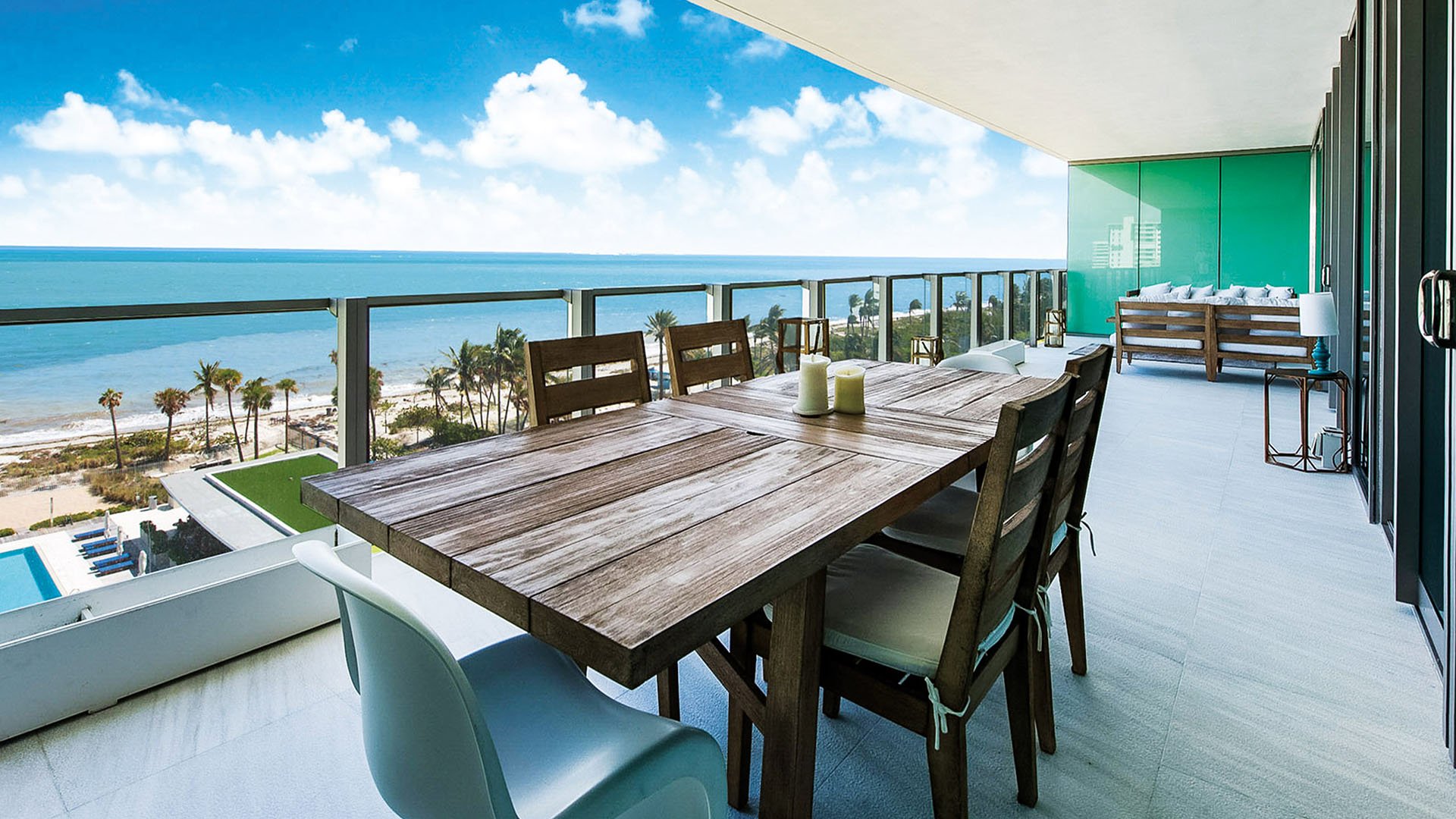
Outdoor space becomes valuable when it is comfortable, accessible, and easy to furnish. Review the terrace plan as carefully as the interior. Assess depth, shape, transitions from principal rooms, covered and uncovered zones, railing placement, service access, and the areas where dining, lounging, and circulation can comfortably coexist.
Visit at more than one time of day when possible. Consider sun exposure, wind, privacy between neighboring outdoor areas, drainage, lighting, and the practicality of moving food or furnishings outside. Confirm which alterations require approval and which elements fall under the owner’s maintenance responsibility.
For an oceanfront or waterfront buyer, the view may establish the emotional case, but everyday utility supports the financial one. A beautiful outdoor area that is difficult to occupy can be less compelling than a more balanced terrace with intuitive connections to the kitchen, living room, and primary suite.
Luxury buyers should map the entire arrival path. Begin at the property boundary, then examine guest admission, vehicle handling, garage access, elevator controls, service entries, delivery procedures, residence access, and after-hours staffing. The strongest experience remains coherent from curb to front door.
Privacy and security overlap, but they are not identical. A controlled elevator may limit access, while floor configuration, sightlines, staffing practices, and service circulation determine discretion. Buyers should ask how vendors, household staff, contractors, and guests are processed, particularly when the residence will be occupied seasonally.
Technology also requires context. Confirm who manages access credentials, how temporary permissions are issued, what happens during an outage, and how emergency procedures are communicated. These questions are more useful than relying on broad labels or assumptions associated with a premium building.
Resale depth describes how many qualified future buyers could understand and desire the property at an appropriate price. It is strengthened by a coherent floor plan, useful outdoor space, privacy, manageable ownership obligations, and a condition that does not immediately require extensive work. It can be weakened by unusual room proportions, highly specific alterations, complicated access, or outdoor areas that photograph better than they function.
Evaluate the residence through two lenses. The first is personal: does it support the way you intend to live? The second is transferable: could another discerning buyer recognize the same advantages without sharing every preference? A strong purchase satisfies both.
Carrying costs and capital obligations also matter. Request current documents and professional guidance regarding the building’s financial position, insurance, assessments, reserves, and restrictions. The purchase price is only one component of the ownership proposition, and future buyers are likely to examine the same file.
A controlled comparison can clarify value. Buyers may examine Apogee South Beach when testing a South Beach alternative, Continuum on South Beach as another Miami Beach reference, or The Residences at Six Fisher Island when considering Fisher Island.
The purpose is not to declare one location superior. It is to compare how similarly positioned residences answer the same questions about outdoor living, arrival, privacy, floor-plan utility, ownership obligations, and eventual marketability. Keep the scorecard consistent so architectural drama does not obscure operational differences.
Before pricing an offer, separate essential attributes from negotiable preferences. Terrace geometry, access configuration, and floor-plan logic are difficult to change. Finishes, furniture, and decorative lighting may be easier to address, subject to approvals and professional review.
Match diligence to the residence’s complexity. Penthouse ownership can involve exclusive-use areas, roof-adjacent conditions, specialized systems, and alterations requiring clear documentation. Engage appropriate legal, inspection, insurance, and financial professionals, and ensure that representations material to the purchase are confirmed in the governing documents or transaction record.
The strongest offer is neither simply aggressive nor conservative. It reflects the buyer’s confidence in the residence, the building, the ownership file, and the property’s appeal to a future audience.
What makes a Key Biscayne penthouse terrace genuinely usable? Useful depth, logical room connections, furnishing flexibility, comfort, and clear maintenance obligations matter more than headline area alone.
Should terrace orientation influence a purchase decision? Yes. Evaluate light, wind, privacy, and intended use at relevant times of day before deciding whether the orientation suits your routine.
How should buyers assess penthouse security? Trace every step from property entry to residence access, including guests, deliveries, vendors, parking, elevators, and emergency procedures.
Is private elevator access enough to establish privacy? No. Floor configuration, service circulation, staffing protocols, sightlines, and access management also shape privacy.
What does resale depth mean for a luxury residence? It reflects the breadth of future qualified buyers who could value the layout, outdoor space, condition, costs, and ownership experience.
Do highly customized interiors reduce resale appeal? They can if future buyers face costly reversals, though thoughtful customization may remain attractive when it preserves functional flexibility.
Which documents deserve close review? Buyers should request governing documents, budgets, assessment information, insurance materials, alteration records, and rules relevant to the residence.
Should buyers compare properties outside Key Biscayne? Yes. A small, disciplined comparison set can reveal whether the preferred residence delivers competitive utility and ownership quality.
How many times should a buyer visit before offering? More than one visit can help test terrace comfort, light, arrival procedures, privacy, and the residence’s atmosphere at different times.
What should remain nonnegotiable in the final choice? Preserve the qualities that are hardest to change: layout, terrace geometry, access, privacy, and a credible long-term ownership proposition.
For a tailored shortlist and next-step guidance, connect with MILLION.
If branded residences are on your mind — as a home or as an allocation — we would be glad to share what we are seeing, privately.
Begin a quiet conversation