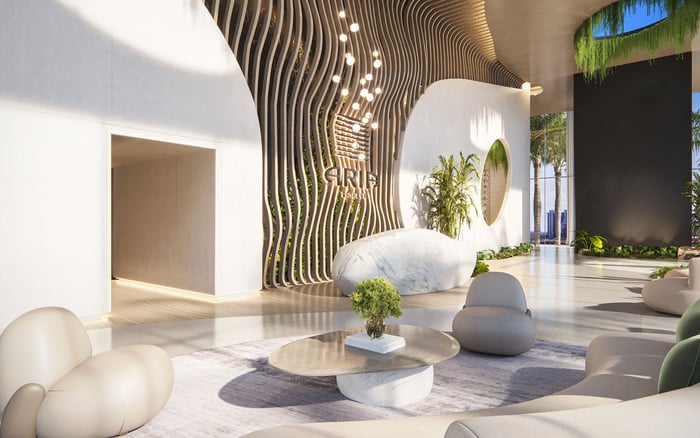
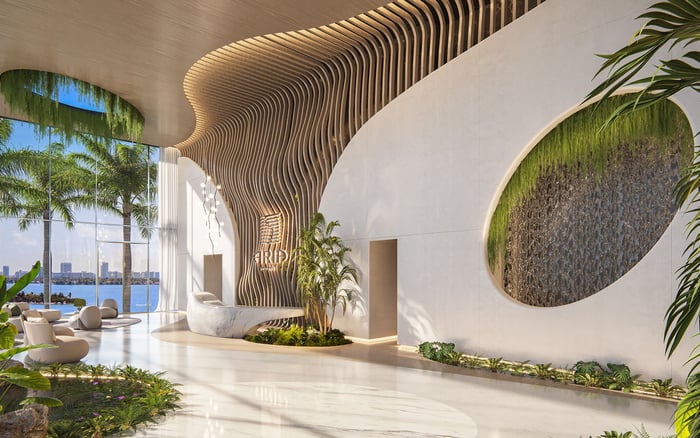
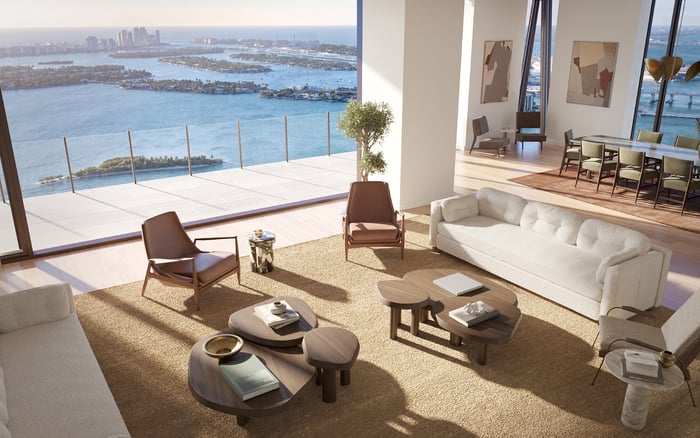
A discreet buyer’s guide to evaluating privacy in Edgewater luxury residences, with emphasis on sightlines, exposure, floor height, glazing, terraces, and due diligence before committing to a tower home.
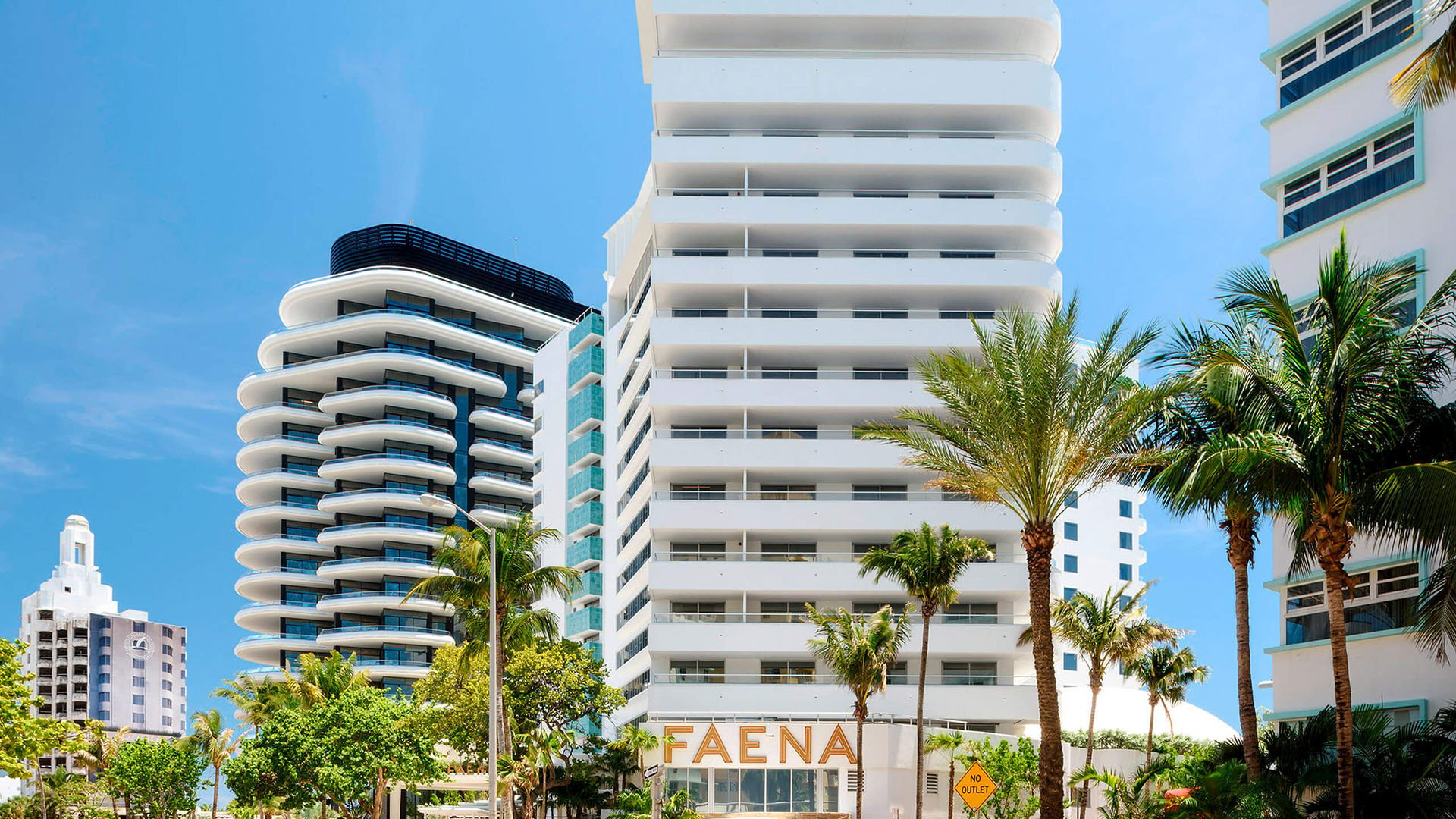
Edgewater’s appeal is immediate: bayfront energy, proximity to Miami’s cultural core, and a vertical residential landscape that continues to attract design-conscious buyers. Yet for the ultra-premium client, the defining question is not simply which residence delivers the most dramatic view. It is which residence can be lived in with ease, discretion, and a genuine sense of separation from neighboring towers.
In a neighborhood defined by height and density, privacy is not a single feature. It is a composition of orientation, spacing, glass, terrace design, elevation, room placement, and the way adjacent buildings relate to one another. The best Edgewater luxury residence for a privacy-focused buyer is therefore not automatically the tallest home, the newest tower, or the most recognizable brand. It is the residence where the plan, exposure, and daily rhythm keep the owner from feeling observed.
For buyers considering EDITION Edgewater, Aria Reserve Miami, The Cove Residences Edgewater, or Villa Miami, the most valuable work begins before comparing finishes. It starts with studying how the residence will feel at breakfast, at sunset, after dark, and when neighboring homes are illuminated.
Privacy in Edgewater is not simply the absence of another building outside the window. A neighboring tower may be visible without feeling intrusive if the residence is angled correctly, if the main living areas face a broader view corridor, or if bedrooms are shielded from direct parallel exposure. Conversely, a dazzling view can feel compromised when a primary suite, bath, or terrace looks directly into another line of residences.
The strongest privacy profiles tend to share several practical qualities. They give the living room a long visual release. They protect bedrooms from direct opposing windows. They place service areas, corridors, or secondary rooms where exposure is less sensitive. They allow terrace use without the sense of performing for a neighboring stack of balconies. They also preserve comfort after dark, when reflective glass and interior lighting can change the privacy equation.
This is why the best purchase strategy is experiential. A plan may look private on paper, but an in-person visit reveals the true relationship between the residence and its surroundings. Buyers should stand where they will actually live: at the kitchen island, inside the primary bath, seated on the terrace, and near the bed wall. These vantage points matter more than lobby drama.
Because privacy depends on the exact residence, exposure, and height, a universal ranking can mislead. In Edgewater, two homes in the same building can live very differently. One line may open toward a generous water or skyline corridor, while another may feel more engaged with neighboring towers. One floor may clear a nearby structure, while another may sit directly across from it.
A discreet buyer should begin with three filters. First, identify the most private daily spaces: primary bedroom, bath, living room, and terrace. Second, compare the angle of those spaces against surrounding buildings. Third, test how the home changes from day to evening. A residence that feels serene at noon can feel more exposed at night if glass becomes reflective and interior lighting is bright.
High floors can help, but elevation alone is not a guarantee. A higher residence may still face another tall building, while a lower residence with a better angle or wider setback may feel more composed. Waterview also deserves careful interpretation. A bay view can provide visual distance, but the edges of that view may still include neighboring towers, amenity decks, or active terraces.
In privacy-sensitive purchases, architectural discipline matters more than sheer square footage. Long, exposed glass walls can be beautiful, but they require a thoughtful relationship to neighboring structures. A generous terrace can be a privilege, but only if it feels usable without constant screening. A dramatic bath view can be memorable, but only if it does not invite unwanted sightlines.
The best floor plans create zones of openness and retreat. They allow the owner to entertain with expansive views while preserving sanctuary in bedrooms and baths. They separate social exposure from intimate exposure. They give the buyer choices: shades open for drama, partial shading for softness, and private rooms that do not depend on constant window treatment.
This is especially important for buyers who split time between residences. A second-home owner may arrive for a weekend and want immediate calm, not a constant negotiation with shades and sightlines. The more naturally private the floor plan feels, the less management the home requires.
A privacy-minded showing should be slower and more deliberate than a standard tour. Ask to spend time in silence. Open and close shades if possible. Step onto the terrace and look diagonally, not only straight ahead. Stand at the kitchen sink, sit where the dining table would be, and consider how the living room will feel when the home is lit at night.
For buyers comparing Edgewater, EDITION Edgewater, Aria Reserve Miami, and Villa Miami, the question is not which name sounds most compelling. It is which specific residence provides the most graceful boundary between spectacle and seclusion. Cove Miami, as a phrase buyers may use when discussing The Cove Residences Edgewater, should be approached with the same discipline: confirm the exact line, exposure, and neighboring context before assuming privacy.
Also ask about future-facing conditions in plain language. What is visible today? What could become visible from nearby parcels or adjacent structures? How does the residence feel from the terrace railing versus from ten feet inside the living room? A private home should not rely on one perfect viewing angle.
For most privacy-focused Edgewater buyers, the hierarchy begins with exposure, then elevation, then plan, then glass management. Exposure determines the broad relationship to neighboring towers. Elevation may improve separation, but only when it changes the sightline. The plan determines whether sensitive rooms are protected. Glass management determines how elegantly the home performs throughout the day.
Finishes, amenities, and branding still matter. In the upper tier, however, they should not distract from livability. A residence that requires constant concealment may not deliver the calm expected at this level. The better choice is often the home that feels quietly resolved: a view that opens, a bedroom that retreats, a terrace that can be used, and interiors that remain composed after sunset.
That is the real definition of the best Edgewater residence for a buyer who needs privacy from neighboring towers. It is not the one that eliminates the city. It is the one that frames the city while preserving the owner’s sense of control.
Is Edgewater a good neighborhood for privacy-minded luxury buyers? Yes, but privacy must be evaluated residence by residence because neighboring tower relationships can vary significantly.
Are higher floors always more private in Edgewater? Not always. High floors may improve separation, but the angle toward surrounding towers is just as important.
What room should buyers inspect first for privacy? Start with the primary bedroom and bath, then evaluate the living room and terrace from real daily-use positions.
Does a bay view guarantee privacy? No. Waterview can create distance, but side angles and adjacent towers still need careful review.
Should privacy buyers avoid glass-heavy residences? Not necessarily. Glass can work beautifully when exposure, shading, and room placement are well considered.
How should buyers compare residences in the same tower? Compare line, exposure, floor height, and the position of sensitive rooms rather than relying on building name alone.
Is terrace privacy as important as interior privacy? For many luxury buyers, yes. A terrace that feels exposed may be used far less than expected.
When is the best time to evaluate privacy? Visit during the day and, if possible, near evening, when lighting can change how exposed a residence feels.
Can window treatments solve most privacy issues? They can help, but the strongest homes feel naturally private without requiring constant shade management.
What is the most important takeaway for Edgewater buyers? Choose the specific residence with the best sightline discipline, not simply the most prominent tower.
For a discreet conversation and a curated building-by-building shortlist, connect with MILLION.
If branded residences are on your mind — as a home or as an allocation — we would be glad to share what we are seeing, privately.
Begin a quiet conversation