Choosing between Coconut Grove and Coral Gables requires more than a compelling outlook. A parcel-level review of neighboring development rights, height measurements, wind exposure and terrace responsibilities helps distinguish lasting enjoyment from avoidable ownership risk.
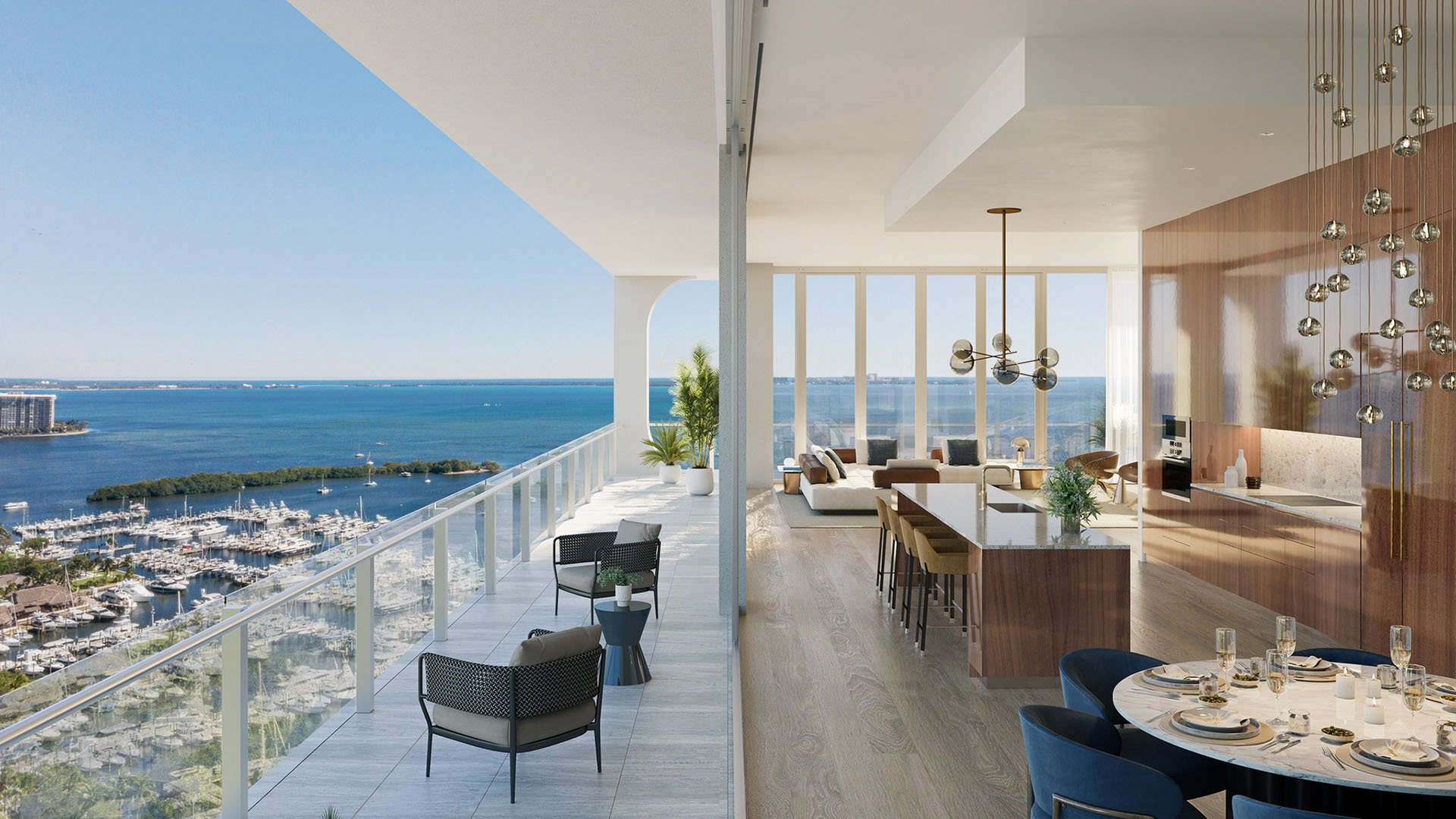
A beautiful outlook can make a residence feel inevitable. The terrace becomes an imagined dining room, neighboring greenery a visual buffer, and the open horizon part of the purchase price. Yet choosing between Coconut Grove and Coral Gables means separating what is visible today from what is legally and physically durable.
The meaningful comparison is not which neighborhood offers the better lifestyle in the abstract. It is which property delivers the view, outdoor comfort and ownership obligations you are prepared to accept. A low-rise neighbor is not necessarily a permanent safeguard. An expansive terrace is not necessarily comfortable at the hours you intend to use it.
For buyers considering Four Seasons Residences Coconut Grove alongside Ponce Park Coral Gables, apply the same scrutiny to each candidate residence. Do not assume either project has a particular exposure or protected outlook.
Treat a prized view as a corridor crossing several parcels, not merely a feature of the apartment. Identify the land between the residence and the focal point, then examine applicable zoning, setbacks, incentive eligibility, approved plans, pending applications and recorded restrictions.
Ask a qualified adviser to distinguish three conditions: what exists now, what can be built under current approvals and rules, and what would require further discretionary approval. Each carries a different level of uncertainty. Neither an empty parcel nor a landscaped foreground establishes permanent protection.
The review should address the actual sightline from the rooms and terrace you will use. A proposed building envelope may affect a seated dining view differently from a standing view at the railing. Request a comparison using consistent elevations, rather than relying on renderings or general assurances that neighboring buildings will remain low.
Where a restriction is offered as reassurance, have counsel confirm its scope, enforceability and relevance to the view. The objective is not to eliminate every possibility of change. It is to understand how much of the premium depends on conditions outside your control.
For a Coconut Grove purchase, make the neighboring-parcel review specific to the residence's outlook. Do not infer a neighboring entitlement from a street name, the appearance of existing buildings or a general description of the neighborhood.
Ask your planning adviser to identify the applicable height rules and explain how height is measured. Establish the starting elevation, the treatment of roof features and any distinction between story count and measured height. These questions are more useful than accepting an unverified numerical limit as a guarantee of your future view.
If proposed or historical planning language is offered as reassurance, ask counsel to verify whether it is adopted, current and applicable to the parcel in question. Keep unresolved rules clearly marked in your purchase review.
For a Coral Gables purchase, ask a qualified planning adviser to identify the neighboring parcel's base development envelope and any potential bonus pathway. Confirm eligibility and approval status rather than assuming that a maximum discussed for another site applies to your view corridor.
Request separate treatment of occupied-building height, roof features and architectural elements wherever the applicable rules distinguish them. Ask whether setbacks or transitions near adjoining residential land affect the envelope, and have those requirements verified for the specific site.
For a buyer considering Cora Merrick Park, the task is the same: establish which neighboring rights are confirmed, which are conditional and which remain unresolved. A general impression of Coral Gables should not substitute for that review.
Do not assume Coconut Grove or Coral Gables is categorically more comfortable. Evaluate exposure at the residence itself.
Visit the terrace at the hours you expect to dine, read or entertain. Note its orientation, cover and the conditions at the seating area-not only beside the open door. A single calm visit should not settle the question. Ask what property-specific engineering information is available, and seek specialist advice where exposure is material to the purchase.
Keep outdoor comfort separate from structural performance. A discussion of building safety does not establish whether your preferred dining arrangement will be pleasant. Likewise, a comfortable viewing appointment is no substitute for reviewing relevant engineering records.
Terrace due diligence should cover drainage, waterproofing, railings, cover and permissible furniture or shading. Confirm that your intended arrangement is allowed before treating outdoor square footage as an extension of the interior.
For a condominium, distinguish exclusive use from responsibility for structural components and repairs. Review governing documents alongside engineering and maintenance records. Ask who must maintain each component, who can authorize work and how applicable costs are allocated. Do not assume private access assigns every obligation to the owner, or that association involvement eliminates owner exposure.
Resolve these questions before committing to the purchase. The most useful terrace is one whose permitted use, physical condition and repair responsibilities fit your expectations.
Build a concise comparison for each finalist: view-facing development rights, verified height measurements, observed outdoor comfort, permitted terrace use and repair allocation. Mark unresolved items plainly rather than allowing a neighborhood preference to fill the gaps.
Choose the residence whose pleasures remain persuasive after those questions are answered. A narrower outlook with understood neighboring rights may suit you better than a broader one dependent on untested assumptions. The luxury is not certainty about every future change. It is making the purchase with clear boundaries around what you know and what you accept.
Explore residences aligned with your priorities through MILLION.
If branded residences are on your mind — as a home or as an allocation — we would be glad to share what we are seeing, privately.
Begin a quiet conversationNeither neighborhood label guarantees view durability. Compare the specific view-facing parcels, their applicable development rights and any enforceable restrictions.
Current conditions alone do not establish permanent protection. Review zoning, approvals, incentive eligibility and recorded restrictions with qualified advisers.
Do not treat a general height claim as a guarantee of your view. Ask a planning adviser to confirm the rules and measurements applicable to each neighboring parcel.
Ask how the applicable rules define the starting elevation and treat roof features. Use consistent elevations when comparing a potential building envelope with your sightline.
Have a qualified adviser verify the neighboring parcel's base envelope, bonus eligibility and approval status. Do not assume a maximum discussed for another site applies.
Ask whether applicable rules distinguish occupied-building height from roof features or architectural elements. Have the review address any features relevant to your outlook.
Ask whether applicable setbacks or transitions affect the neighboring development envelope. Have those requirements verified for the specific parcel rather than inferred from another project.
Do not rely on a neighborhood-wide ranking. Assess orientation, cover, observed conditions and available engineering information at the individual residence.
Not necessarily. Review governing documents alongside engineering and maintenance records to clarify responsibility for structural components, maintenance and repairs.
Check permitted furniture and shading, drainage, waterproofing, railings and cover. Confirm repair responsibilities and assess comfort at the times you intend to use it.