A buyer-focused guide to evaluating Surfside branded residences for dependable winter occupancy, emphasizing service continuity, arrival readiness and operational due diligence.

For a winter resident, the best home is not simply the most visually compelling. It is the residence that performs predictably when the owner returns, guests arrive and the building reaches full seasonal intensity. In Surfside, service continuity is therefore central to the purchase decision.
The question is not whether a property delivers an impressive arrival experience. It is whether that experience remains composed through holidays, weekends and overlapping resident requests. A sophisticated buyer should examine staffing depth, access procedures, residence-entry rules, maintenance escalation and the handoff between building personnel and private household staff.
Among the area’s most recognizable names, The Surf Club Four Seasons Surfside belongs in the conversation because winter buyers often begin with a hospitality-led reference point. The essential task, however, is to determine which services apply to the specific residence, how they are requested and what happens when demand peaks.
The Surf Club Four Seasons Surfside
This is a natural starting point for buyers seeking a globally legible hospitality identity attached to their South Florida residence. The decisive comparison lies in the operational details: the residential service channel, authorization for staff access and the process for resolving multiple requests at once.
Fendi Château Residences Surfside
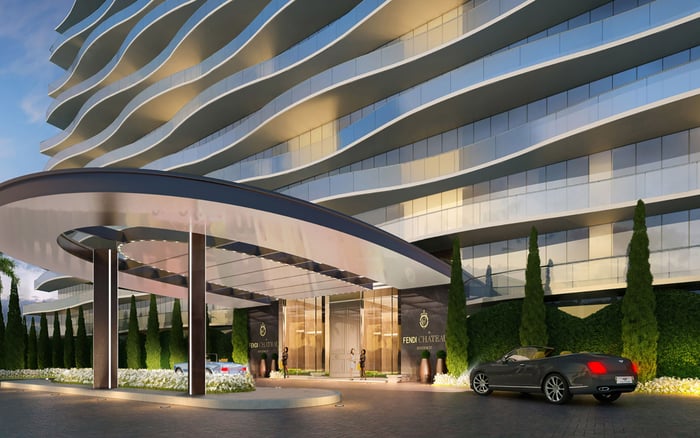
For an owner drawn to a fashion-house identity, Fendi Château Residences Surfside offers a distinct lens on branded living. Buyers should separate design cachet from recurring service, then determine what the building handles, what requires outside vendors and what must be arranged before arrival.
Arte Surfside
Arte Surfside offers a useful boutique-scale comparison for purchasers who value discretion and a more intimate residential atmosphere. Rather than assuming fewer residences automatically produce more responsive service, ask how coverage is maintained across shifts, absences and high-demand periods.
The Delmore Surfside
For buyers comparing current Surfside options, The Delmore Surfside can serve as a forward-looking benchmark. Any evaluation should distinguish planned positioning from services that are contractually defined, funded through the operating structure and available when an owner expects to occupy the home.
These names should not be treated as a universal ranking. The right choice depends on whether the household prioritizes hotel-style coordination, privacy, design identity, future delivery or a simpler residential rhythm.
Reliable service begins before the aircraft lands. A winter home should be opened, inspected and prepared under clear authorization, with exceptions elevated to someone empowered to act. Owners should know who receives an arrival notice, who confirms completion and who assumes responsibility after normal hours.
The strongest operating model is also legible. Requests should move through a defined channel rather than depend on personal favors or one especially capable employee. Ask who supervises each shift, how unresolved items are logged and whether the building can coordinate with an owner’s house manager without compromising security.
For oceanfront ownership, exposure-related maintenance deserves particular attention. Buyers should review procedures for monitoring terraces, exterior openings, climate systems and interiors during extended absences-without presuming that such oversight is included.
Begin with staffing rather than amenity names. Request the roles assigned to residential operations, the hours covered and the escalation path for evenings, weekends and holidays. A polished concierge desk is only one part of the system.
Next, examine access. Seasonal owners may need approved household employees, family members, delivery teams and specialist vendors to enter at different times. Confirm how permissions are created, changed and revoked, and whether instructions can be recorded before the owner is in residence.
Then test a realistic scenario. Ask the sales or management team to explain how the building would handle an early arrival, a climate-control concern and incoming guests on the same peak-season day. A clear answer can be more revealing than a broad promise of personalized attention.
Finally, review costs and boundaries. Identify which services are included, which are billable, which rely on third parties and which are unavailable. Branded residences can offer a powerful sense of assurance, but the brand name should never substitute for reading the governing and service documents.
Second-home ownership works best when the residence fits the household’s actual operating pattern. A couple arriving for several uninterrupted months may need less coordination than a multigenerational family cycling through guests, staff and short stays. The latter should test the building’s systems against its busiest likely week, not its quietest.
Privacy also deserves a precise definition. Some owners want staff to anticipate routines; others prefer minimal contact and tightly limited access. Neither model is inherently superior. The better residence is the one whose procedures align with the owner’s expectations without requiring constant exceptions.
Before committing, discuss concrete scenarios, request written confirmation where appropriate and compare like with like. Peak-season luxury is ultimately operational: the home is ready, the team knows the plan and the owner does not have to manage the building from afar.
What makes a Surfside branded residence suitable for winter occupancy? Look for clear arrival procedures, consistent staffing and a documented route for escalating maintenance or service requests.
Should buyers rely on the brand name alone? No. Review the actual residential operating structure, service scope and governing documents for the specific property.
How can I assess service before purchasing? Present realistic peak-season scenarios and ask who handles each step, including after-hours issues and follow-up.
Which staffing details matter most? Confirm residential roles, shift coverage, supervisory authority and the plan for weekends, holidays and employee absences.
Are all residence-preparation services included? Do not assume so. Determine which tasks are included, separately billed, outsourced or unavailable.
Why are access protocols important for seasonal owners? They determine how securely family, staff and vendors can enter while the owner is away or preparing to arrive.
What should owners verify about maintenance during absences? Ask whether inspections are offered, what they cover, how concerns are documented and who may authorize repairs.
Does a boutique building guarantee better service? Not automatically. Service depends on staffing depth, procedures and management continuity-not residence count alone.
How should buyers compare completed and future residences? Separate current operations from planned services, then confirm timing, costs and obligations in the relevant documents.
What is the final service question to ask? Ask who takes ownership of a problem when the first contact cannot resolve it during a high-demand period.
For a discreet conversation and a curated building-by-building shortlist, connect with MILLION.
If branded residences are on your mind — as a home or as an allocation — we would be glad to share what we are seeing, privately.
Begin a quiet conversation