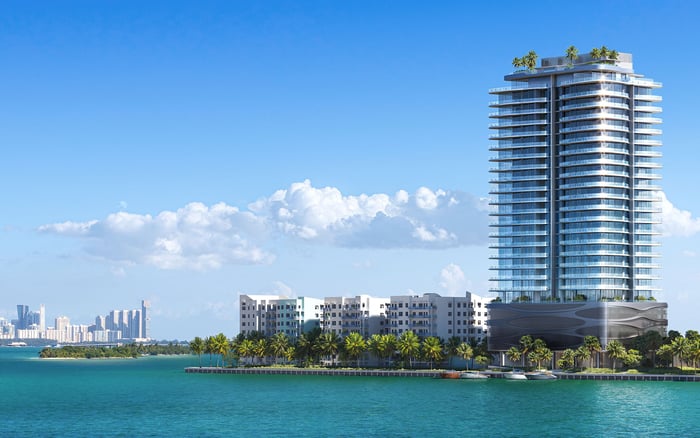
A buyer-focused assessment of North Bay Village branded residences, centered on service quality, governance, privacy, operating rules, and long-term residential control.

The appeal of branded residences is easy to understand: a recognizable identity, a considered arrival experience, and the expectation that daily life will feel professionally managed. Yet sophisticated buyers increasingly want something more nuanced. They seek service without surrendering the practical authority that comes with owning a private home.
That distinction is central to a North Bay Village search. The best purchase is not necessarily the residence with the longest amenity menu or the most visible name. It is the one where the brand promise, ownership documents, operating structure, and resident culture support the same objective: gracious living with meaningful residential control.
This is the essential lens for evaluating a branded address. Service is experiential. Control is contractual. Buyers should examine both with equal care.
This ranking reflects alignment with the buyer brief, not a claim about price, scale, delivery timing, or comparative amenity counts. Each candidate should ultimately be judged through its current governing and purchase documents.
1. Continuum Club & Residences North Bay Village: brand-led residential positioning
Continuum Club & Residences North Bay Village is the clearest starting point for buyers who place branded identity at the center of their search. The decisive diligence question is how the stated service concept translates into enforceable standards, owner obligations, and resident influence.
2. Pagani North Bay Village: design-brand consideration
Pagani North Bay Village belongs on the shortlist for buyers drawn to a brand association as part of the residence’s identity. Before assigning value to that association, purchasers should separate design narrative from recurring operations and determine which owner protections govern future decisions.
3. Shoma Bay North Bay Village: residential-control comparison
Shoma Bay North Bay Village provides a useful comparison for buyers weighing a polished residential proposition against the governance priorities of long-term ownership. The review should focus on rules, budgets, decision rights, and the boundaries between optional conveniences and mandatory costs.
A brand can shape the tone of a property, but buyers should identify who is obligated to deliver each service and under which agreement. The relevant questions include whether standards are fixed or discretionary, which services are included in common charges, which are billed individually, and what remedies apply if performance changes.
The positioning of Continuum Club & Residences North Bay Village makes it a natural candidate for this analysis. Rather than relying on the name alone, buyers should review the relationships among the residence, association, operator, and brand. Those roles may appear seamless in daily life, but their legal and financial responsibilities should remain legible.
Service must also suit actual occupancy. A primary resident may prize consistency, privacy, and responsive building operations. A second-home owner may place greater weight on arrival preparation, residence oversight, and communication while away. The best program is calibrated to the owner’s real pattern of use.
Control is not the same as resisting professional management. In a well-conceived residence, owners can benefit from disciplined operations while retaining appropriate influence over budgets, material rule changes, capital planning, and the property’s future character.
When considering Shoma Bay North Bay Village, buyers should ask counsel to map decision-making authority in plain language. Who appoints key parties? Which agreements can be renewed or terminated? What voting thresholds apply? Are there limits on changes to services, fees, use policies, or shared spaces?
This review is particularly important in pre-construction and new-construction purchases, where the first years of operation may establish enduring expectations. Buyers should understand developer-control periods, transition procedures, reserve assumptions, and the process through which residents eventually exercise association rights. None of these questions diminishes the lifestyle appeal. They protect it.
A disciplined comparison should include nearby or adjacent-market residences that express luxury without relying on precisely the same brand proposition. Tula Residences North Bay Village can help buyers test how much value they assign to branding relative to architecture, privacy, governance, and the underlying quality of the home.
A wider geographic comparison may also prove useful. One Park Tower by Turnberry North Miami offers another frame for examining how a named residential experience fits personal priorities. The purpose is not to treat unlike projects as interchangeable, but to reveal which elements the buyer considers indispensable and which are merely attractive.
Waterfront appeal can command attention, but the residence itself remains the enduring asset. Evaluate the floor plan, privacy, views, storage, parking rights, finish responsibilities, and restrictions with the same rigor applied to the service program. A compelling brand cannot correct a home that does not function for its owner.
Begin by dividing the offer into four columns: the private residence, shared property, included services, and optional services. Then place every promised feature in the correct column and identify the document that governs it. This simple exercise exposes ambiguity before it becomes an ownership issue.
Next, model costs beyond the purchase price. Consider recurring assessments, individually billed conveniences, insurance responsibilities, reserves, and possible capital obligations. Buyers should also understand rental, guest, pet, renovation, access, and vendor policies, even if they do not anticipate exercising every right immediately.
Finally, assess culture. Residential control is partly legal and partly social. A community designed around discretion and long-term stewardship may feel markedly different from one organized around frequent turnover or highly programmed hospitality. The right answer is personal, but it should be intentional.
What makes a branded residence suitable for a control-focused buyer? Clear service obligations, transparent costs, balanced governance, and well-defined owner rights matter more than branding alone.
Does branded service mean hotel-style control over private homes? Not necessarily. The governing agreements determine the operator’s authority and the owner’s practical autonomy.
Which documents deserve the closest review? Buyers should have counsel examine the declaration, bylaws, budget, purchase agreement, management arrangements, rules, and brand-related agreements.
How should buyers compare included and optional services? Identify what common charges fund, what is billed separately, and whether services or pricing can change.
Why are voting rights important? Voting provisions shape owner influence over budgets, board matters, amendments, contracts, and significant property decisions.
Should a second-home buyer use a different standard? Yes. Remote oversight, access protocols, communication, privacy, and residence-care options may carry greater importance.
How should buyers evaluate a brand premium? Separate the value of the home from the value of design identity, service delivery, management quality, and resale perception.
Are amenity lists enough for comparing projects? No. Buyers should assess availability, operating costs, reservation rules, guest access, maintenance, and long-term relevance.
What restrictions should be checked before signing? Review leasing, guests, pets, renovations, vendors, deliveries, parking, storage, and use of shared areas.
What is the final test for residential control? The buyer should be able to explain who makes key decisions, who pays, what can change, and which rights owners retain.
For a tailored shortlist and next-step guidance, connect with MILLION.
If branded residences are on your mind — as a home or as an allocation — we would be glad to share what we are seeing, privately.
Begin a quiet conversation