A buyer’s guide to comparing Boca Raton luxury condominiums through building density, circulation, residence design, governance and daily privacy.
For luxury buyers in Boca Raton, low-density living involves more than the total number of residences. Elevator sharing, corridor length, garage access, visitor handling, service circulation and sightlines can all influence daily discretion.
The best condominium for a privacy-focused buyer is the one whose physical plan and operating approach align with that buyer’s routine. A seasonal owner may prioritize secure, lock-and-leave simplicity, while a full-time resident may focus on quiet circulation, delivery procedures and separation between social amenities and residential areas. Before touring, buyers should translate lifestyle preferences into specific questions.
Privacy should be evaluated residence by residence rather than inferred from a project name or presentation. Four Boca Raton options to include in a consistent comparison are Alina Residences Boca Raton, The Residences at Mandarin Oriental Boca Raton, Mr. C Residences Boca Raton and Glass House Boca Raton.
For each project, request current plans and identify the routes used by residents, guests, staff and deliveries. Ask how visitors are announced, how packages enter the property and whether service activity intersects with resident circulation. Study the path from vehicle arrival to the residence, then repeat the exercise for guests, household staff and vendors.
Residence orientation also deserves close review. Neighboring vantage points, glazing, terrace depth and evening exposure should be assessed from the specific home under consideration rather than assumed from a general project overview.
Begin with a circulation map. Mark the garage entrance, lobby, elevator banks, amenity entrances, service areas and residence, then determine how many households may share each segment. A property can feel private in one area and more social in another, particularly near a pool, fitness area or main arrival space.
Distinguish total building density from floor-level density. Request plans showing the number and position of residences on the relevant floor. A corner placement, direct elevator relationship or short corridor may improve discretion, but every configuration requires independent review.
For new construction, separate contractual commitments from illustrative materials. Confirm the documents governing access, storage, parking, deliveries, leasing, pets, renovations and use of common areas. Rules and their enforcement can affect privacy alongside architecture.
Inside the home, examine adjacency. Determine which walls face another residence, an elevator core, a stair, a service room or an amenity. Review bedroom placement relative to entertaining spaces and note whether entry doors face one another across a corridor.
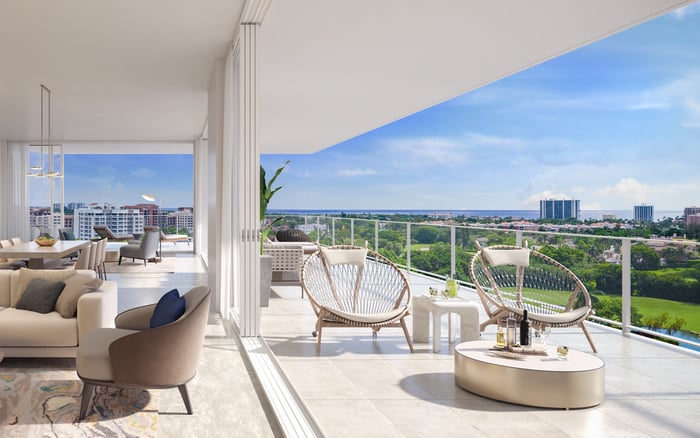
Outdoor space warrants equal scrutiny. Evaluate terrace design for lateral views, overhead exposure and sound transfer when neighboring outdoor areas are aligned. During a visit, stand at the railing, sit where dining furniture might go and look back toward the interior.
Glazing and window treatments can influence nighttime privacy. Consider how the residence may appear from adjacent buildings and common areas after dark. Buyers who value broad views can plan shading and lighting together so openness remains comfortable.
Low-density buyers do not necessarily want fewer amenities; they may prefer more controlled use. Relevant questions include capacity, reservation procedures, guest privileges, operating hours and the routes connecting amenities to residences.
Service may support privacy by reducing errands and coordinating visitors. It may also create movement near a residence when staffing, deliveries or social activity use nearby circulation. Request operating procedures and consider how they would function during an ordinary weekday, a private event and a busier period.
Start by defining three nonnegotiables, such as limited floor sharing, controlled visitor access or separation from amenity traffic. Add three preferences that can be traded for a stronger overall fit, such as view orientation, outdoor space or proximity to a preferred destination.
Tour at different times when possible. Observe arrival patterns, acoustics and the pace of shared spaces. For a resale, review the actual residence and current rules. For a future delivery, focus on executed documents, plan dimensions and written specifications. In either case, engage appropriate legal, inspection and design professionals before committing.
Compare ownership obligations alongside privacy. Staffing, reserves, maintenance and governance can affect how consistently a property maintains its intended atmosphere. The strongest choice is not simply the quietest address on tour day, but the residence most likely to support discretion through its design, rules and operation.
What does low-density condominium living mean? It generally refers to fewer residences sharing a building, floor or circulation area, but buyers should verify the exact configuration.
Is a smaller building always more private? No. Access design, elevator sharing, staffing and visitor procedures may matter more than overall scale.
Should I prioritize a private elevator? It may improve arrival privacy, but service access, emergency circulation and guest handling also deserve review.
How can I assess privacy before construction is complete? Review plans, governing documents, written specifications and contractual disclosures with qualified advisers.
Do extensive amenities conflict with low-density living? Not necessarily. Capacity, location, guest rules and circulation influence whether amenities feel calm or intrusive.
What should I inspect on a residence floor? Check door placement, corridor length, elevator proximity, service rooms, stairs and walls shared with neighboring homes.
How important is parking to privacy? Garage entry, vehicle retrieval and the route to the elevators can shape daily exposure.
Can outdoor space reduce privacy? Yes. Neighboring sightlines, sound transfer and nighttime visibility can make an outdoor area feel exposed.
What documents deserve special attention? Review condominium declarations, rules, budgets, meeting materials, insurance information and applicable purchase documents with advisers.
What is the best way to shortlist comparable options for touring? Start with location fit, delivery status, and daily lifestyle priorities, then compare stacks and elevations to validate views and privacy.
If you'd like a private walkthrough and a curated shortlist, connect with MILLION.
If branded residences are on your mind — as a home or as an allocation — we would be glad to share what we are seeing, privately.
Begin a quiet conversation