Rosewood Residences Hillsboro Beach and Shell Bay by Auberge Hallandale offer two distinct privacy models: a low-density oceanfront sanctuary and a gated private-club ecosystem shaped by membership, scale and golf-course buffers.
For buyers evaluating South Florida in 2026, privacy is no longer simply a function of square footage, elevation or a guarded entrance. Increasingly, it is shaped by the entire residential framework: how arrivals are managed, who shares the setting, how services reach the home and whether the surrounding environment naturally limits exposure.
That distinction places Rosewood Residences Hillsboro Beach and Shell Bay by Auberge Hallandale in a particularly relevant conversation. Both bring branded-residence hospitality to Broward, yet they interpret seclusion through markedly different spatial and social models.
Rosewood presents privacy as an oceanfront sanctuary, supported by low density and the quiet character of Hillsboro Beach. Shell Bay creates it through a gated, membership-oriented private-club environment in Hallandale Beach, using controlled access, master planning and golf-course buffers to establish distance from the surrounding city.
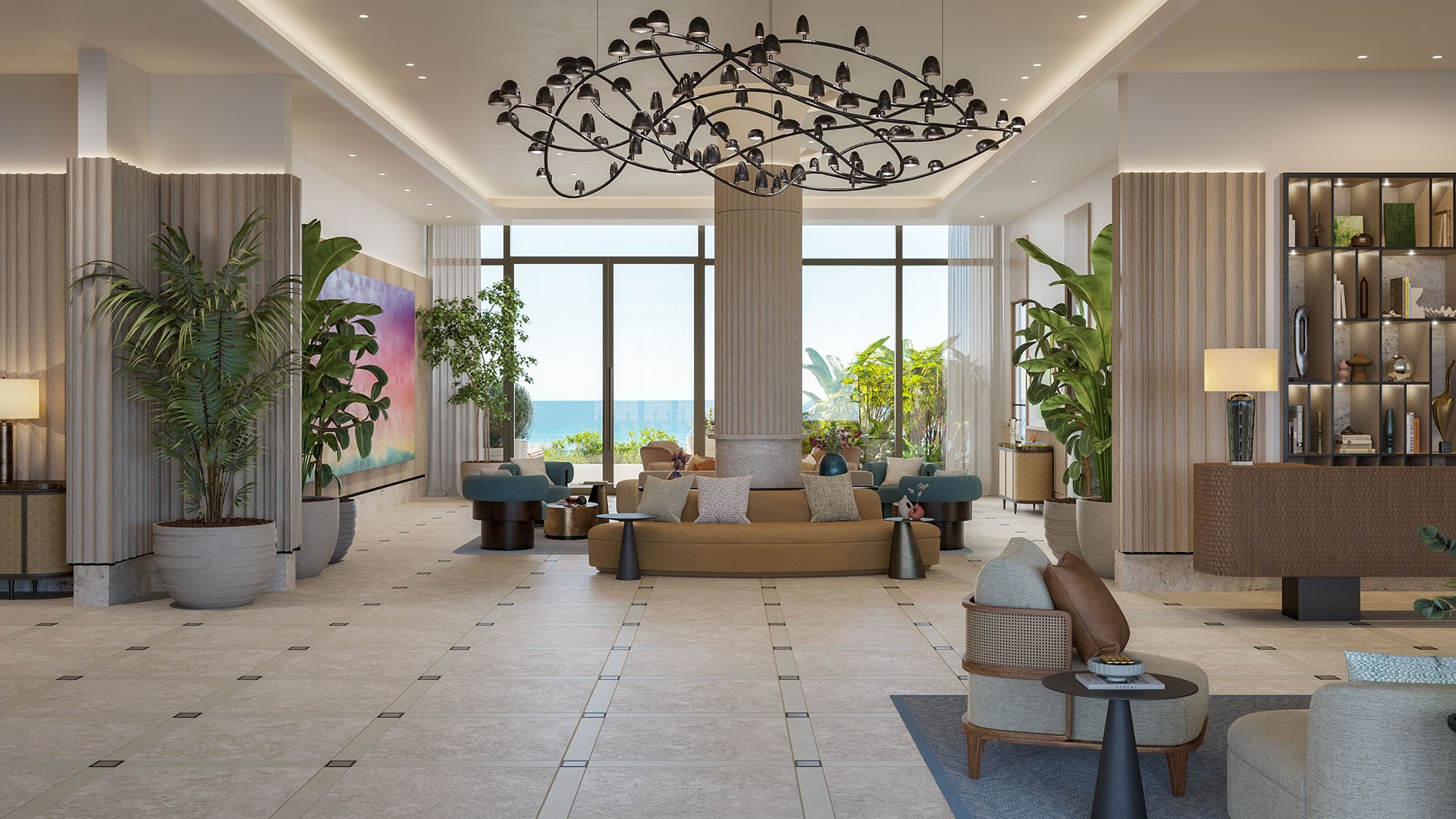
Rosewood’s proposition begins with geography. Its setting along Hillsboro Beach’s “Millionaire’s Mile” stands apart from the denser waterfront districts associated with Miami. The location supports an ultra-prime identity rooted in retreat, lower traffic and a greater sense of separation.
The development’s low-density approach is central to that identity. Rather than reproducing the visibility and guest flow of a conventional resort, it frames hospitality around a boutique residential enclave. Service is intended to be present when needed, while the home remains the primary experience.
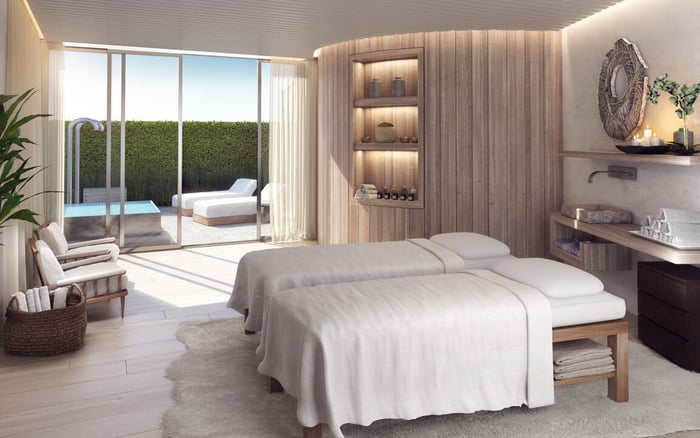
This distinction matters for buyers who want the refinement associated with a global hospitality brand without living in an overt hotel atmosphere. Rosewood’s model pairs resort-level service at home with sanctuary-like living, allowing privacy to emerge from both the setting and the limited intensity of the residential environment.
The result is a quieter interpretation of branded living. Here, exclusivity is not primarily produced by a layered club structure. It is embedded in the low-traffic oceanfront context and the intimacy of the development itself.
Shell Bay addresses the same buyer priority from the more urbanized setting of Hallandale Beach. Its answer is not geographic isolation alone, but a deliberately controlled private-club ecosystem managed by Auberge.
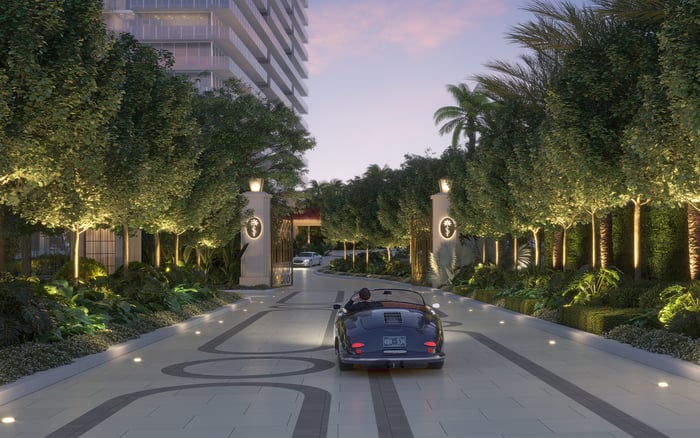
Master-planned scale separates residents and club users from the surrounding urban fabric. Gated access defines the threshold, while membership structures determine who participates in the community. Privacy becomes organizational as well as physical, created through access rules, a managed social environment and clear boundaries between the club and the city beyond.
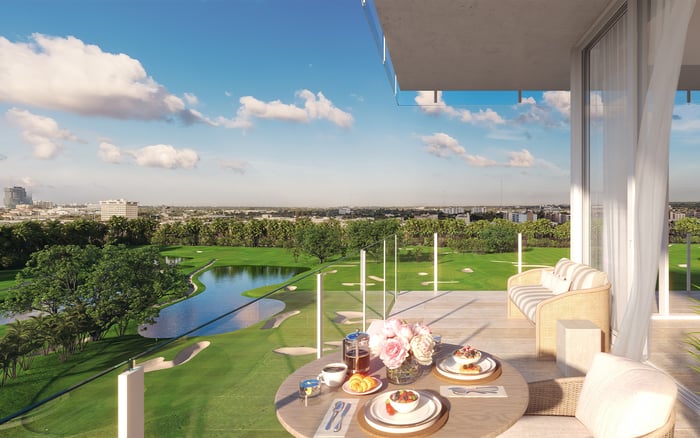
Golf-course buffers add another dimension. Open space creates distance and controlled seclusion, allowing the community to feel removed while remaining within a more connected urban area. For buyers who prefer an active private setting to a purely withdrawn retreat, that distinction may be decisive.
Shell Bay’s lifestyle proposition is therefore more communal than Rosewood’s, but not necessarily less private. Its seclusion rests on selective participation. Buyers enter a protected residential and club environment in which hospitality, access and community operate as one system.
The clearest contrast is between natural retreat and managed enclosure. Rosewood draws privacy from its oceanfront position, low density and boutique scale. Shell Bay uses gates, membership and physical buffers to create a private domain within an urbanized setting.
Hospitality plays a disciplined role in both. Neither proposition needs to be understood as a high-traffic resort model. Instead, service functions as residential infrastructure: an organized layer designed to make daily life more seamless while preserving the primacy of the private home.
Buyers surveying the wider Broward market may also include Four Seasons Hotel & Private Residences Fort Lauderdale in an initial review of hospitality-linked ownership. The useful exercise is not to compare brand names alone, but to examine how each setting controls circulation, shared space and the boundary between residence and hospitality.
A serious review should begin with personal habits. Buyers who value a quiet arrival, minimal community traffic and a home that feels removed from the region’s denser centers may align more naturally with Rosewood’s Hillsboro Beach model.
Those who want privacy alongside a structured club community may find Shell Bay more compelling. Its gates, membership framework and golf-course separation deliver exclusivity through controlled access rather than coastal isolation alone.
Service expectations deserve equal attention. Buyers should consider how often they expect to use hospitality support, how discreetly they want it delivered and whether they prefer a boutique enclave or a broader private-club environment. Privacy is experienced operationally, not merely visually.
The surrounding context matters as well. An oceanfront sanctuary and a master-planned club can both feel secluded, but they establish different daily rhythms. One emphasizes retreat from activity; the other filters activity through a private perimeter.
For 2026 decisions, the strongest question is not which project appears more exclusive, but which privacy architecture best matches the buyer’s definition of home.
Rosewood offers a model founded on place, restraint and residential intimacy. Shell Bay offers one based on controlled entry, membership and a protected communal landscape. Both demonstrate that contemporary residential hospitality can operate quietly, with service supporting the residence rather than overwhelming it.
That distinction gives buyers a precise choice. Privacy can mean withdrawing into a low-density coastal enclave, or joining a carefully managed private world. The more closely that choice reflects everyday patterns, the more durable the ownership experience is likely to feel.
What is the central privacy distinction between the two projects? Rosewood emphasizes low-density oceanfront seclusion, while Shell Bay relies on gates, membership and master-planned separation.
Why does Rosewood’s Hillsboro Beach location matter? Its position along “Millionaire’s Mile” supports a secluded, ultra-prime identity away from denser waterfront districts.
Does Rosewood follow a conventional resort model? No. Its concept emphasizes boutique residential intimacy, lower traffic and resort-level service delivered at home.
How does Shell Bay create privacy in an urbanized setting? It uses controlled access, master-planned scale and physical buffers to separate its private environment from the surrounding city.
What role does membership play at Shell Bay? Membership structures create exclusivity by controlling community participation rather than relying solely on geographic isolation.
How do golf-course buffers affect Shell Bay? They contribute openness, physical distance and a stronger sense of controlled seclusion.
Which model may suit a buyer seeking maximum quiet? Rosewood’s low-density coastal setting may appeal more directly to buyers who prioritize retreat and limited traffic.
Which model may suit a socially oriented buyer? Shell Bay may suit someone seeking privacy within a managed private-club community.
What should buyers examine beyond the brand name? They should study access, circulation, shared-space use and how hospitality services interact with the private residence.
Are pricing and ownership costs addressed here? No. Buyers should evaluate current commercial terms separately as part of project-specific due diligence.
For a discreet conversation and a curated building-by-building shortlist, connect with MILLION.
If branded residences are on your mind — as a home or as an allocation — we would be glad to share what we are seeing, privately.
Begin a quiet conversation